Systematic Review of In Vitro Antimicrobial Susceptibility Testing for Bacillus anthracis, 1947-2019
Systematic reviewBenefit found
What are the antimicrobial susceptibility profiles of Bacillus anthracis?
Who
Bacillus anthracis isolates
Compared
First-line antimicrobials: most isolates were reported as susceptible
Potential alternative antimicrobials
Main outcome
Antimicrobial susceptibility and minimal inhibitory concentrations
Bottom line: Most Bacillus anthracis isolates remain susceptible to current recommended first-line antimicrobials.
Clin Infect Dis · 2022-10-17Download image
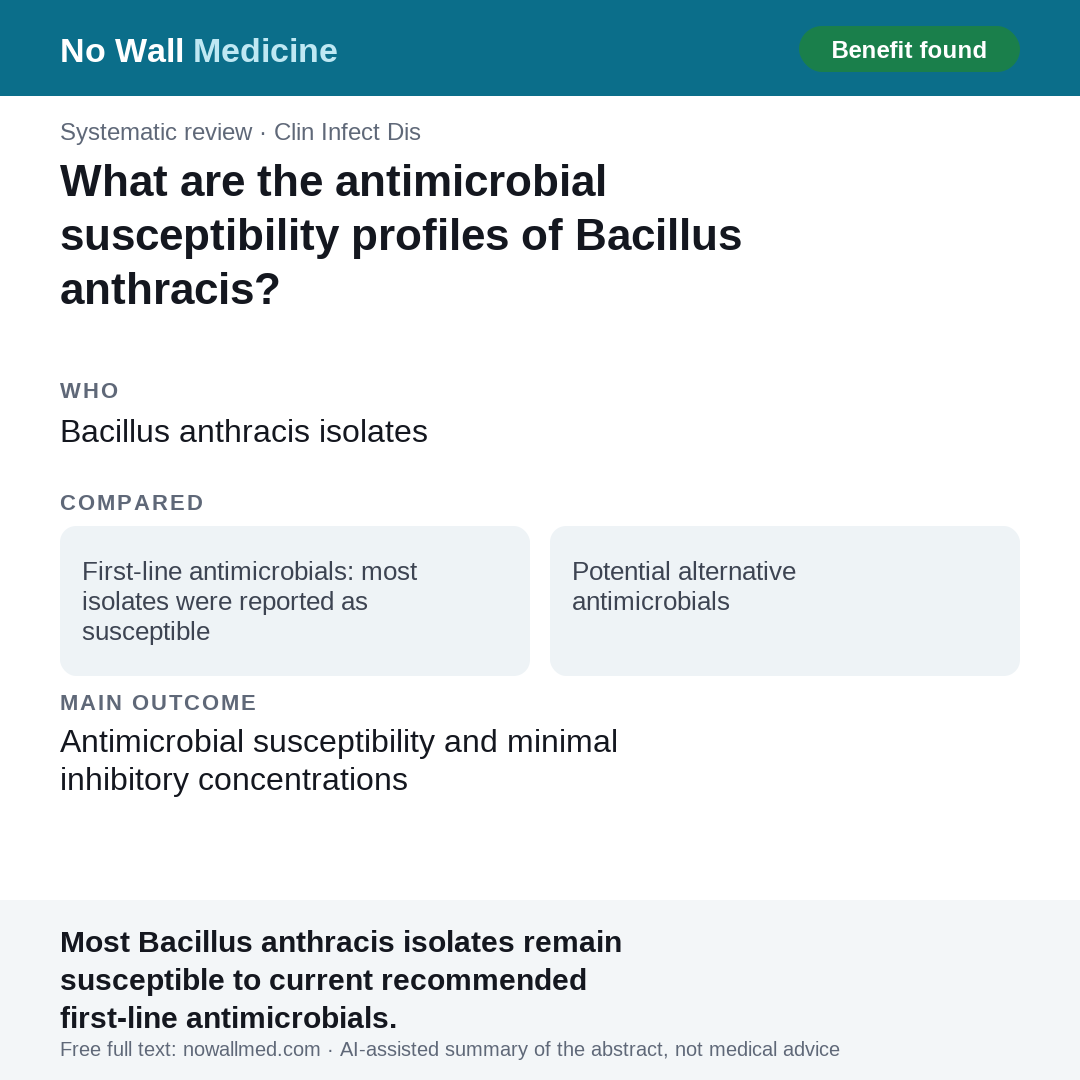
Clinical question: What are the antimicrobial susceptibility profiles of Bacillus anthracis?
Abstract
Bacillus anthracis, the causative agent of anthrax, is a high-consequence bacterial pathogen that occurs naturally in many parts of the world and is considered an agent of biowarfare or bioterrorism. Understanding antimicrobial susceptibility profiles of B. anthracis isolates is foundational to treating naturally occurring outbreaks and to public health preparedness in the event of an intentional release. In this systematic review, we searched the peer-reviewed literature for all publications detailing antimicrobial susceptibility testing of B. anthracis. Within the set of discovered articles, we collated a subset of publications detailing susceptibility testing that followed standardized protocols for Food and Drug Administration-approved, commercially available antimicrobials. We analyzed the findings from the discovered articles, including the reported minimal inhibitory concentrations. Across the literature, most B. anthracis isolates were reported as susceptible to current first-line antimicrobials recommended for postexposure prophylaxis and treatment. The data presented for potential alternative antimicrobials will be of use if significant resistance to first-line antimicrobials arises, the strain is bioengineered, or first-line antimicrobials are not tolerated or available.
Subject terms
Cite this article
Maxson T, Kongphet-Tran T, Mongkolrattanothai T, Travis T, Hendricks K, Parker C. Systematic Review of In Vitro Antimicrobial Susceptibility Testing for Bacillus anthracis, 1947-2019. Clin Infect Dis. 2022. doi:10.1093/cid/ciac520
Spotted a mistake? Suggest a correction
Top studies every Monday
The week’s key trials and guidelines in your specialties, plus any topics you follow. By email, free.
Get the weekly digest