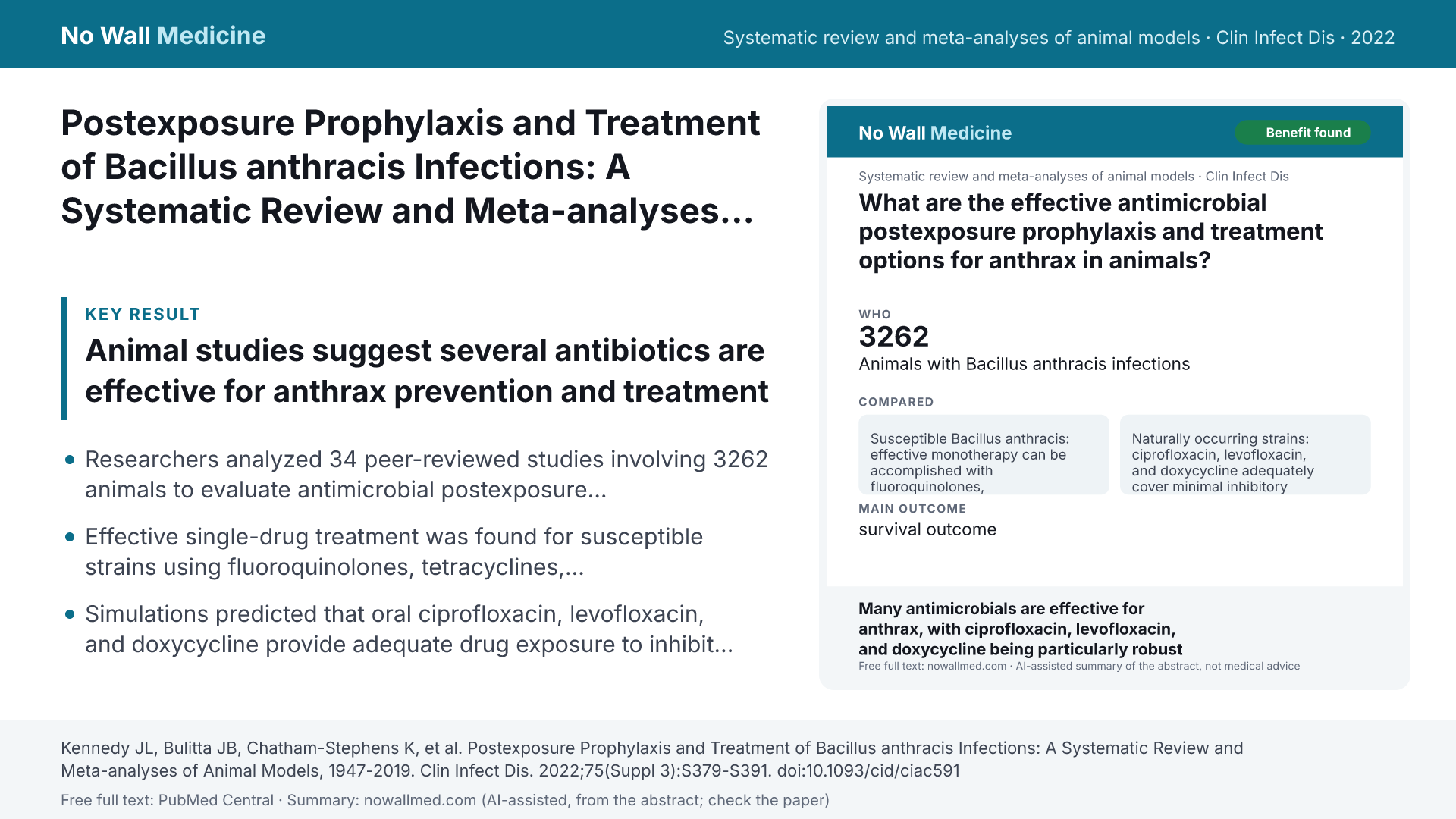
Animal studies suggest several antibiotics are effective for anthrax prevention and treatment
Postexposure Prophylaxis and Treatment of Bacillus anthracis Infections: A Systematic Review and Meta-analyses of Animal Models, 1947-2019
Systematic review and meta-analyses of animal modelsBenefit found
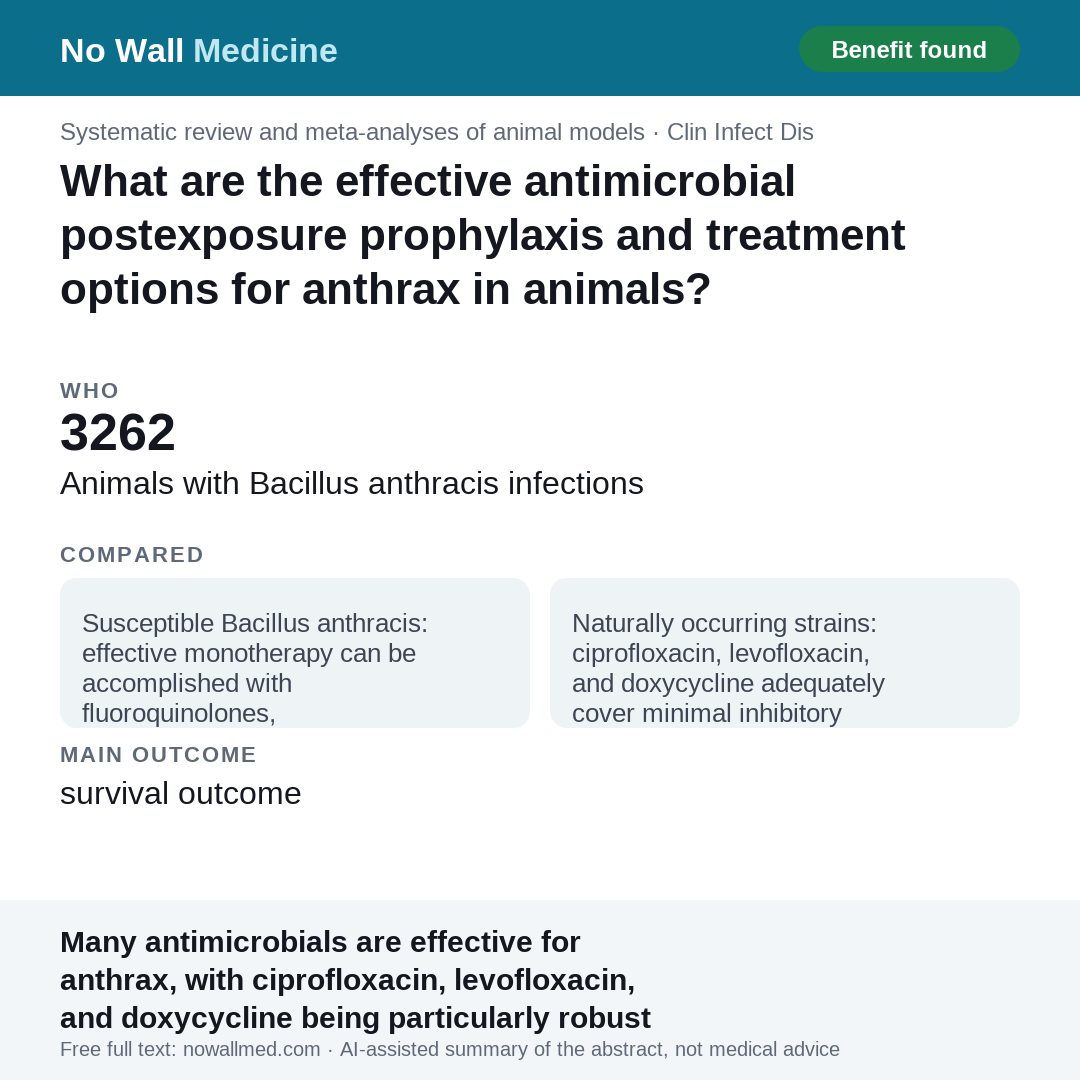
What are the effective antimicrobial postexposure prophylaxis and treatment options for anthrax in animals?
Who
3262
Animals with Bacillus anthracis infections
Compared
Susceptible Bacillus anthracis: effective monotherapy can be accomplished with fluoroquinolones, tetracyclines, beta-lactams, and lipopeptides or glycopeptides
Naturally occurring strains: ciprofloxacin, levofloxacin, and doxycycline adequately cover minimal inhibitory concentrations
Main outcome
survival outcome
Bottom line: Many antimicrobials are effective for anthrax, with ciprofloxacin, levofloxacin, and doxycycline being particularly robust choices.
Clin Infect Dis · 2022-10-17Download image
Clinical question: What are the effective antimicrobial postexposure prophylaxis and treatment options for anthrax in animals?
Why it matters: Clinical guidelines for preventing and treating anthrax infections in humans require information derived from animal treatment models.
Key points
- Researchers analyzed 34 peer-reviewed studies involving 3262 animals to evaluate antimicrobial postexposure prophylaxis (preventative medicine after exposure) and treatment for anthrax.
- Effective single-drug treatment was found for susceptible strains using fluoroquinolones, tetracyclines, beta-lactams, and lipopeptides or glycopeptides.
- Simulations predicted that oral ciprofloxacin, levofloxacin, and doxycycline provide adequate drug exposure to inhibit the growth of naturally occurring resistant strains.
Headline and key points written with AI from the paper’s abstract, with every number checked against it. Read the paper before relying on them.
Was this summary helpful?
Subject terms
Cite this article
Kennedy JL, Bulitta JB, Chatham-Stephens K, et al. Postexposure Prophylaxis and Treatment of Bacillus anthracis Infections: A Systematic Review and Meta-analyses of Animal Models, 1947-2019. Clin Infect Dis. 2022. doi:10.1093/cid/ciac591
Spotted a mistake? Suggest a correction