Systematic review of Mendelian randomization studies on risk of cancer
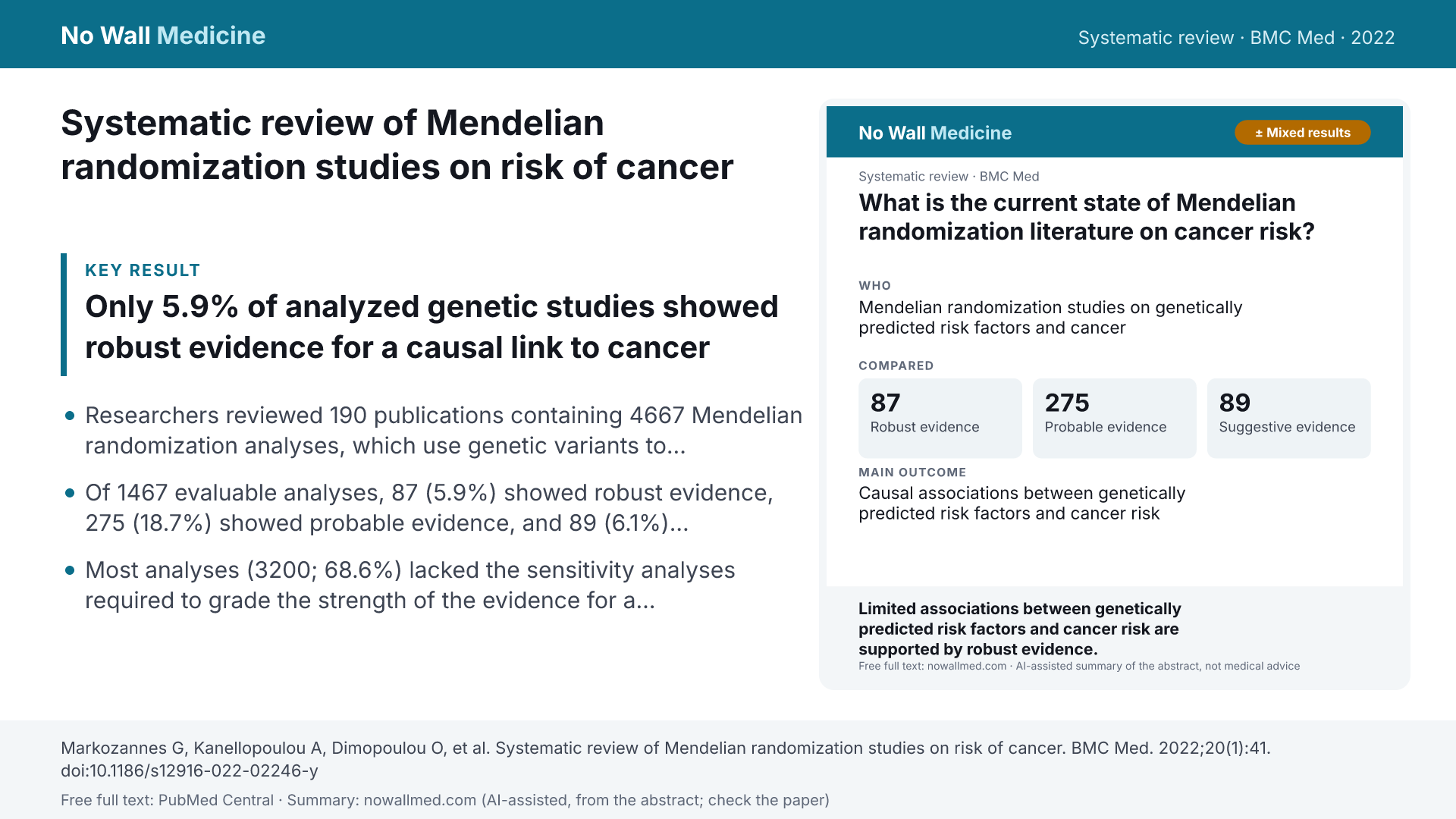
Key result: Only 5.9% of analyzed genetic studies showed robust evidence for a causal link to cancer

Key points
- Researchers reviewed 190 publications containing 4667 Mendelian randomization analyses, which use genetic variants to estimate if a risk factor causes a disease.
- Of 1467 evaluable analyses, 87 (5.9%) showed robust evidence, 275 (18.7%) showed probable evidence, and 89 (6.1%) showed suggestive evidence of causality.
- Most analyses (3200; 68.6%) lacked the sensitivity analyses required to grade the strength of the evidence for a causal link.
Why it matters: The strength and reliability of evidence linking genetically predicted risk factors to cancer risk remain unclear due to inconsistent reporting and analysis.
Limitation the authors note: Most analyses did not present the sensitivity analyses required for grading the evidence, making them non-evaluable.
Discussion prompts
- Would these patients look like yours? Who was left out?
- Is the main outcome one that matters to patients?
- Is the difference large enough to change what you do?
Cite: Markozannes G, Kanellopoulou A, Dimopoulou O, et al. Systematic review of Mendelian randomization studies on risk of cancer. BMC Med. 2022;20(1):41. doi:10.1186/s12916-022-02246-y
Free full text: PubMed Central · Summary and visual abstract: nowallmed.com/a/systematic-review-of-mendelian-randomization-studies-on-risk-of-14eh3pp/ (AI-assisted from the abstract; check the paper before relying on it).