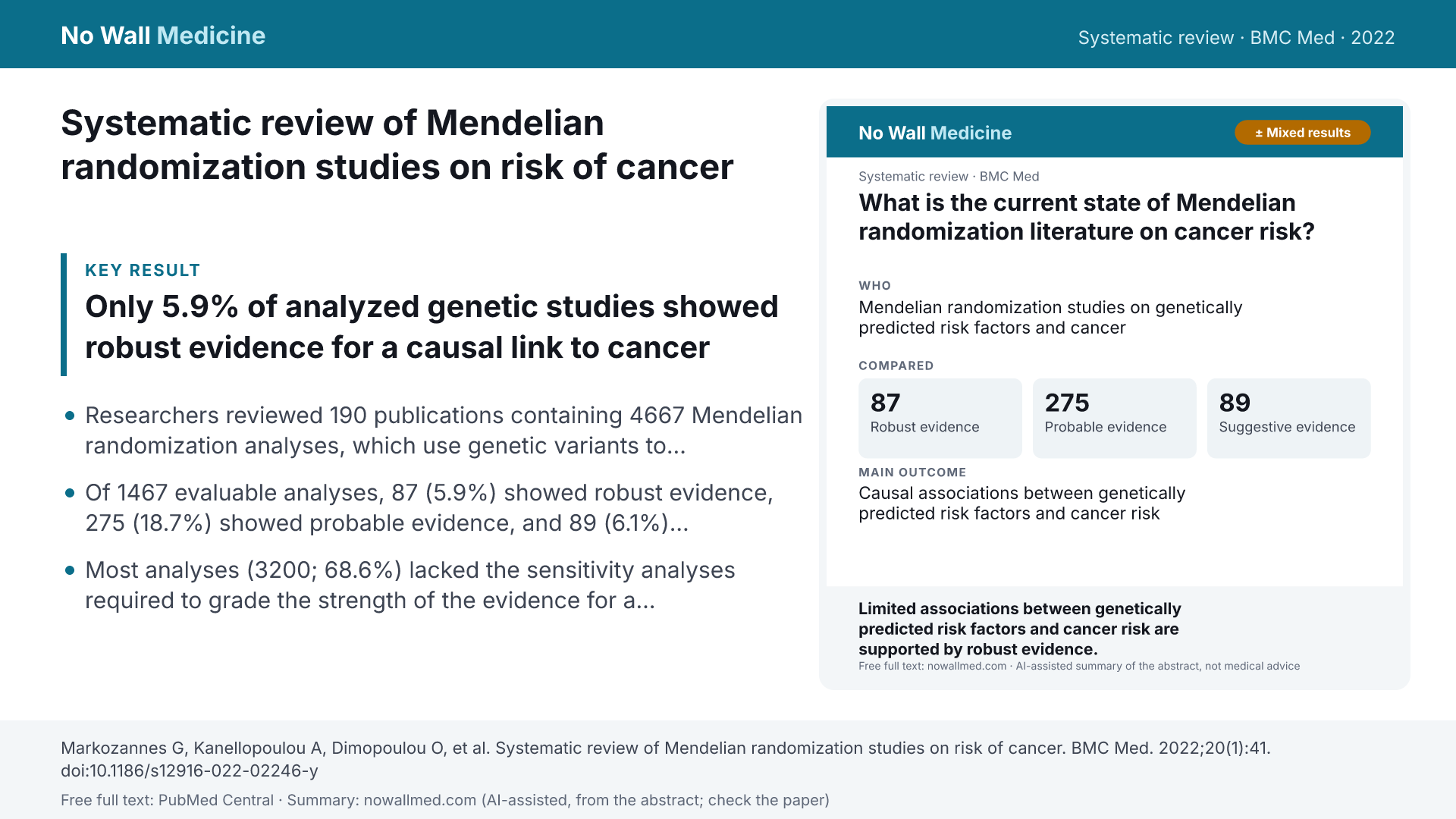
Only 5.9% of analyzed genetic studies showed robust evidence for a causal link to cancer
Systematic review of Mendelian randomization studies on risk of cancer
Systematic reviewMixed results
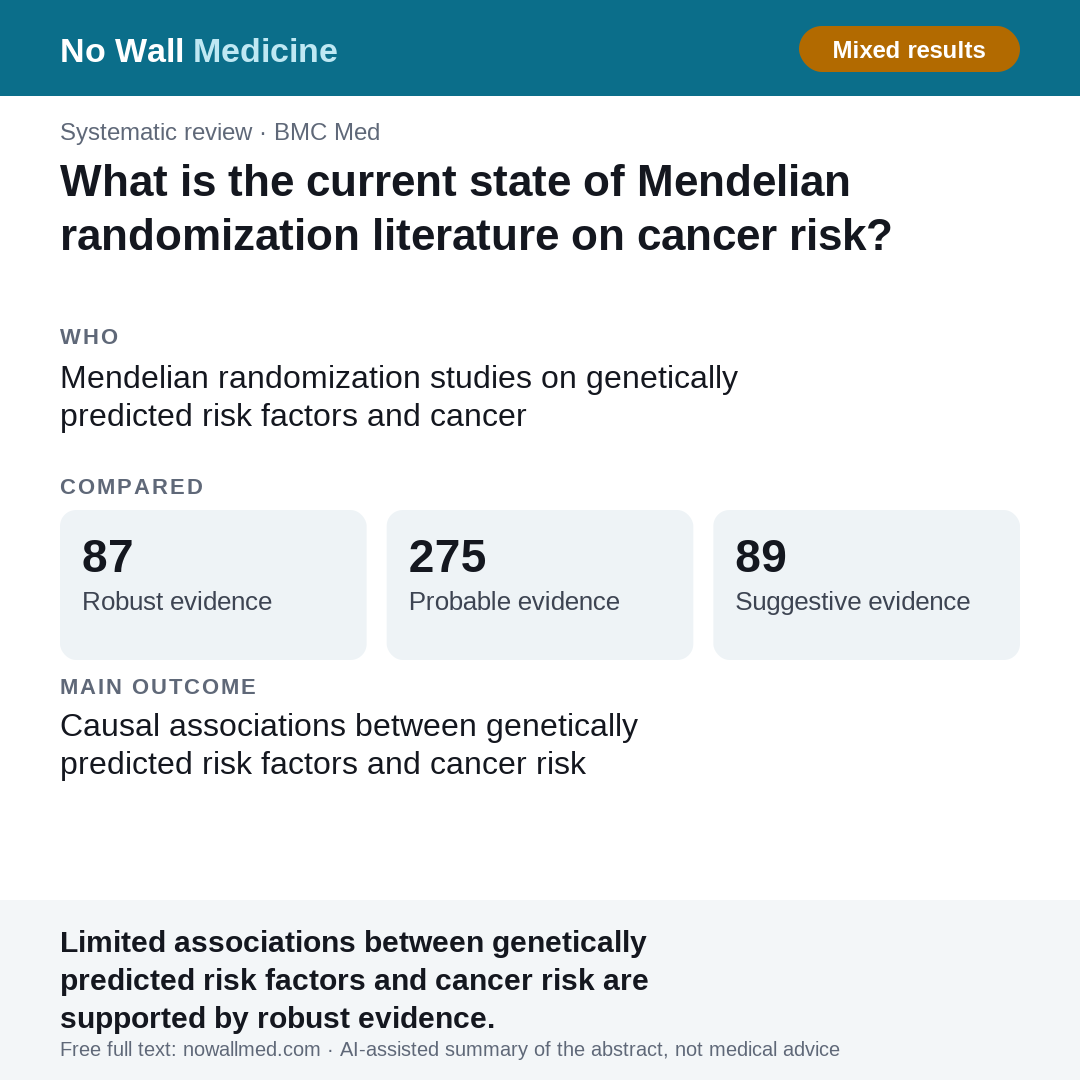
What is the current state of Mendelian randomization literature on cancer risk?
Who
Mendelian randomization studies on genetically predicted risk factors and cancer
Compared
87Robust evidence (5.9%)
275Probable evidence (18.7%)
89Suggestive evidence (6.1%)
Main outcome
Causal associations between genetically predicted risk factors and cancer risk
Bottom line: Limited associations between genetically predicted risk factors and cancer risk are supported by robust evidence.
Limitation: Most analyses lacked sensitivity analyses and were therefore non-evaluable.
BMC Med · 2022-02-02Download image
Clinical question: What is the current state of Mendelian randomization literature on cancer risk?
Why it matters: The strength and reliability of evidence linking genetically predicted risk factors to cancer risk remain unclear due to inconsistent reporting and analysis.
Key points
- Researchers reviewed 190 publications containing 4667 Mendelian randomization analyses, which use genetic variants to estimate if a risk factor causes a disease.
- Of 1467 evaluable analyses, 87 (5.9%) showed robust evidence, 275 (18.7%) showed probable evidence, and 89 (6.1%) showed suggestive evidence of causality.
- Most analyses (3200; 68.6%) lacked the sensitivity analyses required to grade the strength of the evidence for a causal link.
Limitation the authors note: Most analyses did not present the sensitivity analyses required for grading the evidence, making them non-evaluable.
Headline and key points written with AI from the paper’s abstract, with every number checked against it. Read the paper before relying on them.
Was this summary helpful?
Subject terms
Headline, design, result, key points, caveat and citation as plain text.
Cite this article
Markozannes G, Kanellopoulou A, Dimopoulou O, et al. Systematic review of Mendelian randomization studies on risk of cancer. BMC Med. 2022. doi:10.1186/s12916-022-02246-y
Spotted a mistake? Suggest a correction