Systematic review of reintervention with fenestrated or branched devices after failed previous endovascular aortic aneurysm repair
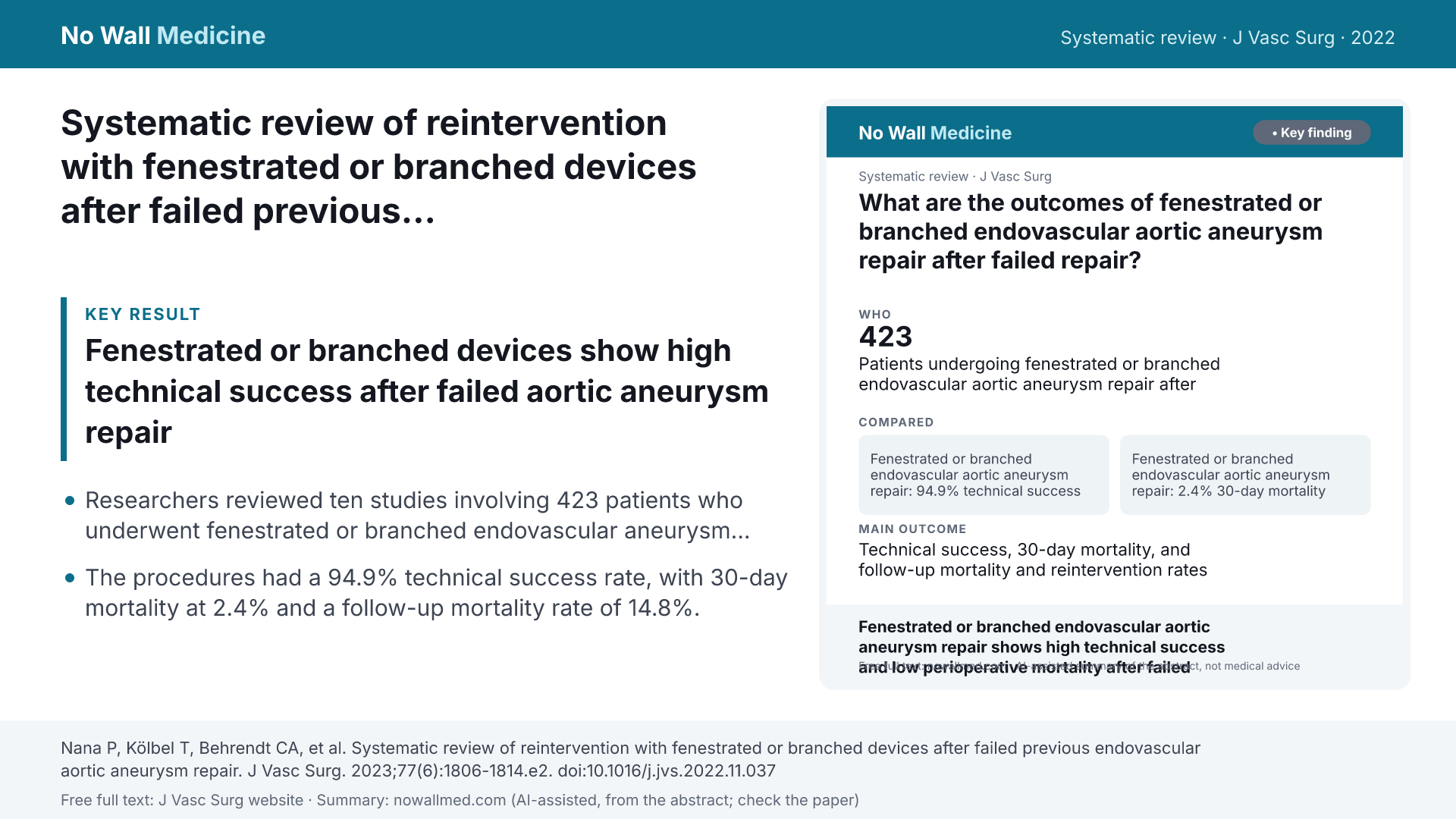
Key result: Fenestrated or branched devices show high technical success after failed aortic aneurysm repair
Key points
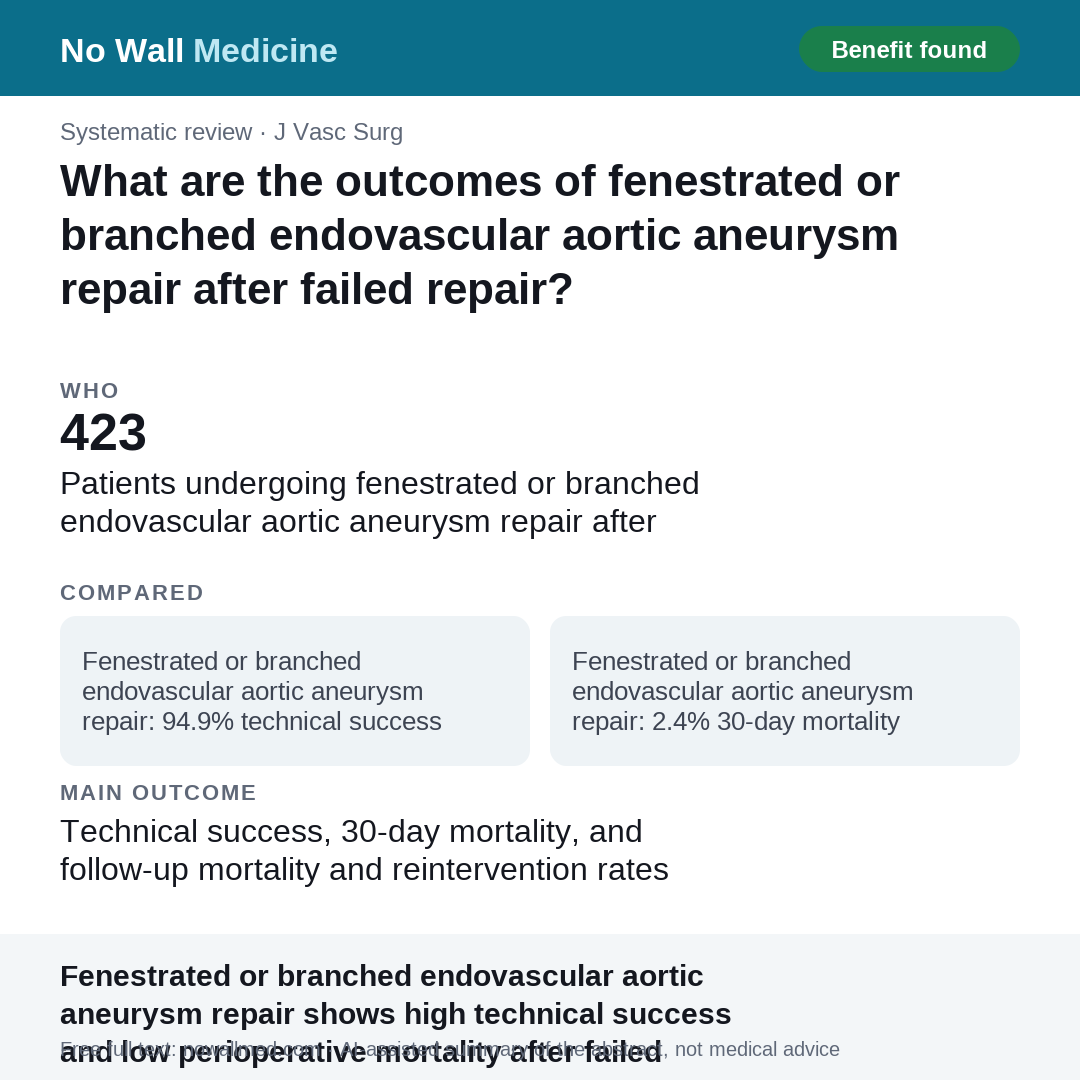
- Researchers reviewed ten studies involving 423 patients who underwent fenestrated or branched endovascular aneurysm repair after a previous repair failed.
- The procedures had a 94.9% technical success rate, with 30-day mortality at 2.4% and a follow-up mortality rate of 14.8%.
- During follow-up, 16.5% of procedures required reintervention, and 6.8% of patients experienced acute kidney injury, which is sudden loss of kidney function.
Why it matters: It was unknown how successful and safe fenestrated or branched endovascular techniques are for patients whose initial abdominal aortic aneurysm repair has failed.
Limitation the authors note: The authors state that further data are needed to provide firm conclusions regarding the safety and durability of these procedures.
Discussion prompts
- Would these patients look like yours? Who was left out?
- Is the main outcome one that matters to patients?
- Is the difference large enough to change what you do?
Cite: Nana P, Kölbel T, Behrendt CA, et al. Systematic review of reintervention with fenestrated or branched devices after failed previous endovascular aortic aneurysm repair. J Vasc Surg. 2022. doi:10.1016/j.jvs.2022.11.037
Free full text: J Vasc Surg website · Summary and visual abstract: nowallmed.com/a/systematic-review-of-reintervention-with-fenestrated-or-branched-1o731vm/ (AI-assisted from the abstract; check the paper before relying on it).