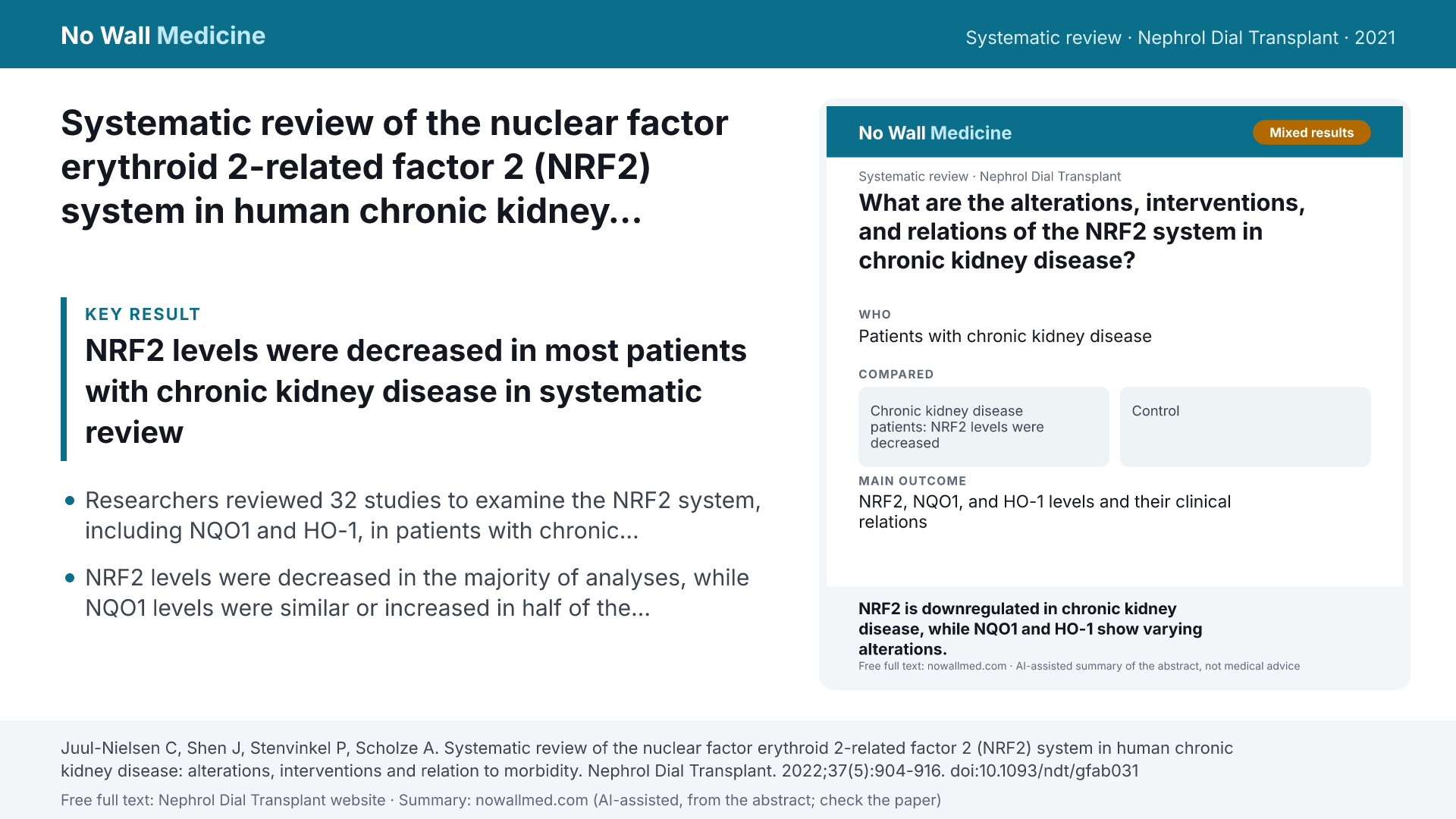
Systematic review of the nuclear factor erythroid 2-related factor 2 (NRF2) system in human chronic kidney disease: alterations, interventions and relation to morbidity
Key result: NRF2 levels were decreased in most patients with chronic kidney disease in systematic review
Key points
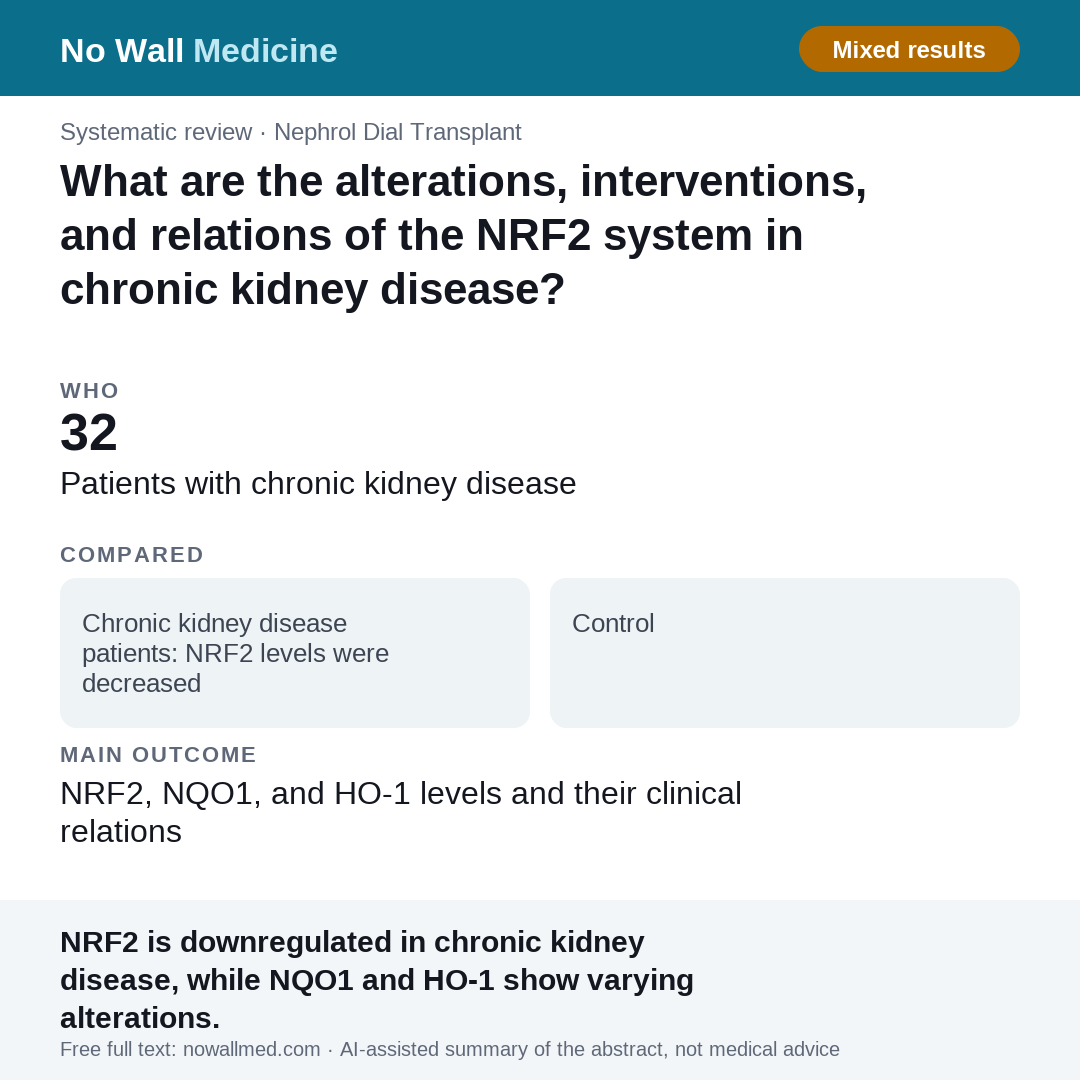
- Researchers reviewed 32 studies to examine the NRF2 system, including NQO1 and HO-1, in patients with chronic kidney disease.
- NRF2 levels were decreased in the majority of analyses, while NQO1 levels were similar or increased in half of the analyses and decreased in the other half.
- Two-thirds of intervention studies, including 50% involving dietary changes like resistant starch, reported an increase in NRF2, NQO1, or HO-1.
Why it matters: The status of the NRF2 system, its response to interventions, and its relationship to clinical parameters in chronic kidney disease were not fully established.
Discussion prompts
- Would these patients look like yours? Who was left out?
- Is the main outcome one that matters to patients?
- Is the difference large enough to change what you do?
Cite: Juul-Nielsen C, Shen J, Stenvinkel P, Scholze A. Systematic review of the nuclear factor erythroid 2-related factor 2 (NRF2) system in human chronic kidney disease: alterations, interventions and relation to morbidity. Nephrol Dial Transplant. 2021. doi:10.1093/ndt/gfab031
Free full text: Nephrol Dial Transplant website · Summary and visual abstract: nowallmed.com/a/systematic-review-of-the-nuclear-factor-erythroid-2-related-factor-2-1m4oxen/ (AI-assisted from the abstract; check the paper before relying on it).