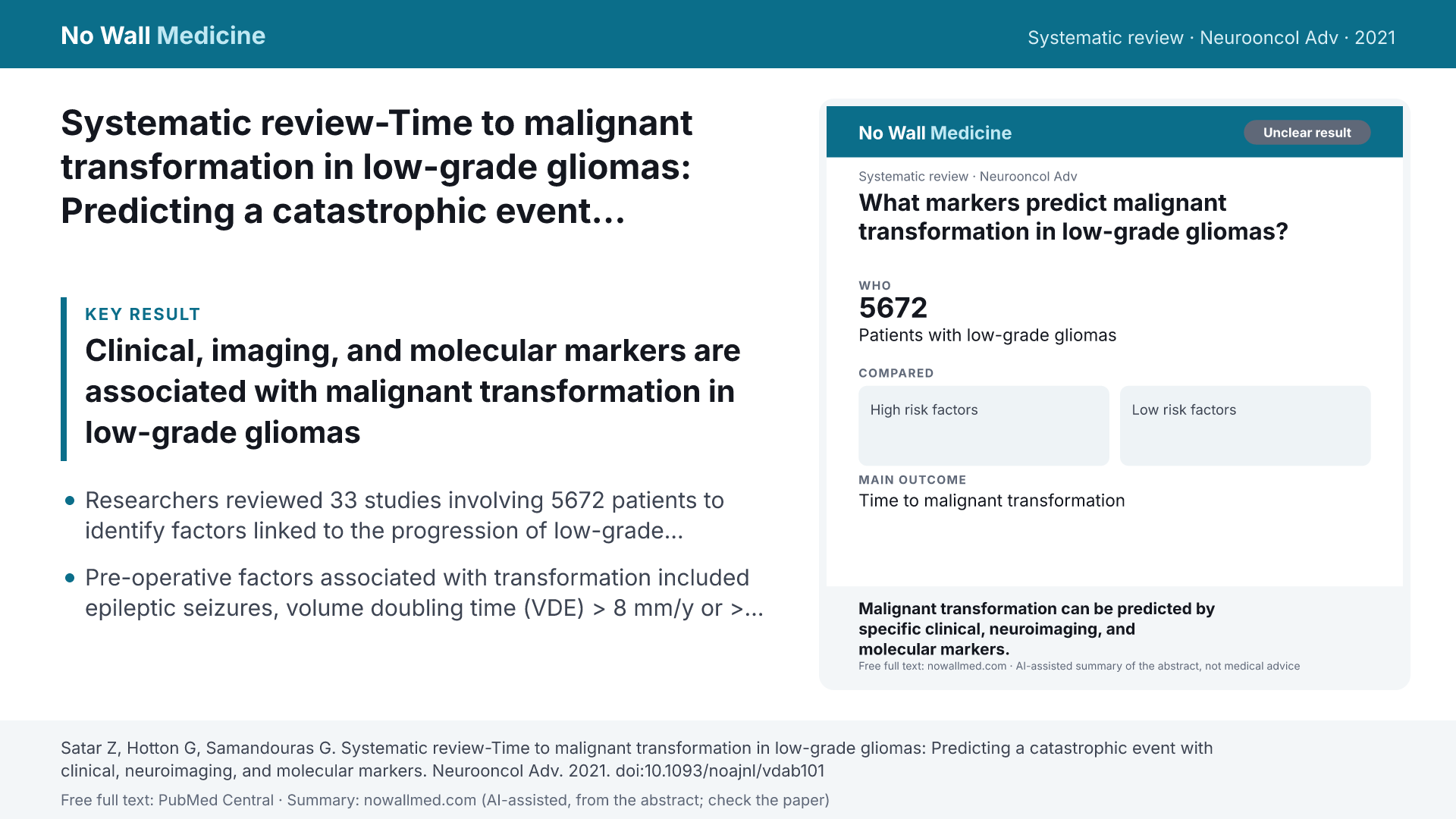
Systematic review-Time to malignant transformation in low-grade gliomas: Predicting a catastrophic event with clinical, neuroimaging, and molecular markers
Key result: Clinical, imaging, and molecular markers are associated with malignant transformation in low-grade gliomas
Key points
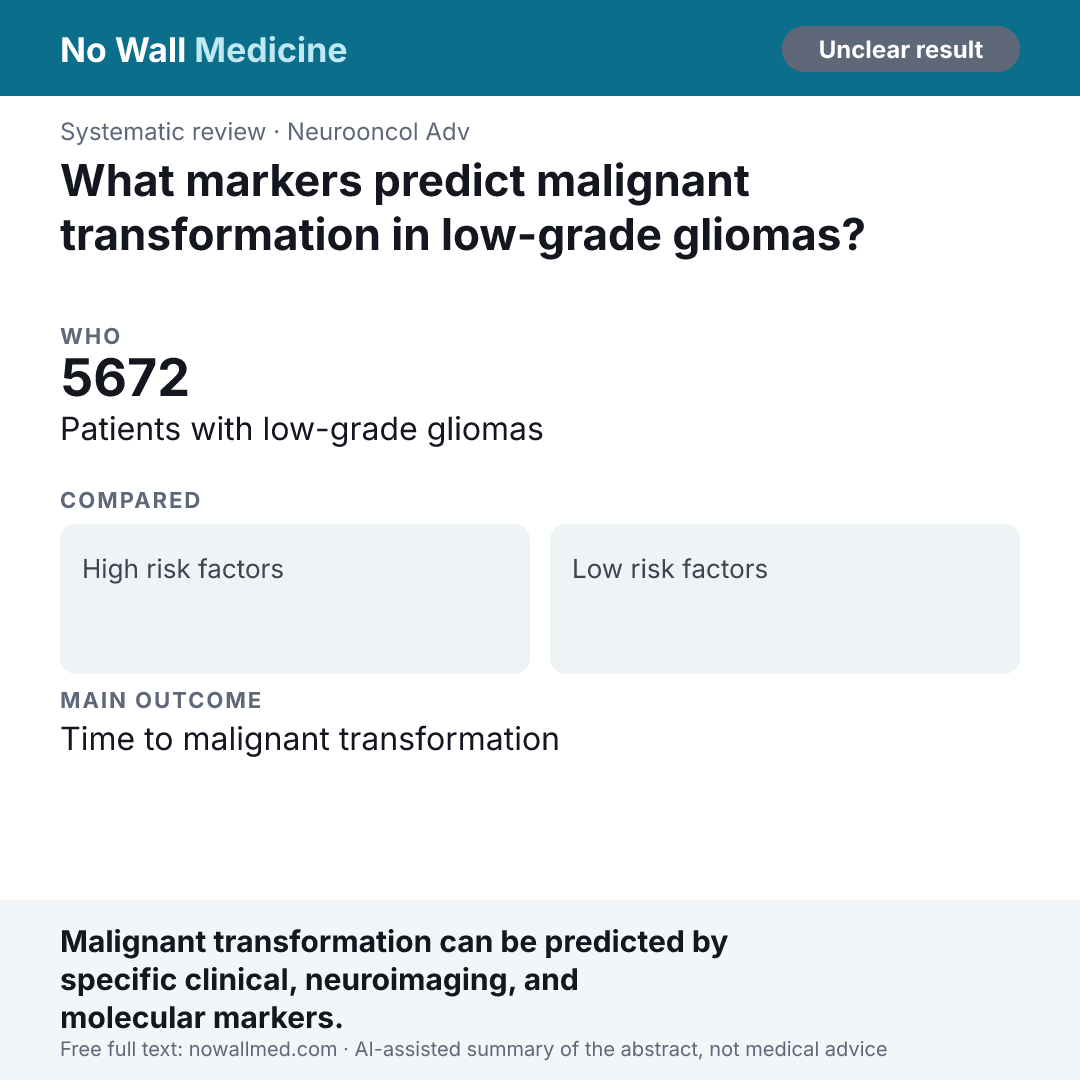
- Researchers reviewed 33 studies involving 5672 patients to identify factors linked to the progression of low-grade gliomas to higher grades.
- Pre-operative factors associated with transformation included epileptic seizures, volume doubling time (VDE) > 8 mm/y or > 4 mm/y, relative cerebral blood volume (rCBV) > 1.75, tumor volume (PTV) ≥ 5 cm (65 ml) or ≥ 100 ml, and cortical involvement.
- Post-operative factors associated with transformation included IDH-wildtype status, TP53 mutation, and temozolomide monotherapy.
Why it matters: It is currently difficult to predict when low-grade gliomas will transform into more aggressive malignant tumors to guide timing of medical interventions.
Discussion prompts
- Would these patients look like yours? Who was left out?
- Is the main outcome one that matters to patients?
- Is the difference large enough to change what you do?
Cite: Satar Z, Hotton G, Samandouras G. Systematic review-Time to malignant transformation in low-grade gliomas: Predicting a catastrophic event with clinical, neuroimaging, and molecular markers. Neurooncol Adv. 2021. doi:10.1093/noajnl/vdab101
Free full text: PubMed Central · Summary and visual abstract: nowallmed.com/a/systematic-review-time-to-malignant-transformation-in-low-grade-1miebtm/ (AI-assisted from the abstract; check the paper before relying on it).