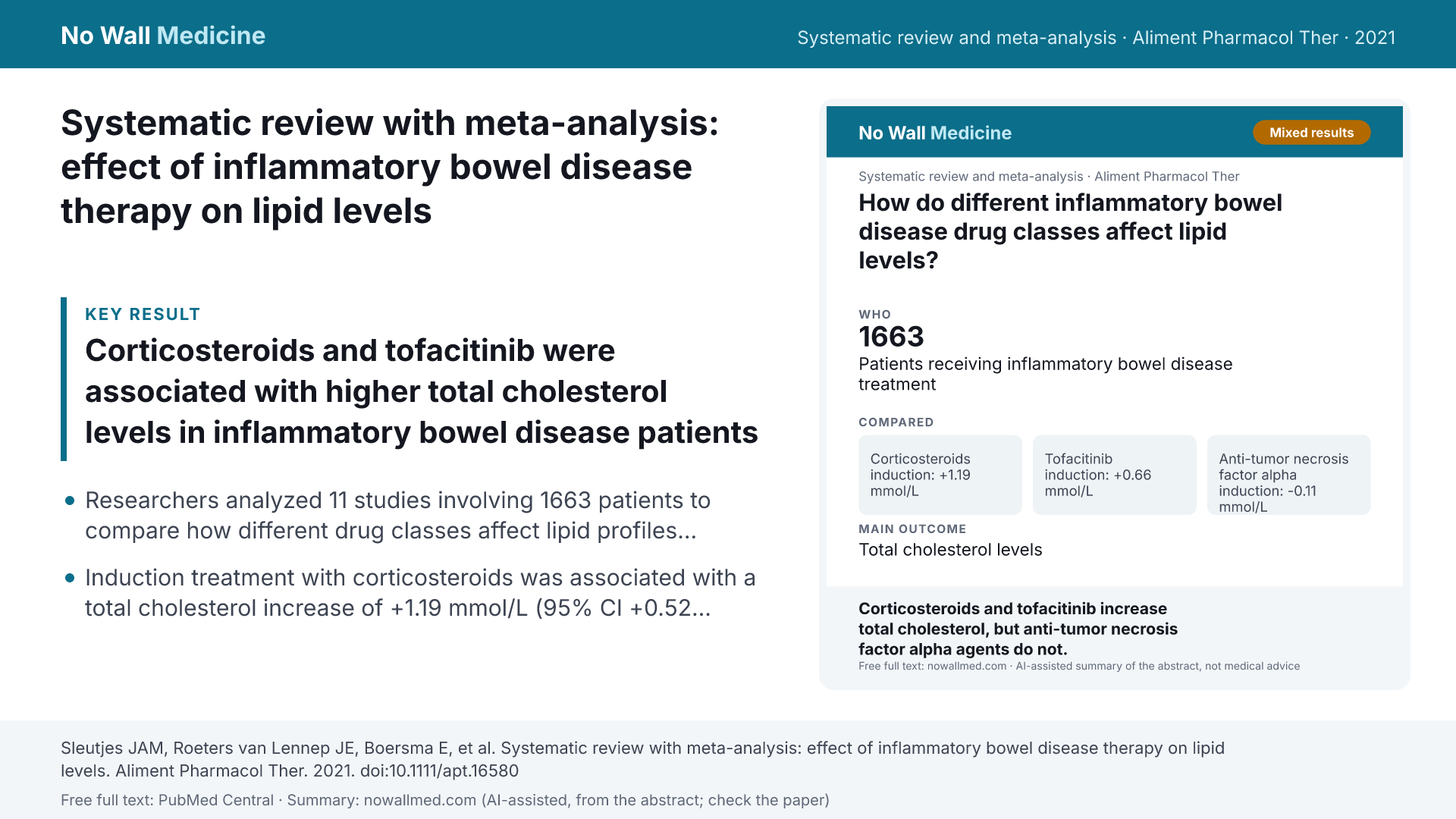
Systematic review with meta-analysis: effect of inflammatory bowel disease therapy on lipid levels
Key result: Corticosteroids and tofacitinib were associated with higher total cholesterol levels in inflammatory bowel disease patients
Key points
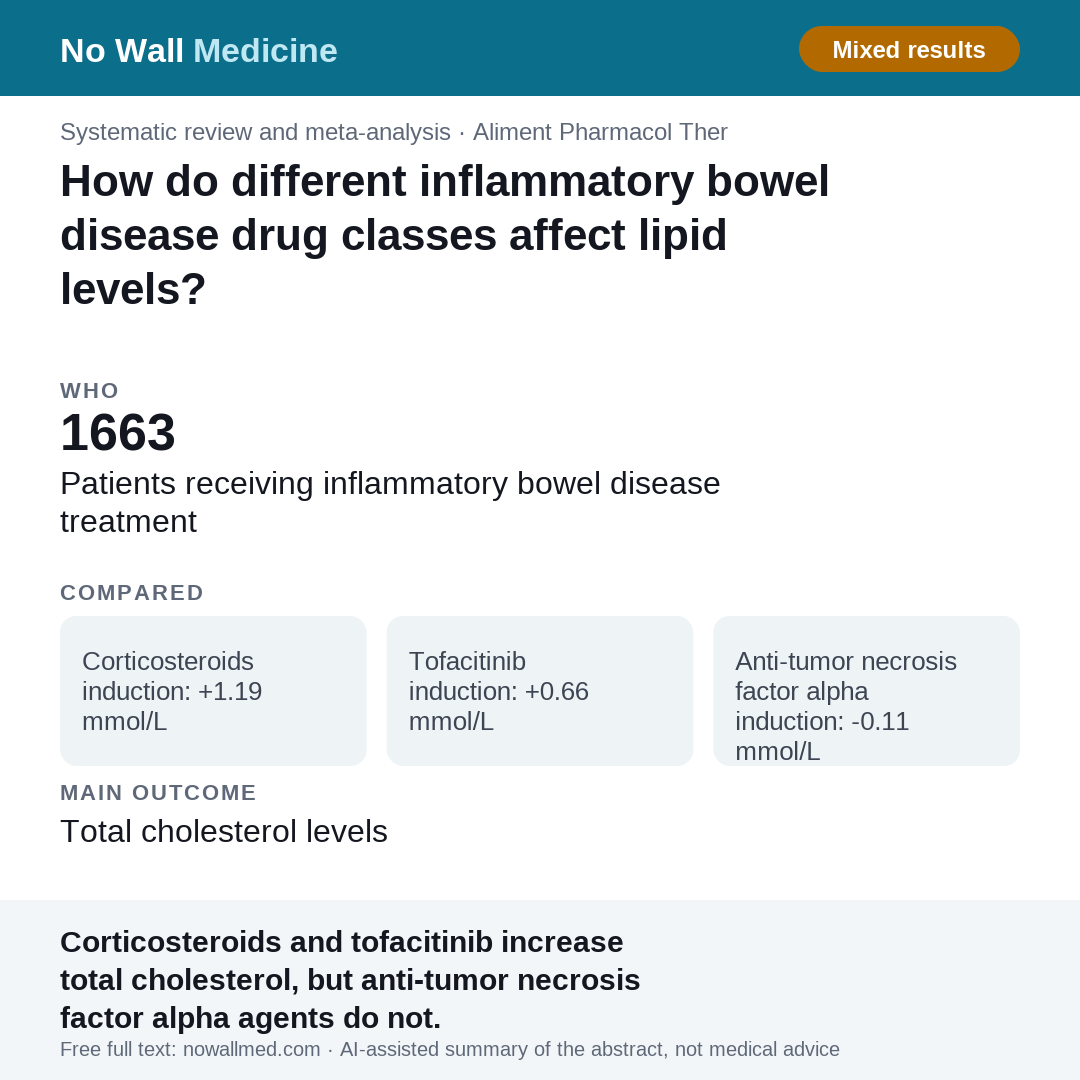
- Researchers analyzed 11 studies involving 1663 patients to compare how different drug classes affect lipid profiles during induction and maintenance of inflammatory bowel disease treatment.
- Induction treatment with corticosteroids was associated with a total cholesterol increase of +1.19 mmol/L (95% CI +0.52 to +2.59) and tofacitinib with an increase of +0.66 mmol/L (95% CI +0.42 to +0.79).
- Total cholesterol changes were not associated with anti-TNFα treatment, which showed a change of -0.11 mmol/L (95% CI -0.26 to +0.36 mmol/L).
Why it matters: It was unknown if the reported increase in lipid levels was similar across all different classes of drugs used to treat inflammatory bowel disease.
Discussion prompts
- Would these patients look like yours? Who was left out?
- Is the main outcome one that matters to patients?
- Is the difference large enough to change what you do?
Cite: Sleutjes JAM, Roeters van Lennep JE, Boersma E, Menchen LA, Laudes M, Farkas K. Systematic review with meta-analysis: effect of inflammatory bowel disease therapy on lipid levels. Aliment Pharmacol Ther. 2021. doi:10.1111/apt.16580
Free full text: PubMed Central · Summary and visual abstract: nowallmed.com/a/systematic-review-with-meta-analysis-effect-of-inflammatory-bowel-149s0ba/ (AI-assisted from the abstract; check the paper before relying on it).