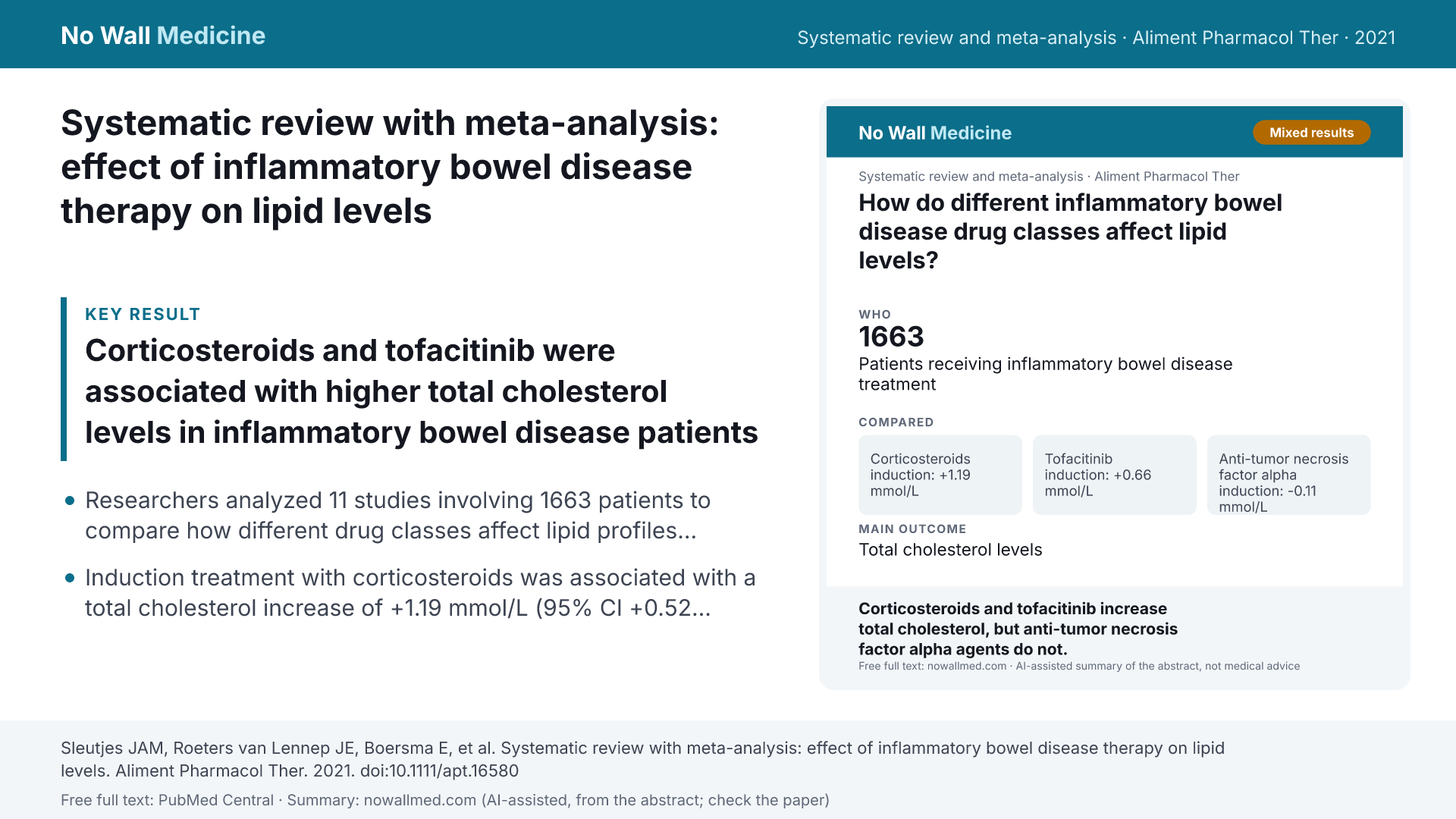
Corticosteroids and tofacitinib were associated with higher total cholesterol levels in inflammatory bowel disease patients
Systematic review with meta-analysis: effect of inflammatory bowel disease therapy on lipid levels
Systematic review and meta-analysisMixed results
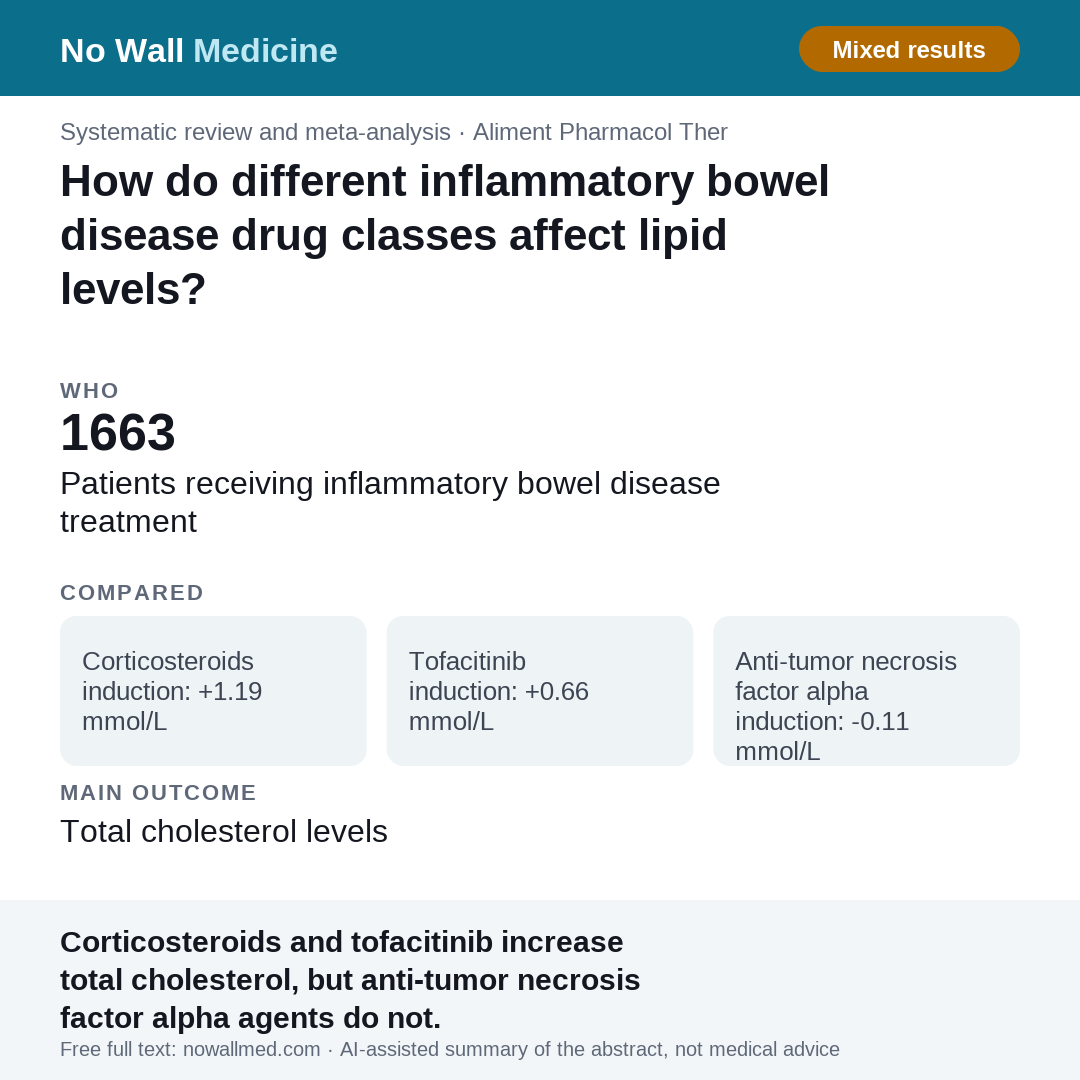
How do different inflammatory bowel disease drug classes affect lipid levels?
Who
1663
Patients receiving inflammatory bowel disease treatment
Compared
Corticosteroids induction: +1.19 mmol/L
Tofacitinib induction: +0.66 mmol/L
Anti-tumor necrosis factor alpha induction: -0.11 mmol/L
Main outcome
Total cholesterol levels
Bottom line: Corticosteroids and tofacitinib increase total cholesterol, but anti-tumor necrosis factor alpha agents do not.
Limitation: Whether total cholesterol change associated with treatment affects cardiovascular risk requires further study.
Aliment Pharmacol Ther · 2021-08-28Download image
Clinical question: How do different inflammatory bowel disease drug classes affect lipid levels?
Why it matters: It was unknown if the reported increase in lipid levels was similar across all different classes of drugs used to treat inflammatory bowel disease.
Key points
- Researchers analyzed 11 studies involving 1663 patients to compare how different drug classes affect lipid profiles during induction and maintenance of inflammatory bowel disease treatment.
- Induction treatment with corticosteroids was associated with a total cholesterol increase of +1.19 mmol/L (95% CI +0.52 to +2.59) and tofacitinib with an increase of +0.66 mmol/L (95% CI +0.42 to +0.79).
- Total cholesterol changes were not associated with anti-TNFα treatment, which showed a change of -0.11 mmol/L (95% CI -0.26 to +0.36 mmol/L).
Headline and key points written with AI from the paper’s abstract, with every number checked against it. Read the paper before relying on them.
Was this summary helpful?
Subject terms
Cite this article
Sleutjes JAM, Roeters van Lennep JE, Boersma E, Menchen LA, Laudes M, Farkas K. Systematic review with meta-analysis: effect of inflammatory bowel disease therapy on lipid levels. Aliment Pharmacol Ther. 2021. doi:10.1111/apt.16580
Spotted a mistake? Suggest a correction
Top studies every Monday
The week’s key trials and guidelines in your specialties, plus any topics you follow. By email, free.
Get the weekly digest