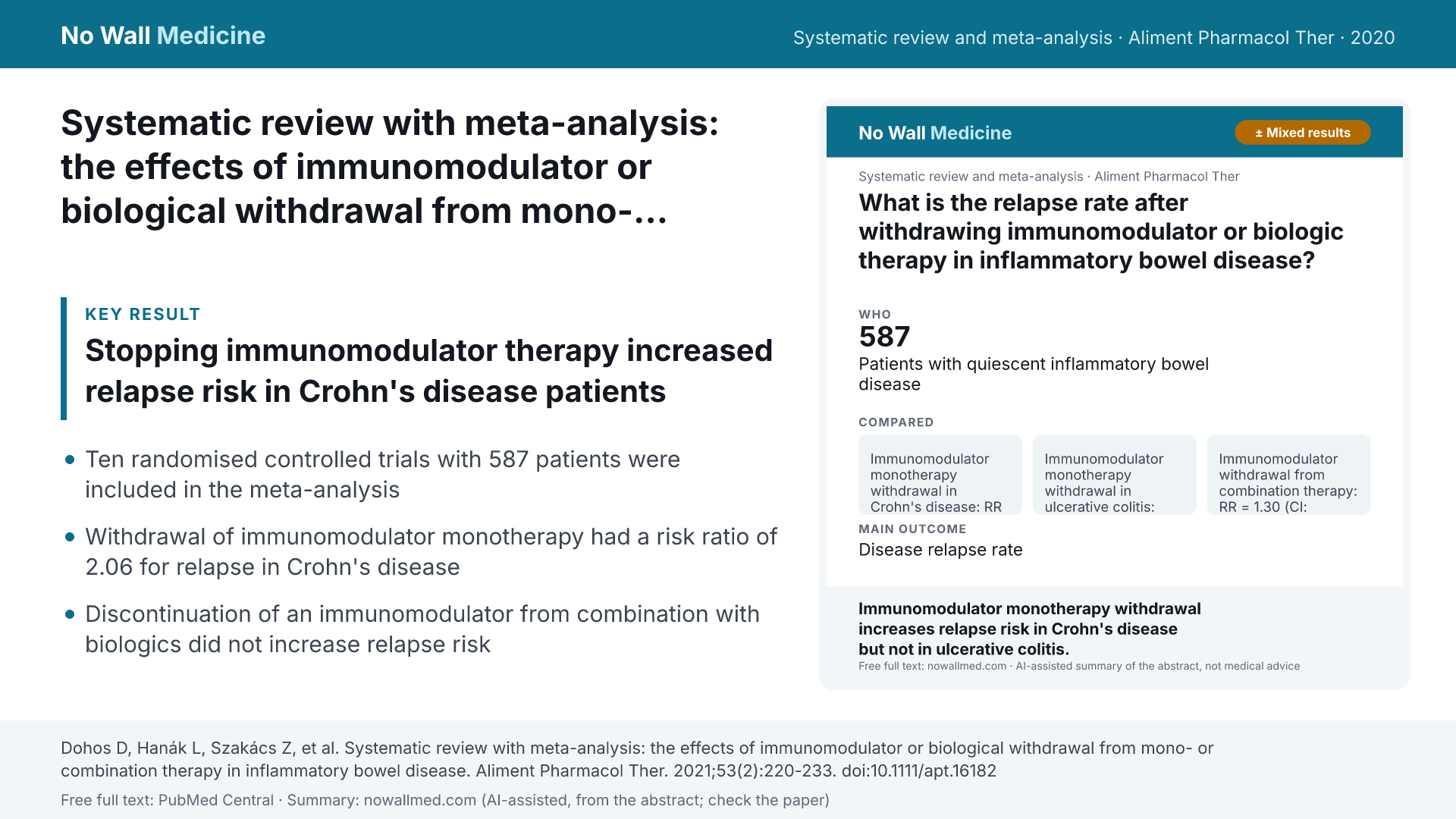
Stopping immunomodulator therapy increased relapse risk in Crohn's disease patients
Systematic review with meta-analysis: the effects of immunomodulator or biological withdrawal from mono- or combination therapy in inflammatory bowel disease
Systematic review and meta-analysisMixed results
What is the relapse rate after withdrawing immunomodulator or biologic therapy in inflammatory bowel disease?
Who
587
Patients with quiescent inflammatory bowel disease
Compared
Immunomodulator monotherapy withdrawal in Crohn's disease: RR = 2.06 (CI: 1.53-2.77)
Immunomodulator monotherapy withdrawal in ulcerative colitis: RR = 1.39 (CI: 0.85-2.26)
Immunomodulator withdrawal from combination therapy: RR = 1.30 (CI: 0.81-2.08)
Main outcome
Disease relapse rate
Result: RR = 2.06 (95% CI 1.53 to 2.77) for Crohn's disease immunomodulator withdrawal
Bottom line: Immunomodulator monotherapy withdrawal increases relapse risk in Crohn's disease but not in ulcerative colitis.
Aliment Pharmacol Ther · 2020-11-28Download image
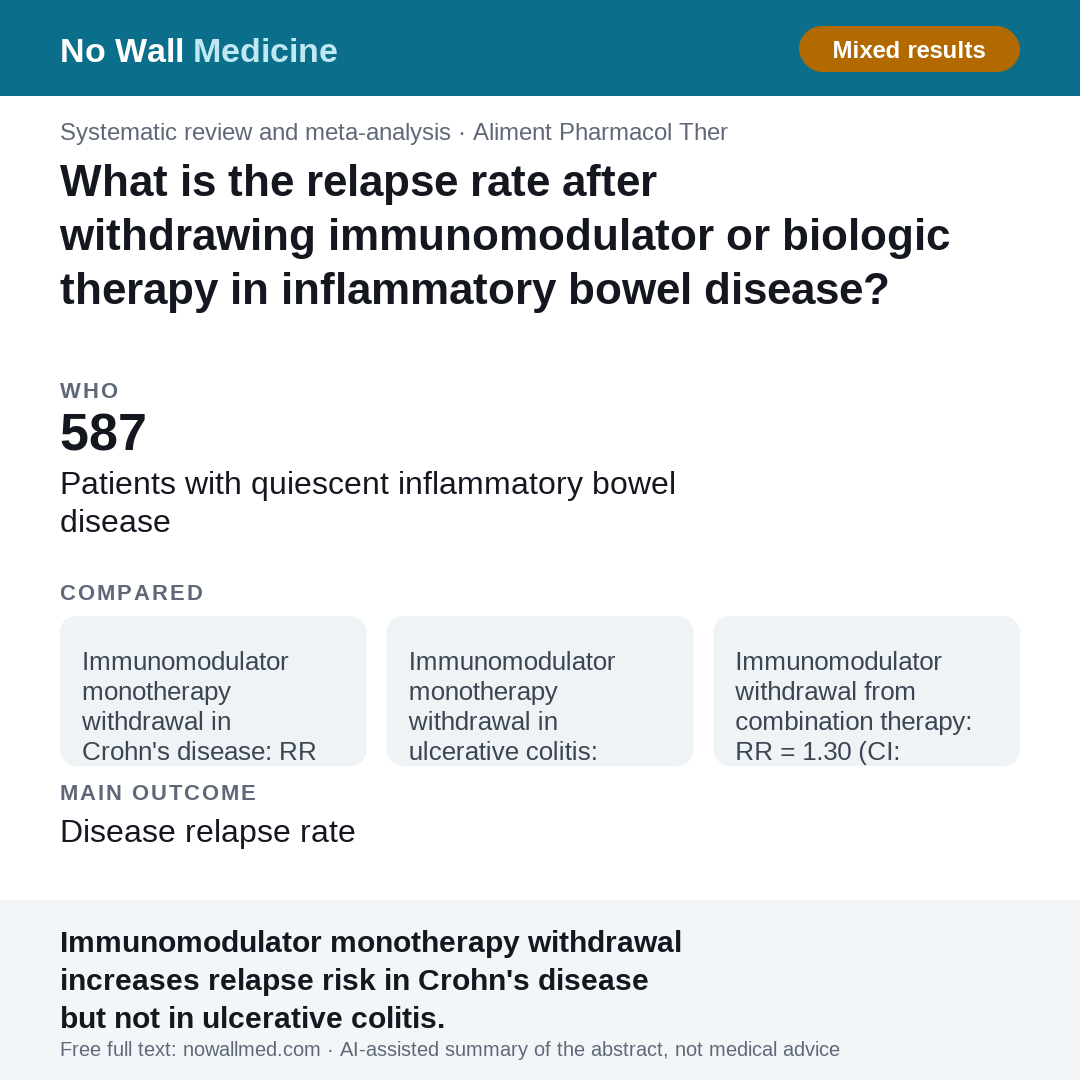
Clinical question: What is the relapse rate after withdrawing immunomodulator or biologic therapy in inflammatory bowel disease?
Why it matters: It was unknown whether stopping immunomodulator or biologic therapy would increase relapse risk in inflammatory bowel disease
Key points
- Ten randomised controlled trials with 587 patients were included in the meta-analysis.
- Withdrawal of immunomodulator monotherapy had a risk ratio of 2.06 for relapse in Crohn's disease.
- Discontinuation of an immunomodulator from combination with biologics did not increase relapse risk.
Headline and key points written with AI from the paper’s abstract, with every number checked against it. Read the paper before relying on them.
Was this summary helpful?
Subject terms
Cite this article
Dohos D, Hanák L, Szakács Z, Kiss S, Párniczky A, Erőss B. Systematic review with meta-analysis: the effects of immunomodulator or biological withdrawal from mono- or combination therapy in inflammatory bowel disease. Aliment Pharmacol Ther. 2020. doi:10.1111/apt.16182
Spotted a mistake? Suggest a correction
Top studies every Monday
The week’s key trials and guidelines in your specialties, plus any topics you follow. By email, free.
Get the weekly digest