Surgery type is associated with varying risks of blood clots and major bleeding
Systematic Reviews and Meta-analyses of the Procedure-specific Risks of Thrombosis and Bleeding in General Abdominal, Colorectal, Upper Gastrointestinal, and Hepatopancreatobiliary Surgery
Meta-analysis of 285 observational studiesMixed results
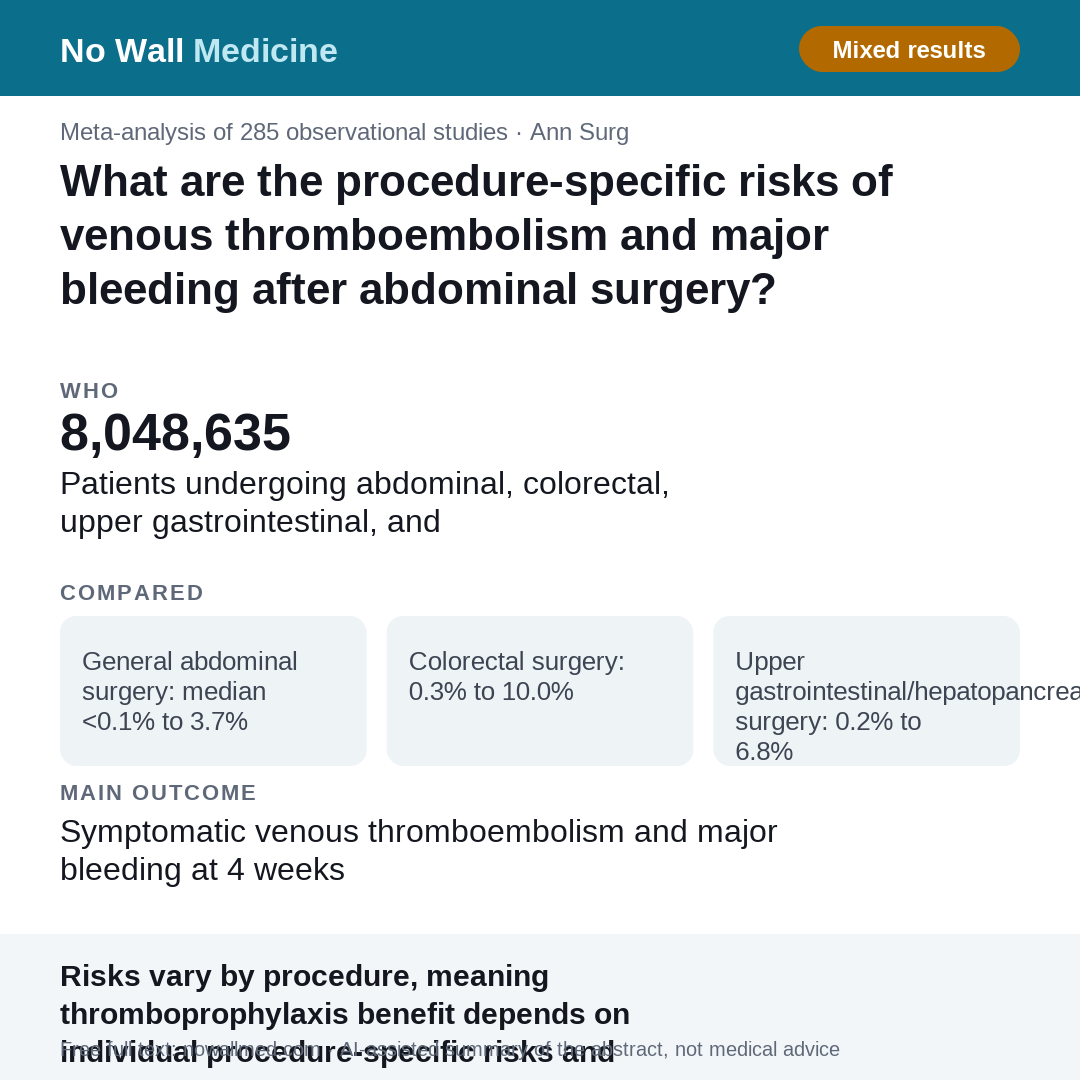
What are the procedure-specific risks of venous thromboembolism and major bleeding after abdominal surgery?
Who
8,048,635
Patients undergoing abdominal, colorectal, upper gastrointestinal, and hepatopancreatobiliary surgery
Compared
General abdominal surgery: median <0.1% to 3.7%
Colorectal surgery: 0.3% to 10.0%
Upper gastrointestinal/hepatopancreatobiliary surgery: 0.2% to 6.8%
Main outcome
Symptomatic venous thromboembolism and major bleeding at 4 weeks
Bottom line: Risks vary by procedure, meaning thromboprophylaxis benefit depends on individual procedure-specific risks and patient preferences.
Ann Surg · 2023-08-08Download image
Clinical question: What are the procedure-specific risks of venous thromboembolism and major bleeding after abdominal surgery?
Why it matters: The magnitude of risks for blood clots and bleeding varies between different surgical procedures, making the trade-off of using blood-thinning medication uncertain.
Key points
- Researchers analyzed 285 studies involving 8,048,635 patients to estimate risks of venous thromboembolism (blood clots) and major bleeding after different abdominal surgeries.
- Median blood clot risks ranged from <0.1% in laparoscopic gallbladder removal to 10.0% in emergency open total proctocolectomy.
- The risk of blood clots varied from 0.2% in laparoscopic sleeve gastrectomy to 6.8% in open distal pancreatectomy for cancer.
Limitation the authors note: Evidence certainty was generally moderate or low for blood clots and low or very low for bleeding requiring reintervention.
Headline and key points written with AI from the paper’s abstract, with every number checked against it. Read the paper before relying on them.
Was this summary helpful?
Subject terms
Cite this article
Lavikainen LI, Guyatt GH, Sallinen VJ, Karanicolas PJ, Couban RJ, Singh T. Systematic Reviews and Meta-analyses of the Procedure-specific Risks of Thrombosis and Bleeding in General Abdominal, Colorectal, Upper Gastrointestinal, and Hepatopancreatobiliary Surgery. Ann Surg. 2023. doi:10.1097/SLA.0000000000006059
Spotted a mistake? Suggest a correction
Top studies every Monday
The week’s key trials and guidelines in your specialties, plus any topics you follow. By email, free.
Get the weekly digest