High-dose upadacitinib was highly effective but also among the most harmful for eczema
Systemic treatments for atopic dermatitis (eczema): Systematic review and network meta-analysis of randomized trials
Systematic review and network meta-analysisMixed results
What are the comparative benefits and harms of systemic treatments for atopic dermatitis?
Who
28,686
Patients with moderate-to-severe atopic dermatitis
Compared
High-dose upadacitinib: among the most effective for 5 of 6 patient-important outcomes
Dupilumab, lebrikizumab, and tralokinumab: intermediate effectiveness and among the safest
Main outcome
Atopic dermatitis severity, itch, sleep, quality of life, flares, and harms
Bottom line: High-dose Janus kinase inhibitors are highly effective but more harmful, while monoclonal antibodies offer intermediate effectiveness with favorable safety.
Limitation: Efficacy and safety of several treatments like azathioprine and oral corticosteroids are less certain.
JACI · 2023-09-09Download image
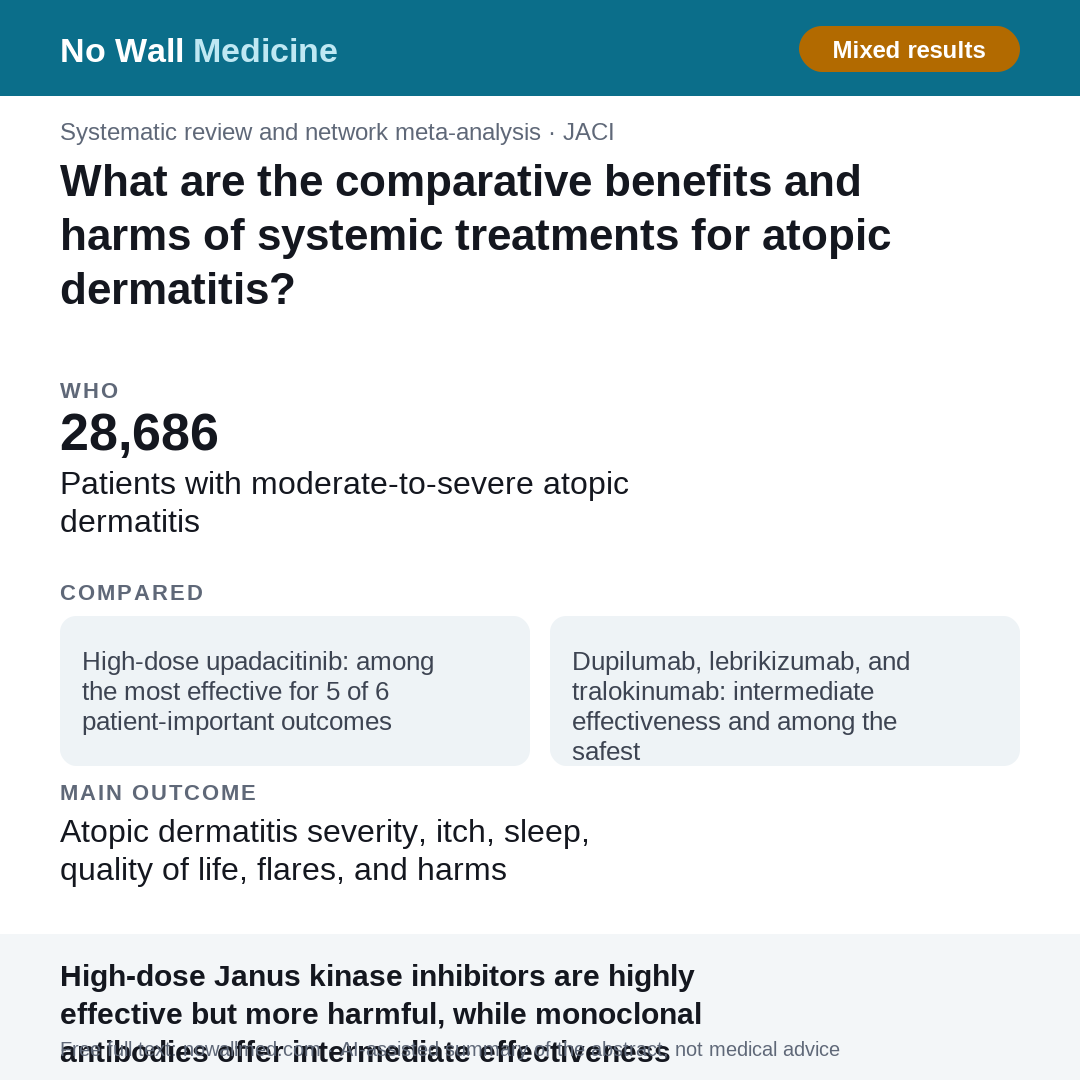
Clinical question: What are the comparative benefits and harms of systemic treatments for atopic dermatitis?
Why it matters: There is uncertainty regarding the comparative impact of different systemic treatments on outcomes for people with atopic dermatitis.
Key points
- Researchers analyzed 149 randomized trials involving 28,686 patients with moderate-to-severe atopic dermatitis, an inflammatory skin condition.
- High-dose upadacitinib was among the most effective for 5 of 6 patient-important outcomes but was also among the most harmful in increasing adverse events.
- Dupilumab, lebrikizumab, and tralokinumab showed intermediate effectiveness and were among the safest, though they modestly increased conjunctivitis, or eye inflammation.
Headline and key points written with AI from the paper’s abstract, with every number checked against it. Read the paper before relying on them.
Topics
Cite this article
Chu AWL, Wong MM, Rayner DG, Guyatt GH, Díaz Martinez JP, Ceccacci R. Systemic treatments for atopic dermatitis (eczema): Systematic review and network meta-analysis of randomized trials. JACI. 2023. doi:10.1016/j.jaci.2023.08.029
Spotted a mistake? Suggest a correction
Top studies every Monday
The week’s key trials and guidelines in your specialties, plus any topics you follow. By email, free.
Get the weekly digest