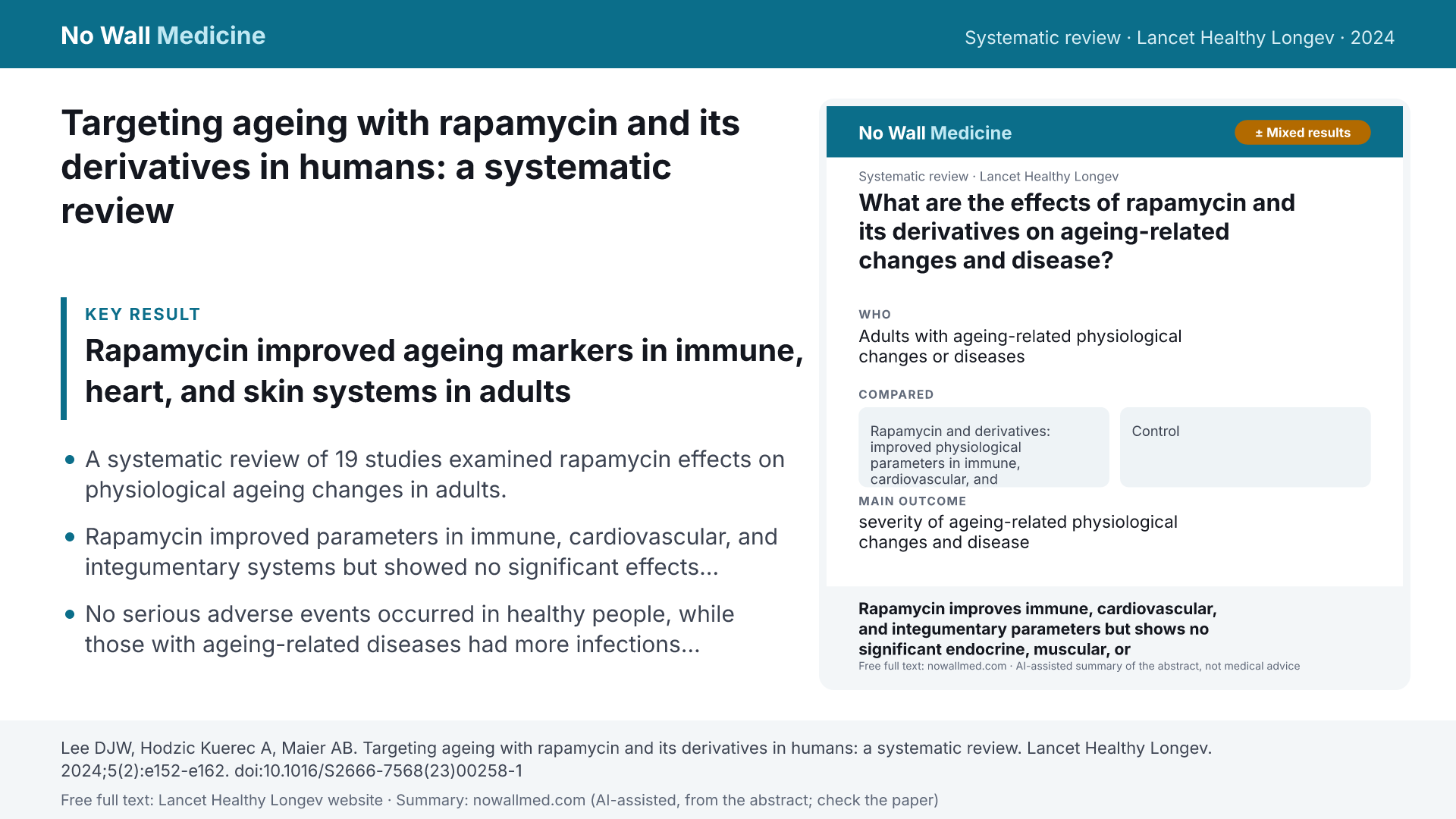
Targeting ageing with rapamycin and its derivatives in humans: a systematic review
Systematic reviewMixed results
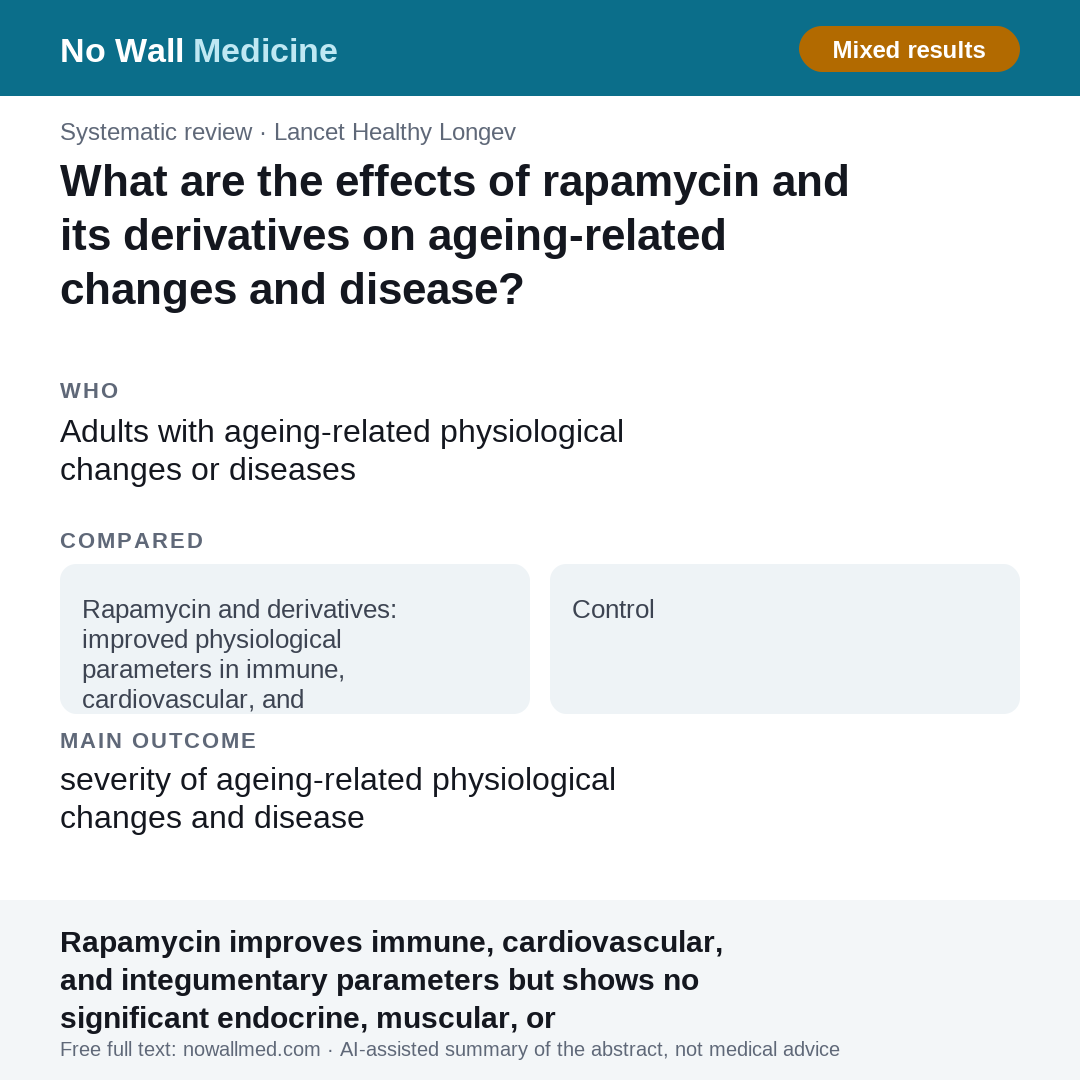
What are the effects of rapamycin and its derivatives on ageing-related changes and disease?
Who
Adults with ageing-related physiological changes or diseases
Compared
Rapamycin and derivatives: improved physiological parameters in immune, cardiovascular, and integumentary systems
Control
Main outcome
severity of ageing-related physiological changes and disease
Bottom line: Rapamycin improves immune, cardiovascular, and integumentary parameters but shows no significant endocrine, muscular, or neurological effects.
Limitation: Effects on respiratory, digestive, renal, and reproductive systems were not assessed.
Lancet Healthy Longev · 2024-02-05Download image
Clinical question: What are the effects of rapamycin and its derivatives on ageing-related changes and disease?
Abstract
Rapamycin and its derivatives (rapalogs) are inhibitors of mTOR, a major regulator of the ageing process. We aimed to summarise the effects of rapamycin and its derivatives on the severity of ageing-related physiological changes and disease in adults. A search across five databases yielded 18 400 unique articles, resulting in 19 included studies. Rapamycin and its derivatives improved physiological parameters associated with ageing in the immune, cardiovascular, and integumentary systems of healthy individuals or individuals with ageing-related diseases. Overall, no significant effects on the endocrine, muscular, or neurological systems were found. The effects of rapamycin or its derivatives on the respiratory, digestive, renal, and reproductive systems were not assessed. No serious adverse events attributed to rapamycin and its derivatives were reported in healthy individuals; however, there were increased numbers of infections and increases in total cholesterol, LDL cholesterol, and triglycerides in individuals with ageing-related diseases. Future studies should assess the remaining unexamined systems and test the effects of long-term exposure to rapamycin and its derivatives.
Abstract reproduced under the article’s CC BY licence.
Subject terms
Cite this article
Lee DJW, Hodzic Kuerec A, Maier AB. Targeting ageing with rapamycin and its derivatives in humans: a systematic review. Lancet Healthy Longev. 2024. doi:10.1016/S2666-7568(23)00258-1
Spotted a mistake? Suggest a correction