Targeting ageing with rapamycin and its derivatives in humans: a systematic review
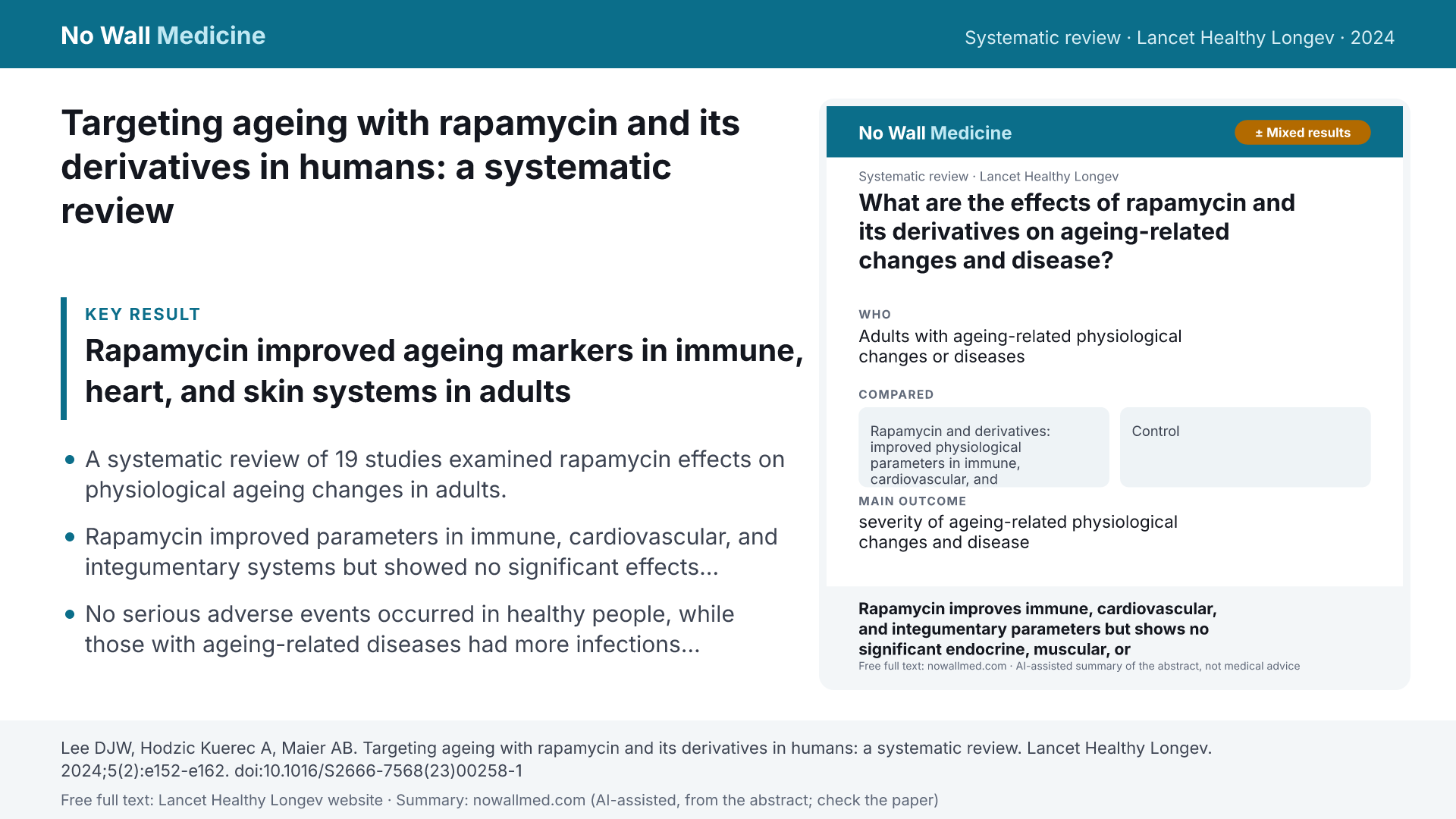
Key result: Rapamycin improved ageing markers in immune, heart, and skin systems in adults
Systematic reviewMixed results
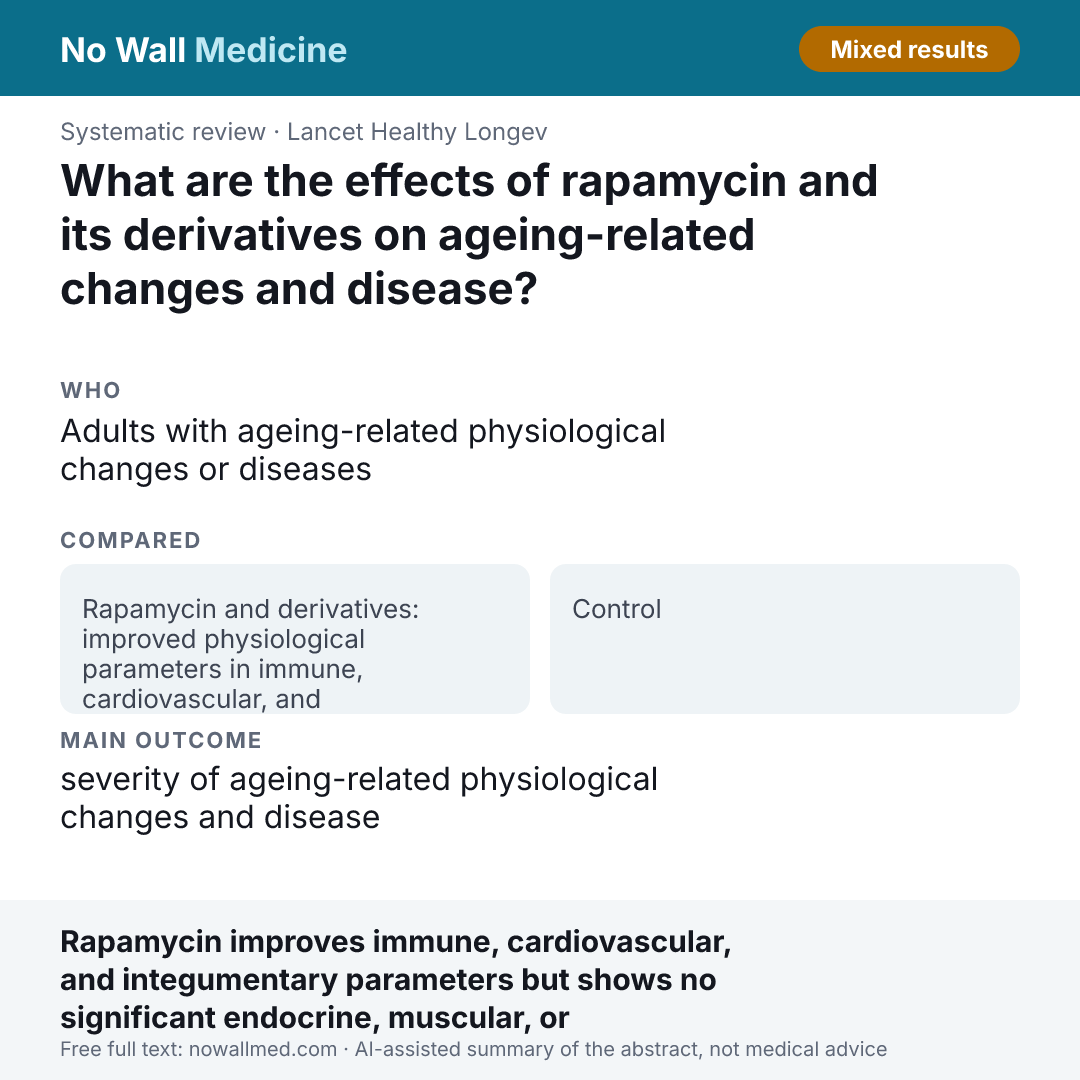
What are the effects of rapamycin and its derivatives on ageing-related changes and disease?
Who
Adults with ageing-related physiological changes or diseases
Compared
Rapamycin and derivatives: improved physiological parameters in immune, cardiovascular, and integumentary systems
Control
Main outcome
severity of ageing-related physiological changes and disease
Bottom line: Rapamycin improves immune, cardiovascular, and integumentary parameters but shows no significant endocrine, muscular, or neurological effects.
Limitation: Effects on respiratory, digestive, renal, and reproductive systems were not assessed.
Lancet Healthy Longev · 2024-02-05 · Save PNG
Key points
- A systematic review of 19 studies examined rapamycin effects on physiological ageing changes in adults.
- Rapamycin improved parameters in immune, cardiovascular, and integumentary systems but showed no significant effects on endocrine, muscular, or neurological systems.
- No serious adverse events occurred in healthy people, while those with ageing-related diseases had more infections and higher cholesterol levels.
Discussion prompts
- Would these patients look like yours? Who was left out?
- Is the main outcome one that matters to patients?
- Is the difference large enough to change what you do?
Cite: Lee DJW, Hodzic Kuerec A, Maier AB. Targeting ageing with rapamycin and its derivatives in humans: a systematic review. Lancet Healthy Longev. 2024;5(2):e152-e162. doi:10.1016/S2666-7568(23)00258-1
Free full text: Lancet Healthy Longev website · Summary and visual abstract: nowallmed.com/a/targeting-ageing-with-rapamycin-and-its-derivatives-in-humans-a-p1bq6m/ (AI-assisted from the abstract; check the paper before relying on it).