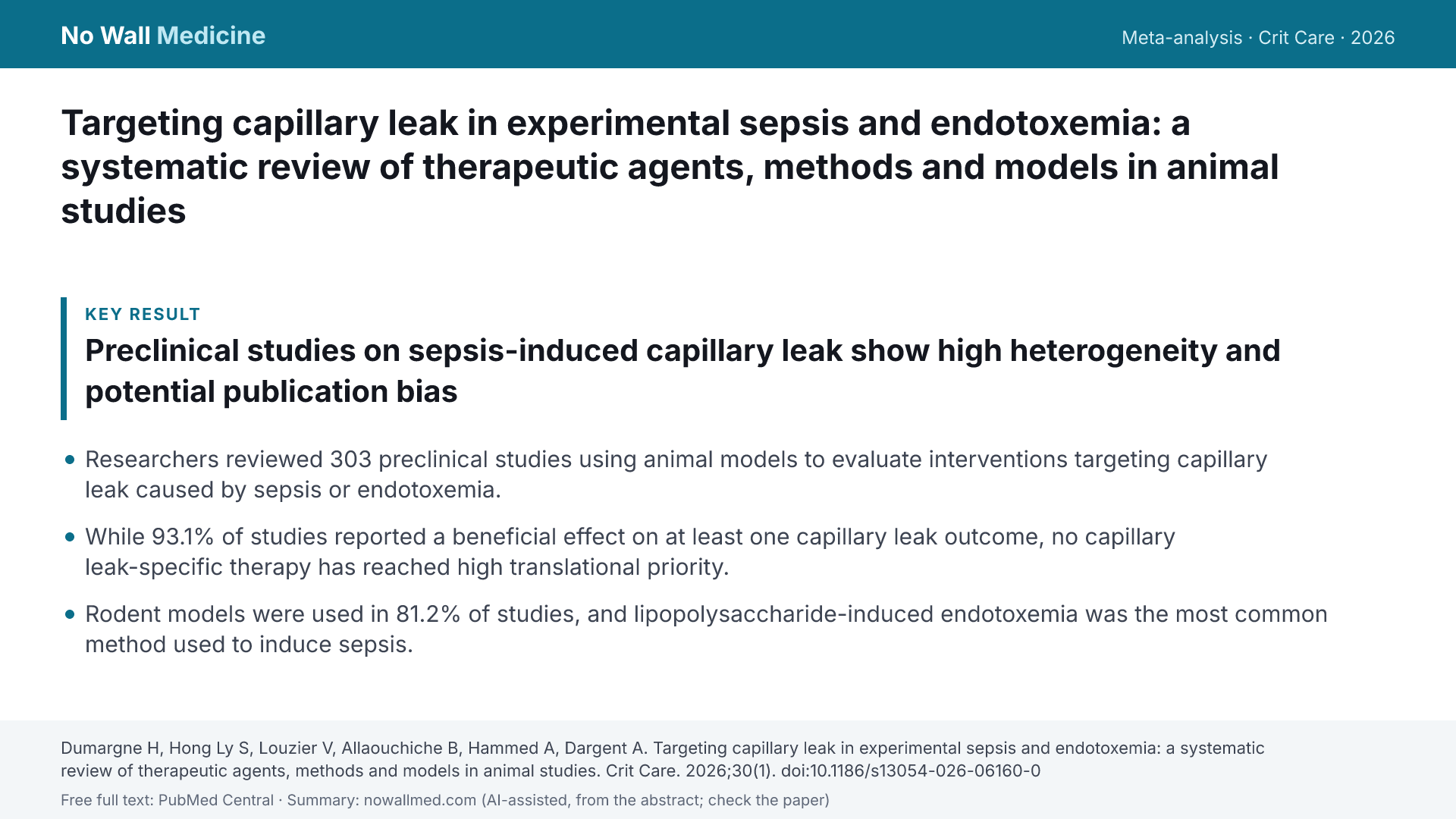
Preclinical studies on sepsis-induced capillary leak show high heterogeneity and potential publication bias
Targeting capillary leak in experimental sepsis and endotoxemia: a systematic review of therapeutic agents, methods and models in animal studies
Why it matters: Many interventions showing promise in animal models have failed to demonstrate clinical efficacy in humans when treating sepsis-induced capillary leak.
Key points
- Researchers reviewed 303 preclinical studies using animal models to evaluate interventions targeting capillary leak caused by sepsis or endotoxemia.
- While 93.1% of studies reported a beneficial effect on at least one capillary leak outcome, no capillary leak-specific therapy has reached high translational priority.
- Rodent models were used in 81.2% of studies, and lipopolysaccharide-induced endotoxemia was the most common method used to induce sepsis.
Limitation the authors note: The review noted substantial heterogeneity in models and outcomes, as well as a disproportionately high rate of studies reporting beneficial results.
Headline and key points written with AI from the paper’s abstract, with every number checked against it. Read the paper before relying on them.
Was this summary helpful?
Subject terms
Cite this article
Dumargne H, Hong Ly S, Louzier V, Allaouchiche B, Hammed A, Dargent A. Targeting capillary leak in experimental sepsis and endotoxemia: a systematic review of therapeutic agents, methods and models in animal studies. Crit Care. 2026. doi:10.1186/s13054-026-06160-0
Spotted a mistake? Suggest a correction