Targeting capillary leak in experimental sepsis and endotoxemia: a systematic review of therapeutic agents, methods and models in animal studies
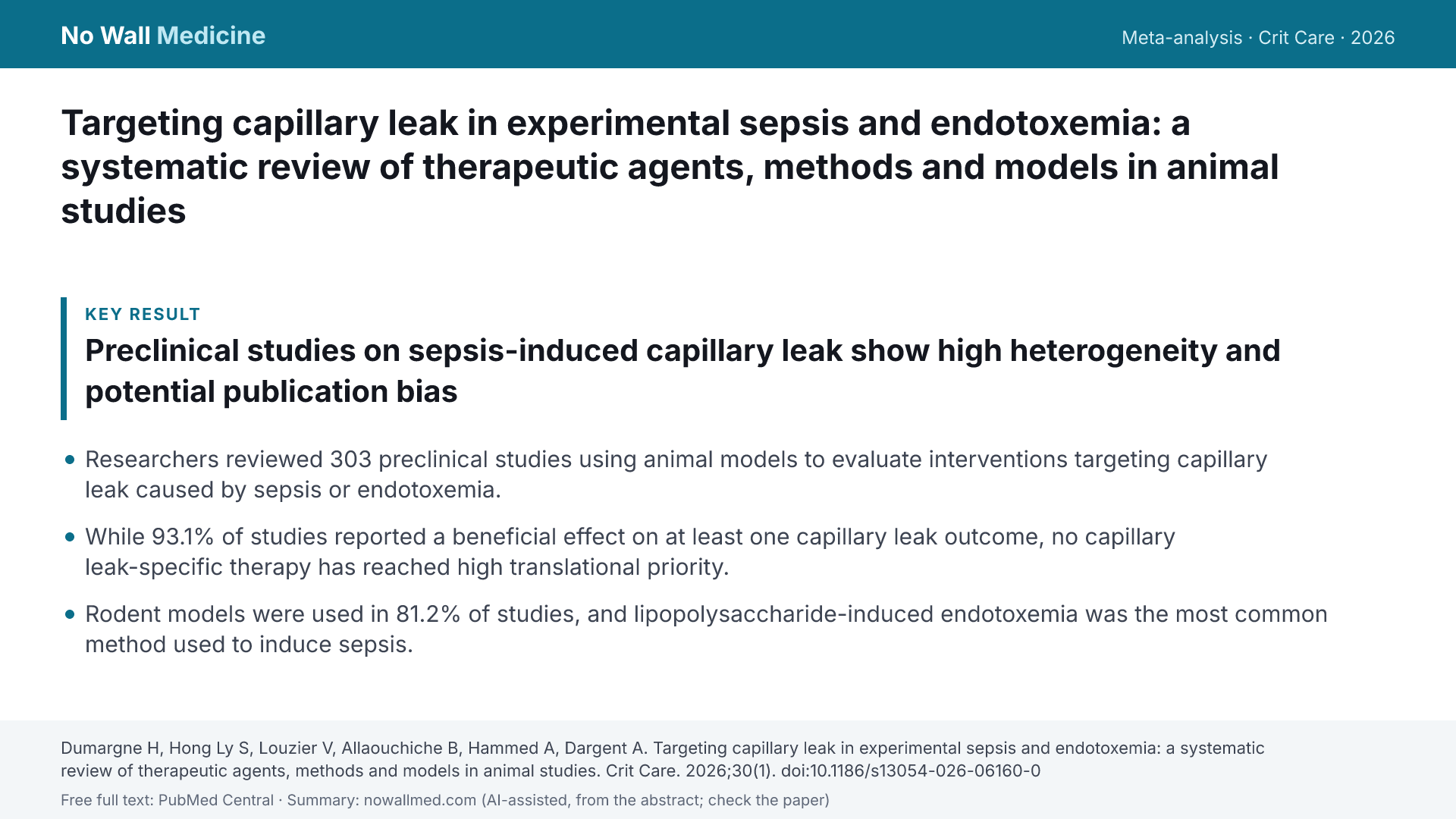
Key result: Preclinical studies on sepsis-induced capillary leak show high heterogeneity and potential publication bias
Key points
- Researchers reviewed 303 preclinical studies using animal models to evaluate interventions targeting capillary leak caused by sepsis or endotoxemia.
- While 93.1% of studies reported a beneficial effect on at least one capillary leak outcome, no capillary leak-specific therapy has reached high translational priority.
- Rodent models were used in 81.2% of studies, and lipopolysaccharide-induced endotoxemia was the most common method used to induce sepsis.
Why it matters: Many interventions showing promise in animal models have failed to demonstrate clinical efficacy in humans when treating sepsis-induced capillary leak.
Limitation the authors note: The review noted substantial heterogeneity in models and outcomes, as well as a disproportionately high rate of studies reporting beneficial results.
Discussion prompts
- Would these patients look like yours? Who was left out?
- Is the main outcome one that matters to patients?
- Is the difference large enough to change what you do?
Cite: Dumargne H, Hong Ly S, Louzier V, Allaouchiche B, Hammed A, Dargent A. Targeting capillary leak in experimental sepsis and endotoxemia: a systematic review of therapeutic agents, methods and models in animal studies. Crit Care. 2026;30(1). doi:10.1186/s13054-026-06160-0
Free full text: PubMed Central · Summary and visual abstract: nowallmed.com/a/targeting-capillary-leak-in-experimental-sepsis-and-endotoxemia-a-jiq5cn/ (AI-assisted from the abstract; check the paper before relying on it).