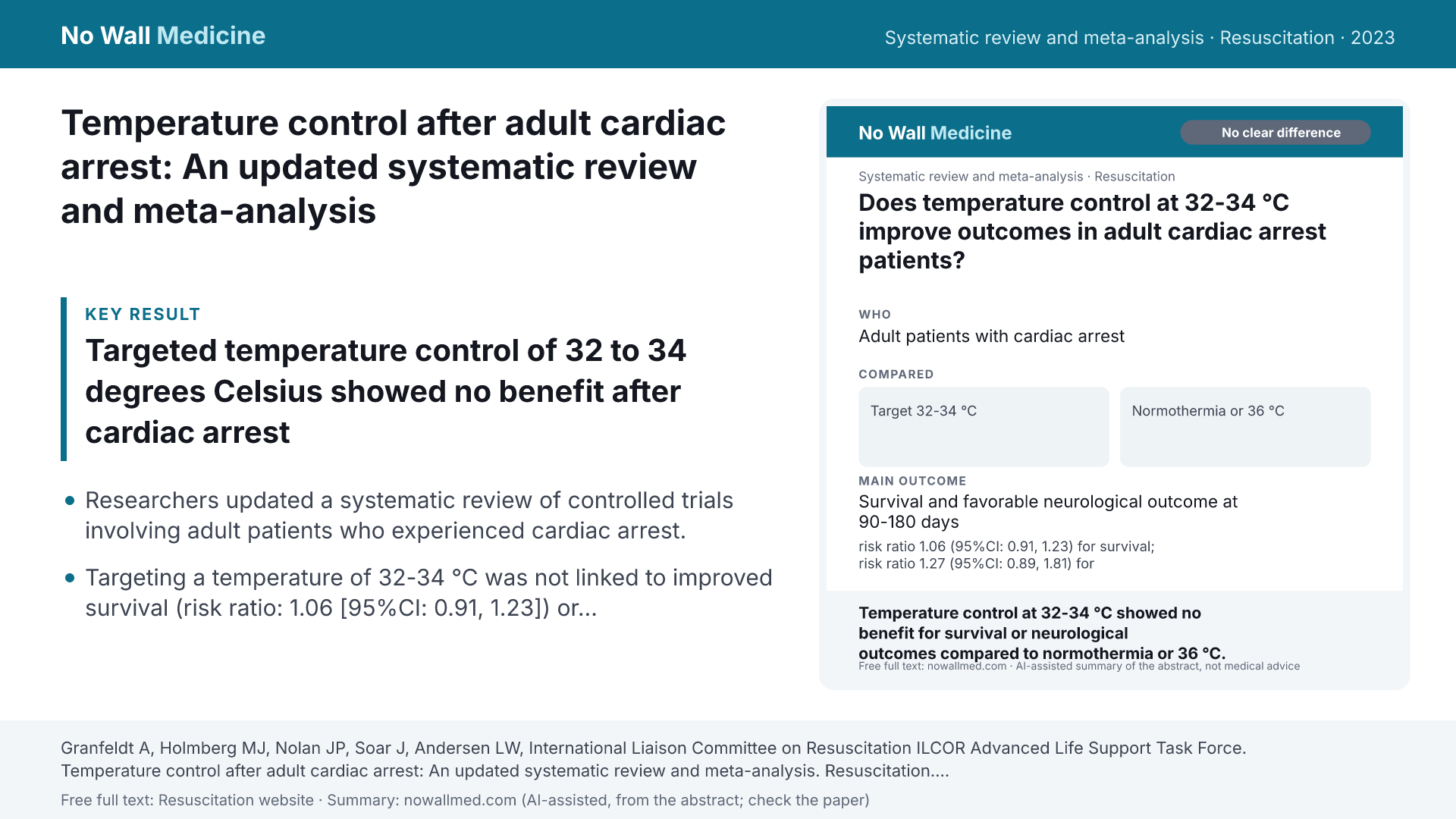
Targeted temperature control of 32 to 34 degrees Celsius showed no benefit after cardiac arrest
Temperature control after adult cardiac arrest: An updated systematic review and meta-analysis
Systematic review and meta-analysisNo clear difference
Does temperature control at 32-34 °C improve outcomes in adult cardiac arrest patients?
Who
Adult patients with cardiac arrest
Compared
Target 32-34 °C
Normothermia or 36 °C
Main outcome
Survival and favorable neurological outcome at 90-180 days
Result: risk ratio 1.06 (95%CI: 0.91, 1.23) for survival; risk ratio 1.27 (95%CI: 0.89, 1.81) for neurological outcome
Bottom line: Temperature control at 32-34 °C showed no benefit for survival or neurological outcomes compared to normothermia or 36 °C.
Limitation: Low certainty evidence and knowledge gaps exist regarding temperature targets, rewarming rates, and fever control.
Resuscitation · 2023-08-07Download image
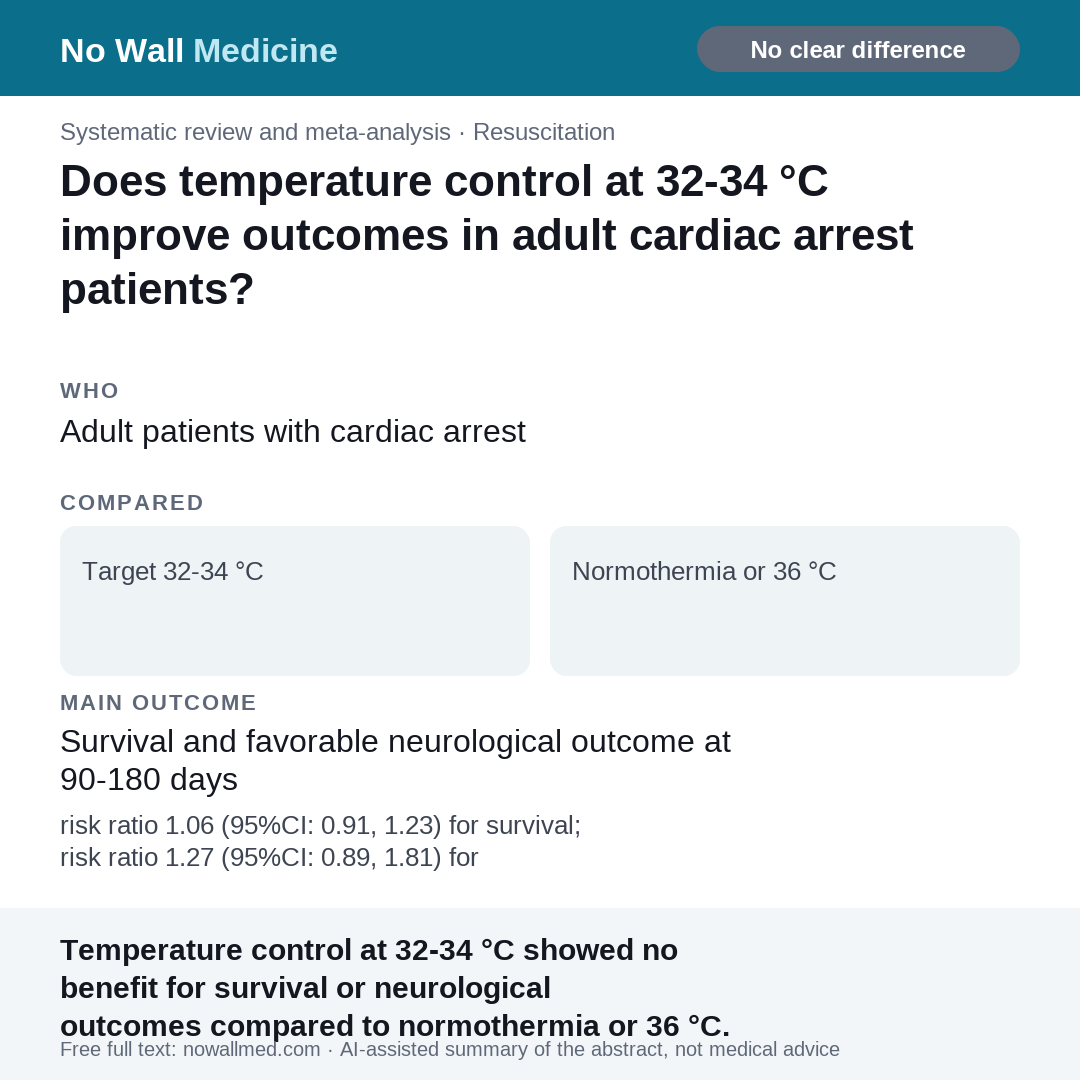
Clinical question: Does temperature control at 32-34 °C improve outcomes in adult cardiac arrest patients?
Why it matters: It is unknown if specific temperature targets, durations, rewarming rates, or fever prevention methods improve outcomes for adults after cardiac arrest.
Key points
- Researchers updated a systematic review of controlled trials involving adult patients who experienced cardiac arrest.
- Targeting a temperature of 32-34 °C was not linked to improved survival (risk ratio: 1.06 [95%CI: 0.91, 1.23]) or favorable neurological outcomes (risk ratio: 1.27 [95%CI: 0.89, 1.81]).
- Subgroup analyses for in-hospital versus out-of-hospital cardiac arrest and sensitivity analyses for neurological outcomes also showed no improvement.
Limitation the authors note: The certainty of evidence for the main outcomes was low.
Headline and key points written with AI from the paper’s abstract, with every number checked against it. Read the paper before relying on them.
Was this summary helpful?
Subject terms
Cite this article
Granfeldt A, Holmberg MJ, Nolan JP, Soar J, Andersen LW, International Liaison Committee on Resuscitation ILCOR Advanced Life Support Task Force. Temperature control after adult cardiac arrest: An updated systematic review and meta-analysis. Resuscitation. 2023. doi:10.1016/j.resuscitation.2023.109928
Spotted a mistake? Suggest a correction