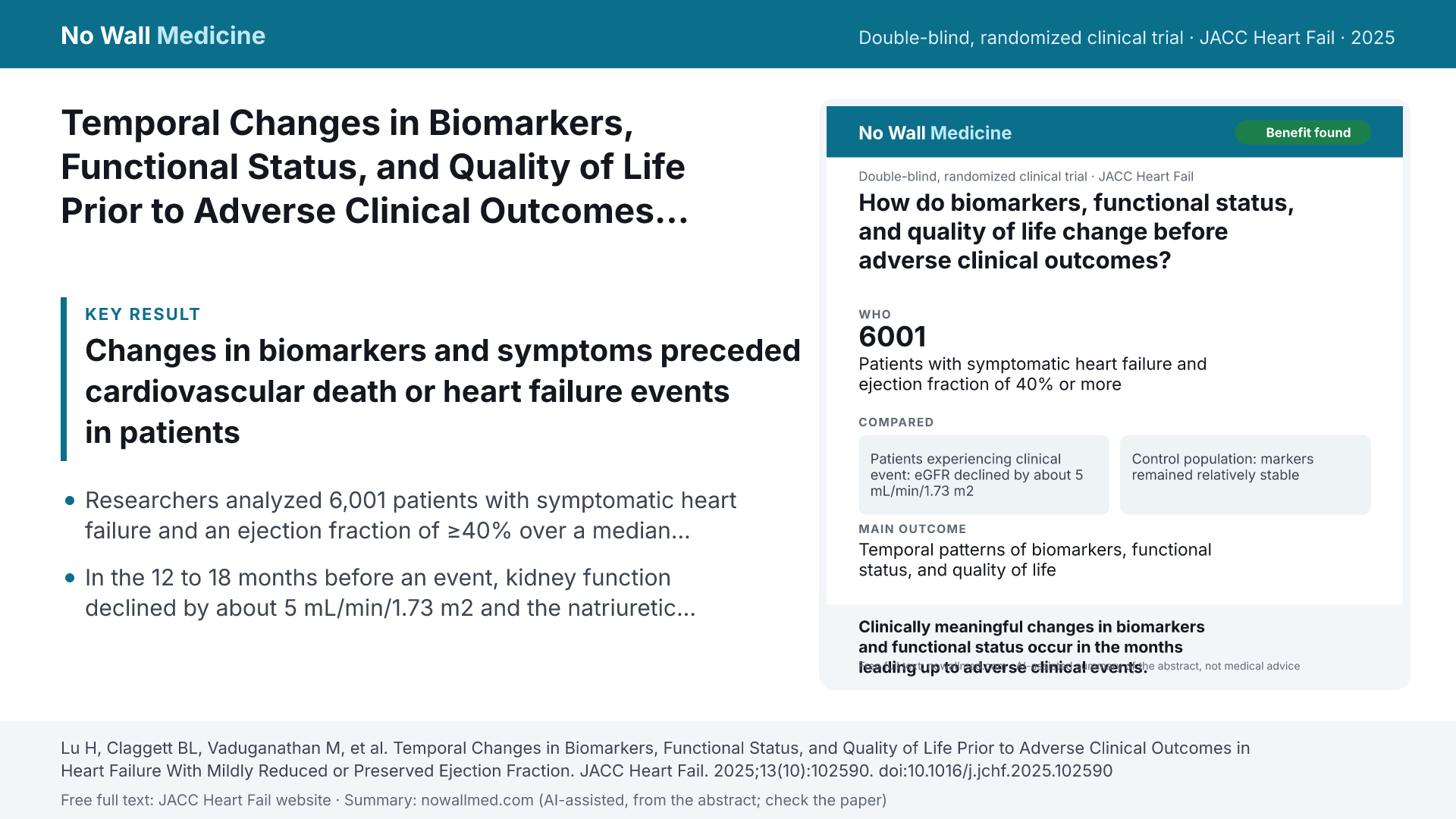
Changes in biomarkers and symptoms preceded cardiovascular death or heart failure events in patients
Temporal Changes in Biomarkers, Functional Status, and Quality of Life Prior to Adverse Clinical Outcomes in Heart Failure With Mildly Reduced or Preserved Ejection Fraction
Double-blind, randomized clinical trialBenefit found
How do biomarkers, functional status, and quality of life change before adverse clinical outcomes?
Who
6001
Patients with symptomatic heart failure and ejection fraction of 40% or more
Compared
Patients experiencing clinical event: eGFR declined by about 5 mL/min/1.73 m2
Control population: markers remained relatively stable
Main outcome
Temporal patterns of biomarkers, functional status, and quality of life
Bottom line: Clinically meaningful changes in biomarkers and functional status occur in the months leading up to adverse clinical events.
JACC Heart Fail · 2025-08-25Download image
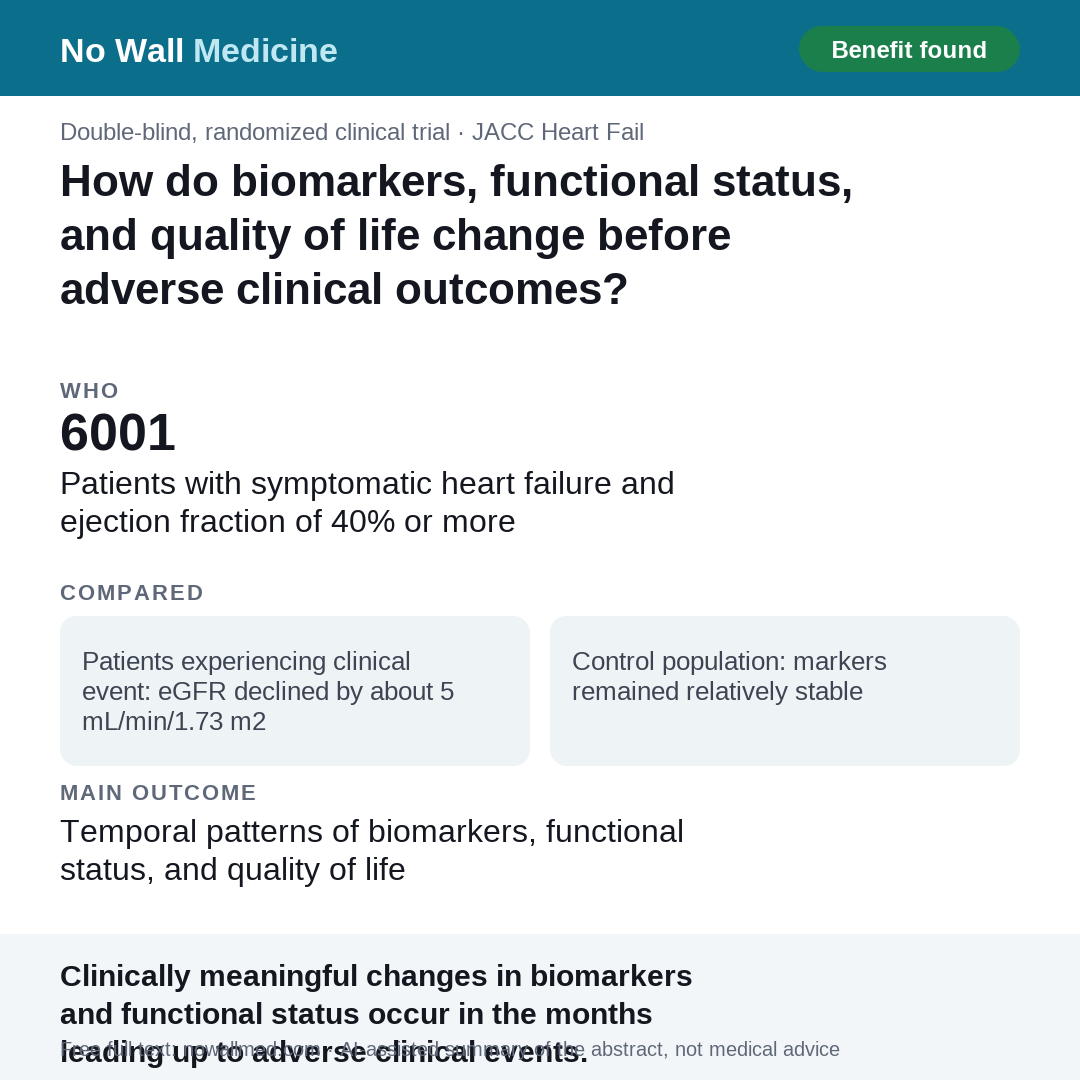
Clinical question: How do biomarkers, functional status, and quality of life change before adverse clinical outcomes?
Why it matters: Mapping the trajectories of biomarkers, functional status, and medication dosing before adverse outcomes may help inform population monitoring approaches for heart failure.
Key points
- Researchers analyzed 6,001 patients with symptomatic heart failure and an ejection fraction of ≥40% over a median 2.7-year follow-up period.
- In the 12 to 18 months before an event, kidney function declined by about 5 mL/min/1.73 m2 and the natriuretic peptide biomarker increased by 70% to 80%.
- In the 6 months before an event, diuretic doses increased from ∼50 to ∼60 mg/day of furosemide equivalents and symptom scores declined by approximately 6 points.
Headline and key points written with AI from the paper’s abstract, with every number checked against it. Read the paper before relying on them.
Was this summary helpful?
Subject terms
Cite this article
Lu H, Claggett BL, Vaduganathan M, et al. Temporal Changes in Biomarkers, Functional Status, and Quality of Life Prior to Adverse Clinical Outcomes in Heart Failure With Mildly Reduced or Preserved Ejection Fraction. JACC Heart Fail. 2025. doi:10.1016/j.jchf.2025.102590
Spotted a mistake? Suggest a correction