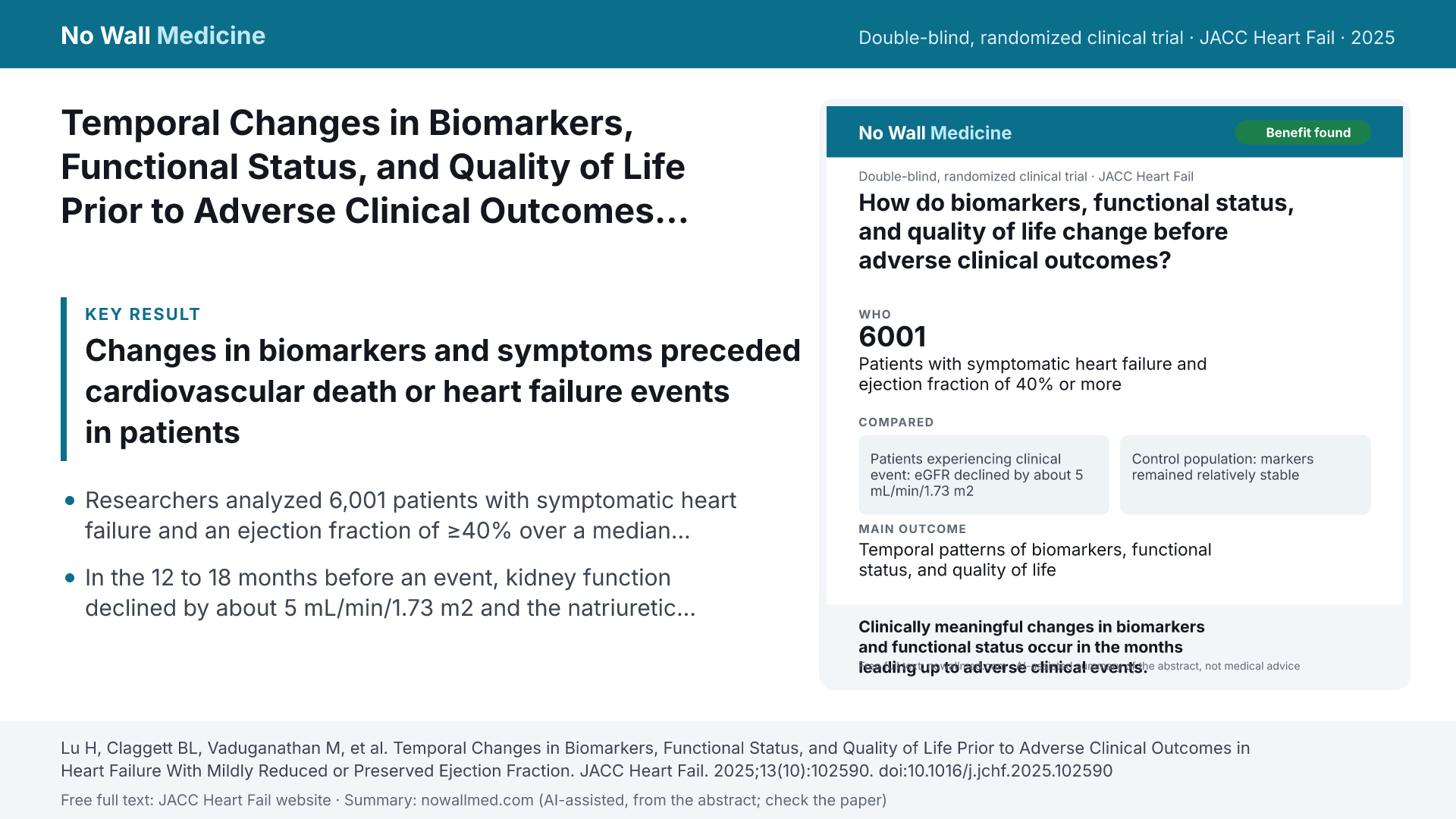
Temporal Changes in Biomarkers, Functional Status, and Quality of Life Prior to Adverse Clinical Outcomes in Heart Failure With Mildly Reduced or Preserved Ejection Fraction
Key result: Changes in biomarkers and symptoms preceded cardiovascular death or heart failure events in patients
Key points
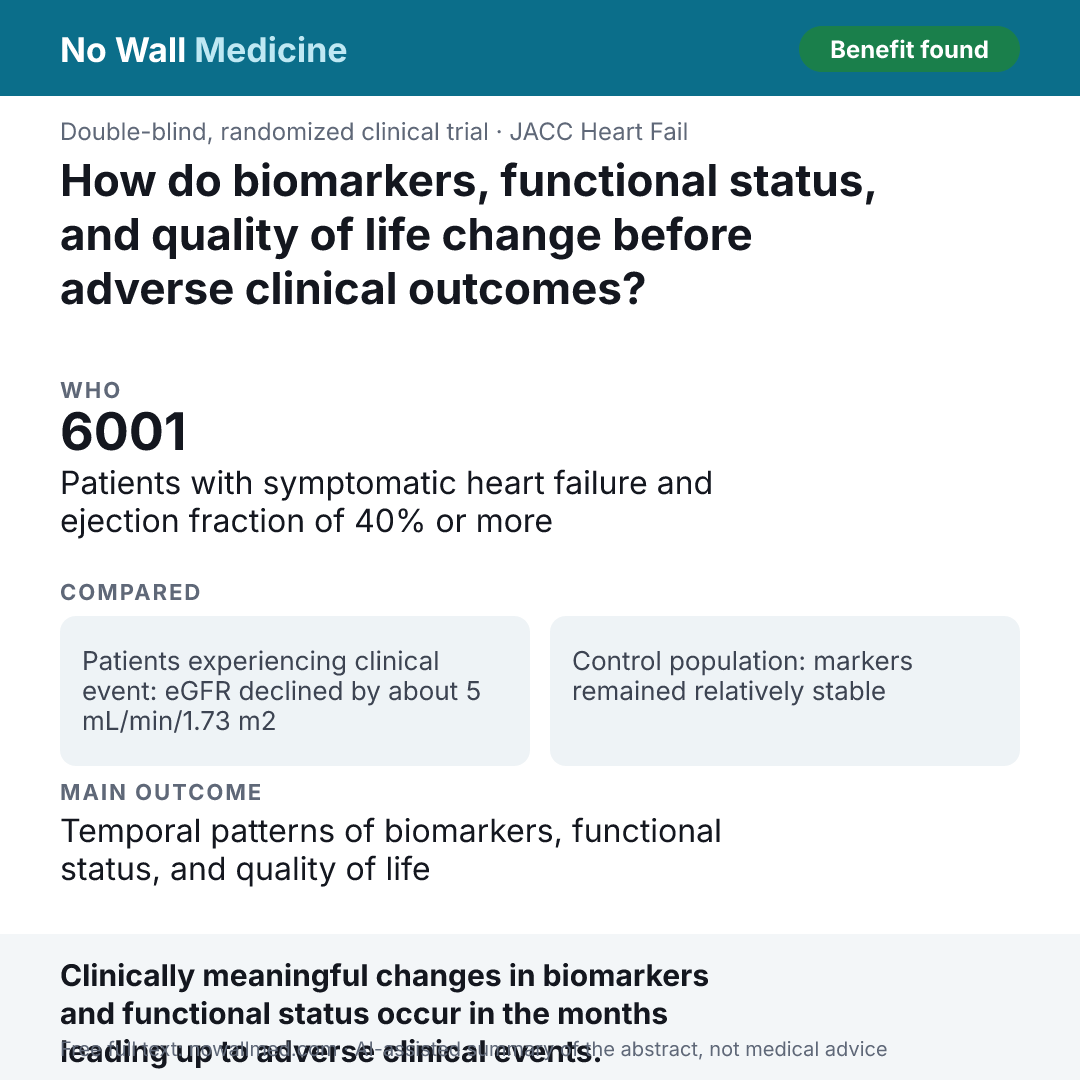
- Researchers analyzed 6,001 patients with symptomatic heart failure and an ejection fraction of ≥40% over a median 2.7-year follow-up period.
- In the 12 to 18 months before an event, kidney function declined by about 5 mL/min/1.73 m2 and the natriuretic peptide biomarker increased by 70% to 80%.
- In the 6 months before an event, diuretic doses increased from ∼50 to ∼60 mg/day of furosemide equivalents and symptom scores declined by approximately 6 points.
Why it matters: Mapping the trajectories of biomarkers, functional status, and medication dosing before adverse outcomes may help inform population monitoring approaches for heart failure.
Discussion prompts
- Would these patients look like yours? Who was left out?
- Is the main outcome one that matters to patients?
- Is the difference large enough to change what you do?
Cite: Lu H, Claggett BL, Vaduganathan M, et al. Temporal Changes in Biomarkers, Functional Status, and Quality of Life Prior to Adverse Clinical Outcomes in Heart Failure With Mildly Reduced or Preserved Ejection Fraction. JACC Heart Fail. 2025;13(10):102590. doi:10.1016/j.jchf.2025.102590
Free full text: JACC Heart Fail website · Summary and visual abstract: nowallmed.com/a/temporal-changes-in-biomarkers-functional-status-and-quality-of-life-12irqms/ (AI-assisted from the abstract; check the paper before relying on it).