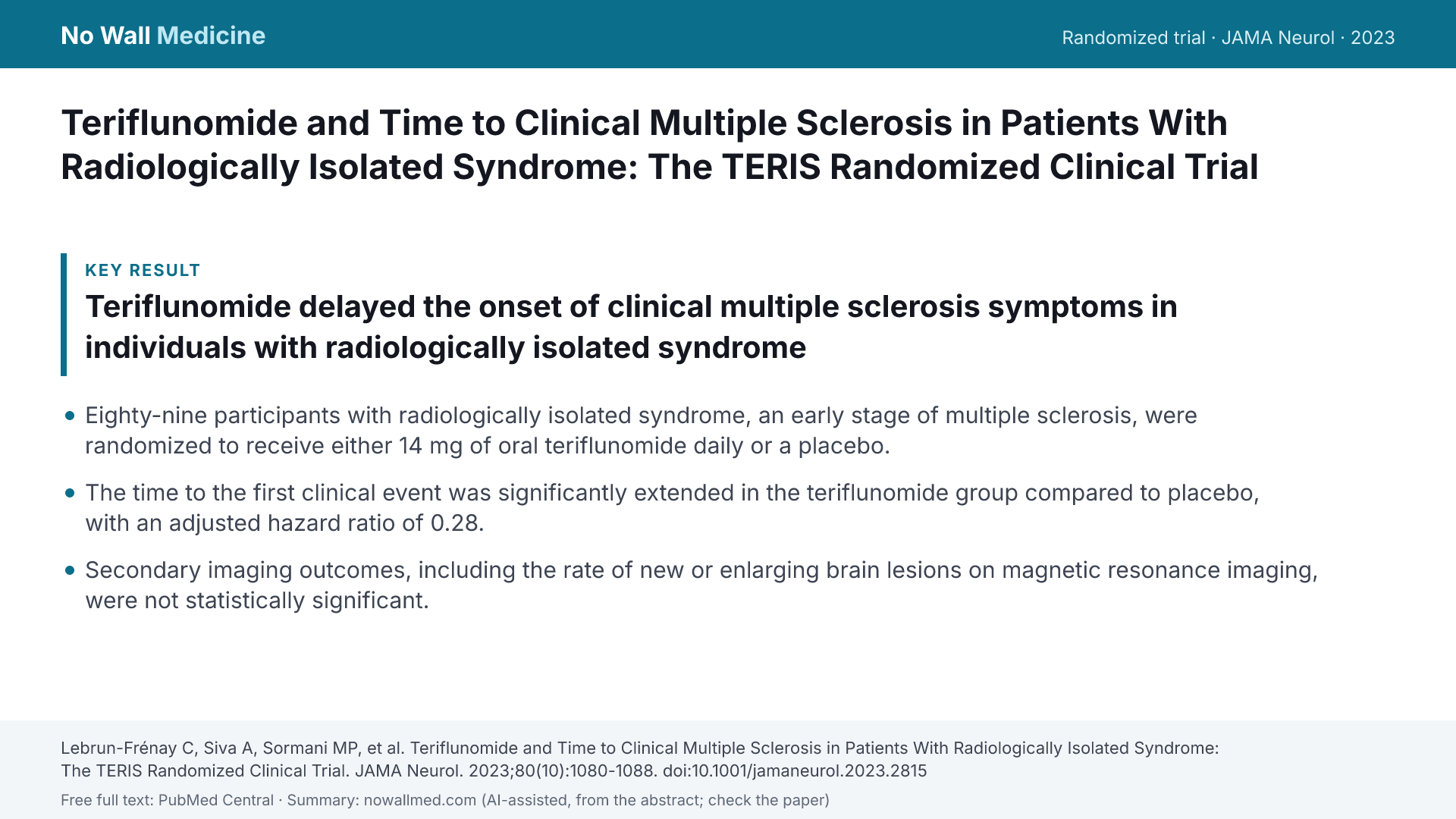
Teriflunomide and Time to Clinical Multiple Sclerosis in Patients With Radiologically Isolated Syndrome: The TERIS Randomized Clinical Trial
Key result: Teriflunomide delayed the onset of clinical multiple sclerosis symptoms in individuals with radiologically isolated syndrome
Key points
- Eighty-nine participants with radiologically isolated syndrome, an early stage of multiple sclerosis, were randomized to receive either 14 mg of oral teriflunomide daily or a placebo.
- The time to the first clinical event was significantly extended in the teriflunomide group compared to placebo, with an adjusted hazard ratio of 0.28.
- Secondary imaging outcomes, including the rate of new or enlarging brain lesions on magnetic resonance imaging, were not statistically significant.
Discussion prompts
- Would these patients look like yours? Who was left out?
- Is the main outcome one that matters to patients?
- Is the difference large enough to change what you do?
Cite: Lebrun-Frénay C, Siva A, Sormani MP, et al. Teriflunomide and Time to Clinical Multiple Sclerosis in Patients With Radiologically Isolated Syndrome: The TERIS Randomized Clinical Trial. JAMA Neurol. 2023;80(10):1080-1088. doi:10.1001/jamaneurol.2023.2815
Free full text: PubMed Central · Summary and visual abstract: nowallmed.com/a/teriflunomide-and-time-to-clinical-multiple-sclerosis-in-patients-1b3hpko/ (AI-assisted from the abstract; check the paper before relying on it).