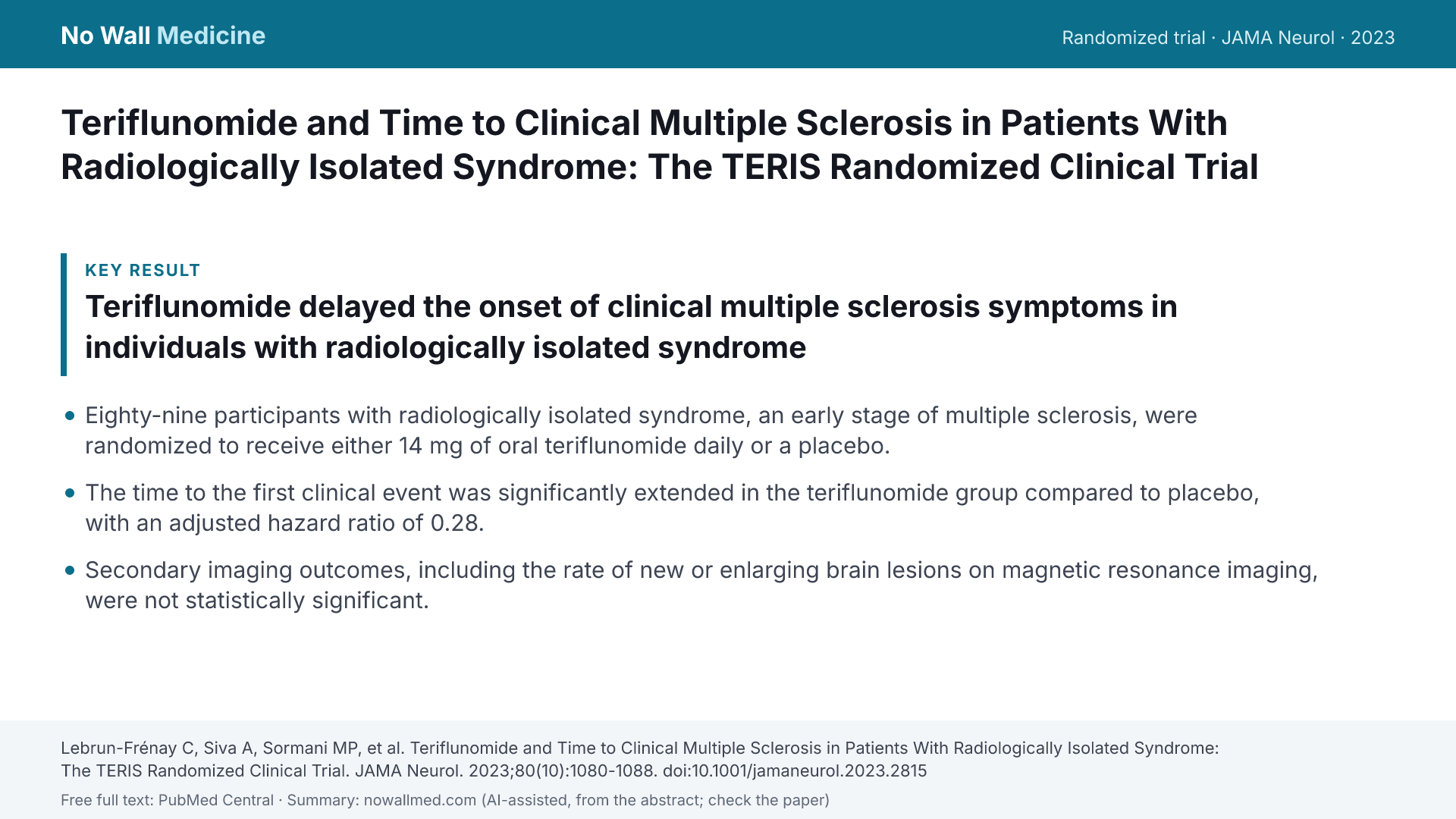
Teriflunomide delayed the onset of clinical multiple sclerosis symptoms in individuals with radiologically isolated syndrome
Teriflunomide and Time to Clinical Multiple Sclerosis in Patients With Radiologically Isolated Syndrome: The TERIS Randomized Clinical Trial
Why it matters: It is unknown if treating radiologically isolated syndrome, the earliest detectable phase of multiple sclerosis, can delay the onset of clinical symptoms.
Key points
- Eighty-nine participants with radiologically isolated syndrome, an early stage of multiple sclerosis, were randomized to receive either 14 mg of oral teriflunomide daily or a placebo.
- The time to the first clinical event was significantly extended in the teriflunomide group compared to placebo, with an adjusted hazard ratio of 0.28.
- Secondary imaging outcomes, including the rate of new or enlarging brain lesions on magnetic resonance imaging, were not statistically significant.
Headline and key points written with AI from the paper’s abstract, with every number checked against it. Read the paper before relying on them.
Was this summary helpful?
Subject terms
Cite this article
Lebrun-Frénay C, Siva A, Sormani MP, et al. Teriflunomide and Time to Clinical Multiple Sclerosis in Patients With Radiologically Isolated Syndrome: The TERIS Randomized Clinical Trial. JAMA Neurol. 2023. doi:10.1001/jamaneurol.2023.2815
Spotted a mistake? Suggest a correction