The Association Between Obesity and Malignant Progression of Barrett's Esophagus: A Systematic Review and Dose-Response Meta-Analysis
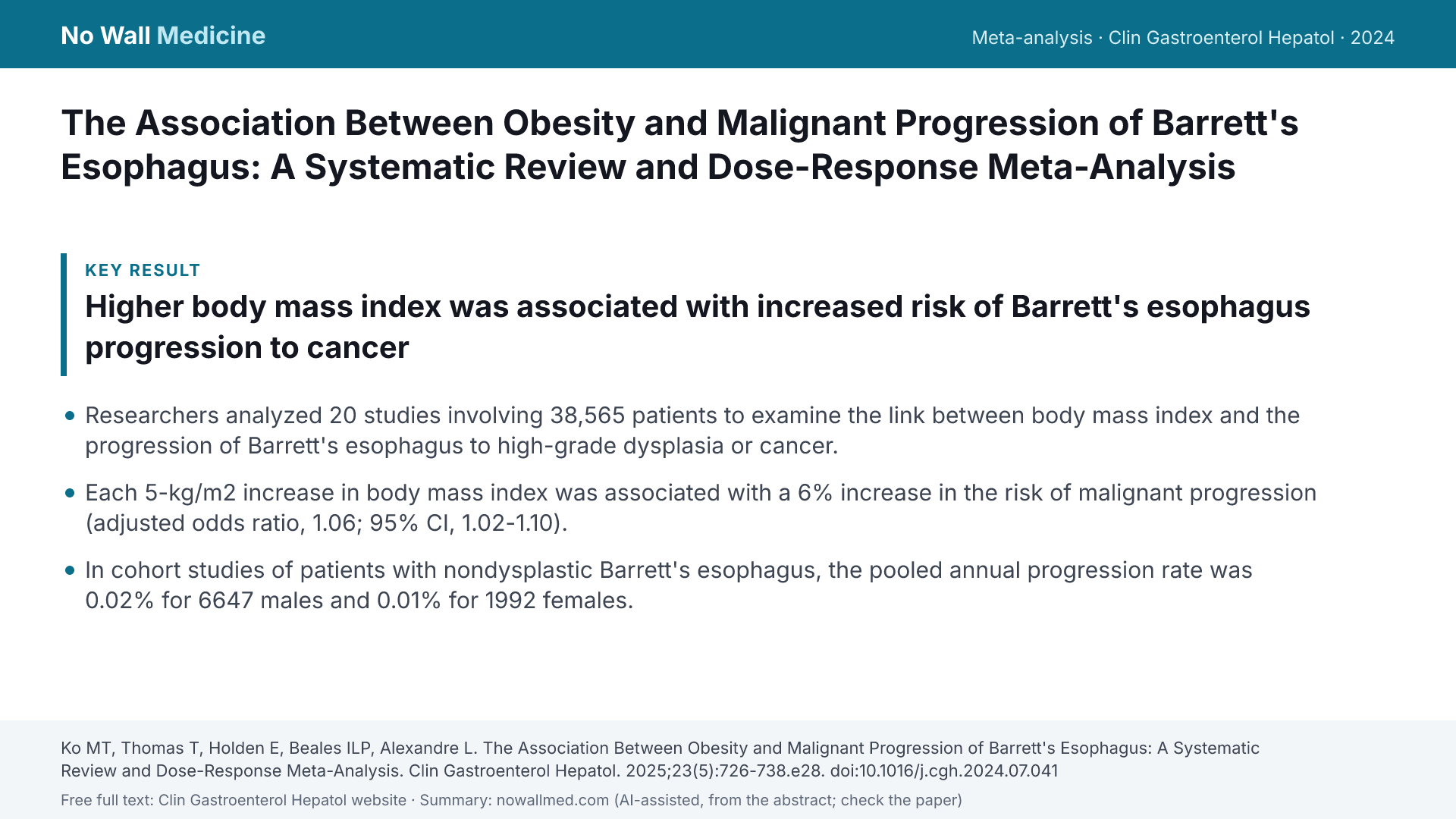
Key result: Higher body mass index was associated with increased risk of Barrett's esophagus progression to cancer
Key points
- Researchers analyzed 20 studies involving 38,565 patients to examine the link between body mass index and the progression of Barrett's esophagus to high-grade dysplasia or cancer.
- Each 5-kg/m2 increase in body mass index was associated with a 6% increase in the risk of malignant progression (adjusted odds ratio, 1.06; 95% CI, 1.02-1.10).
- In cohort studies of patients with nondysplastic Barrett's esophagus, the pooled annual progression rate was 0.02% for 6647 males and 0.01% for 1992 females.
Discussion prompts
- Would these patients look like yours? Who was left out?
- Is the main outcome one that matters to patients?
- Is the difference large enough to change what you do?
Cite: Ko MT, Thomas T, Holden E, Beales ILP, Alexandre L. The Association Between Obesity and Malignant Progression of Barrett's Esophagus: A Systematic Review and Dose-Response Meta-Analysis. Clin Gastroenterol Hepatol. 2025;23(5):726-738.e28. doi:10.1016/j.cgh.2024.07.041
Free full text: Clin Gastroenterol Hepatol website · Summary and visual abstract: nowallmed.com/a/the-association-between-obesity-and-malignant-progression-of-barrett-rxcf5d/ (AI-assisted from the abstract; check the paper before relying on it).