Weight loss was associated with increased gut bacteria diversity and reduced intestinal permeability
The association of weight loss with changes in the gut microbiota diversity, composition, and intestinal permeability: a systematic review and meta-analysis
Systematic review and meta-analysisBenefit found
How does intentional weight loss affect gut microbiota diversity and intestinal permeability?
Who
1,916
Participants undergoing weight loss interventions
Compared
Weight loss
Control
Main outcome
Gut microbiota alpha-diversity and intestinal permeability
Result: alpha-diversity SMD 0.4 (95% CI: 0.2, 0.6); intestinal permeability SMD -0.7 (95% CI: -0.9, -0.4)
Bottom line: Increasing weight loss is positively associated with increases in gut microbiota alpha-diversity and reductions in intestinal permeability.
Limitation: The evidence for alpha-diversity was described as imprecise.
Gut Microbes · 2022-01-18Download image
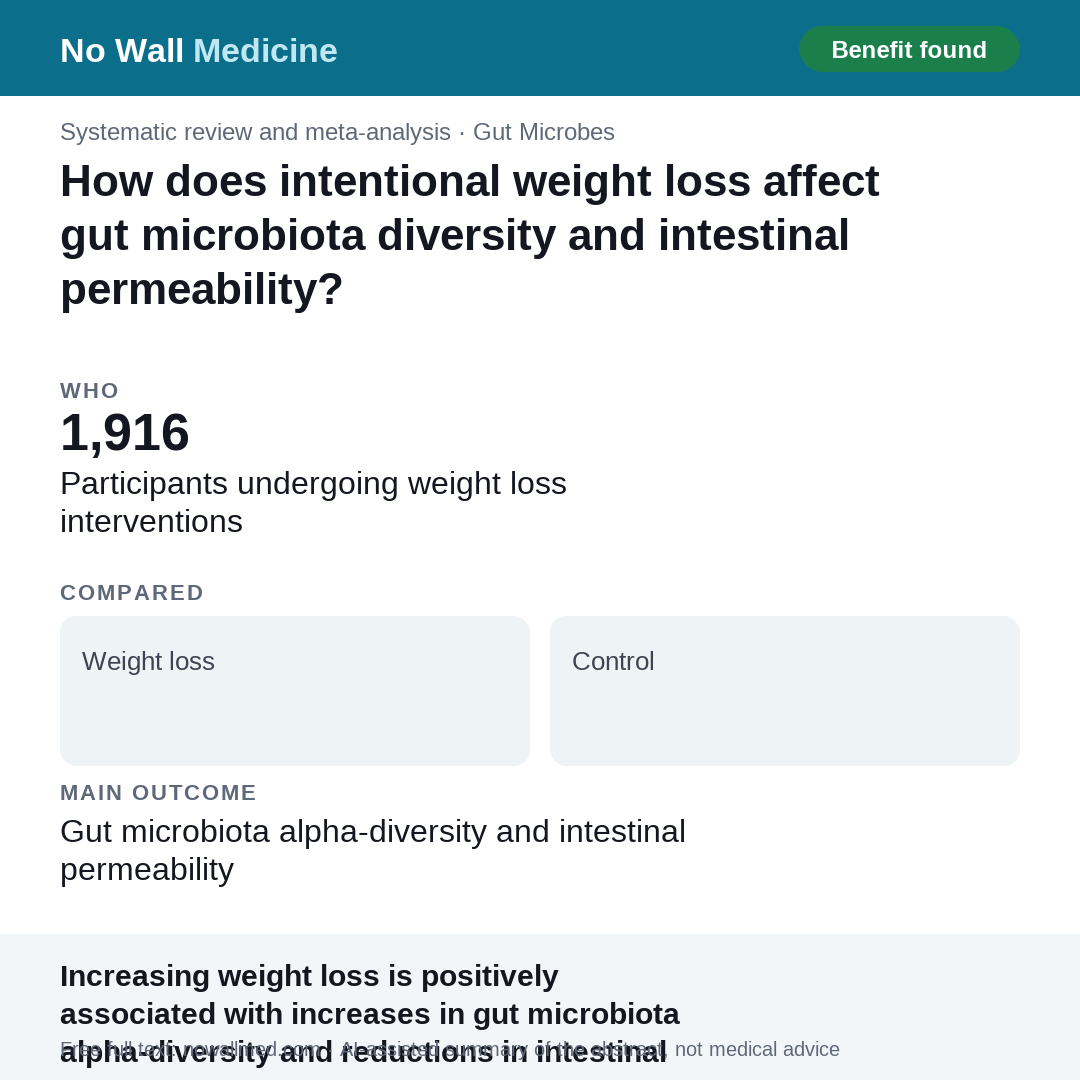
Clinical question: How does intentional weight loss affect gut microbiota diversity and intestinal permeability?
Why it matters: It was unclear how intentional weight loss through diets, medication, or surgery changes the gut microbiota and the permeability of the intestinal lining.
Key points
- Researchers analyzed 47 trials involving 1,916 participants, 81% of whom were female, to examine how weight loss affects the gut microbiome and intestinal barrier function.
- Weight loss was associated with an increase in alpha-diversity, which measures the variety of bacteria, and a reduction in intestinal permeability, the leaking of substances through the gut wall.
- Each kg of weight loss was associated with a 0.012 increase in alpha-diversity and a -0.017 reduction in intestinal permeability.
Limitation the authors note: The evidence regarding the increase in alpha-diversity was described as imprecise.
Headline and key points written with AI from the paper’s abstract, with every number checked against it. Read the paper before relying on them.
Was this summary helpful?
Subject terms
Cite this article
Koutoukidis DA, Jebb SA, Zimmerman M, Otunla A, Henry JA, Ferrey A. The association of weight loss with changes in the gut microbiota diversity, composition, and intestinal permeability: a systematic review and meta-analysis. Gut Microbes. 2022. doi:10.1080/19490976.2021.2020068
Spotted a mistake? Suggest a correction
Top studies every Monday
The week’s key trials and guidelines in your specialties, plus any topics you follow. By email, free.
Get the weekly digest