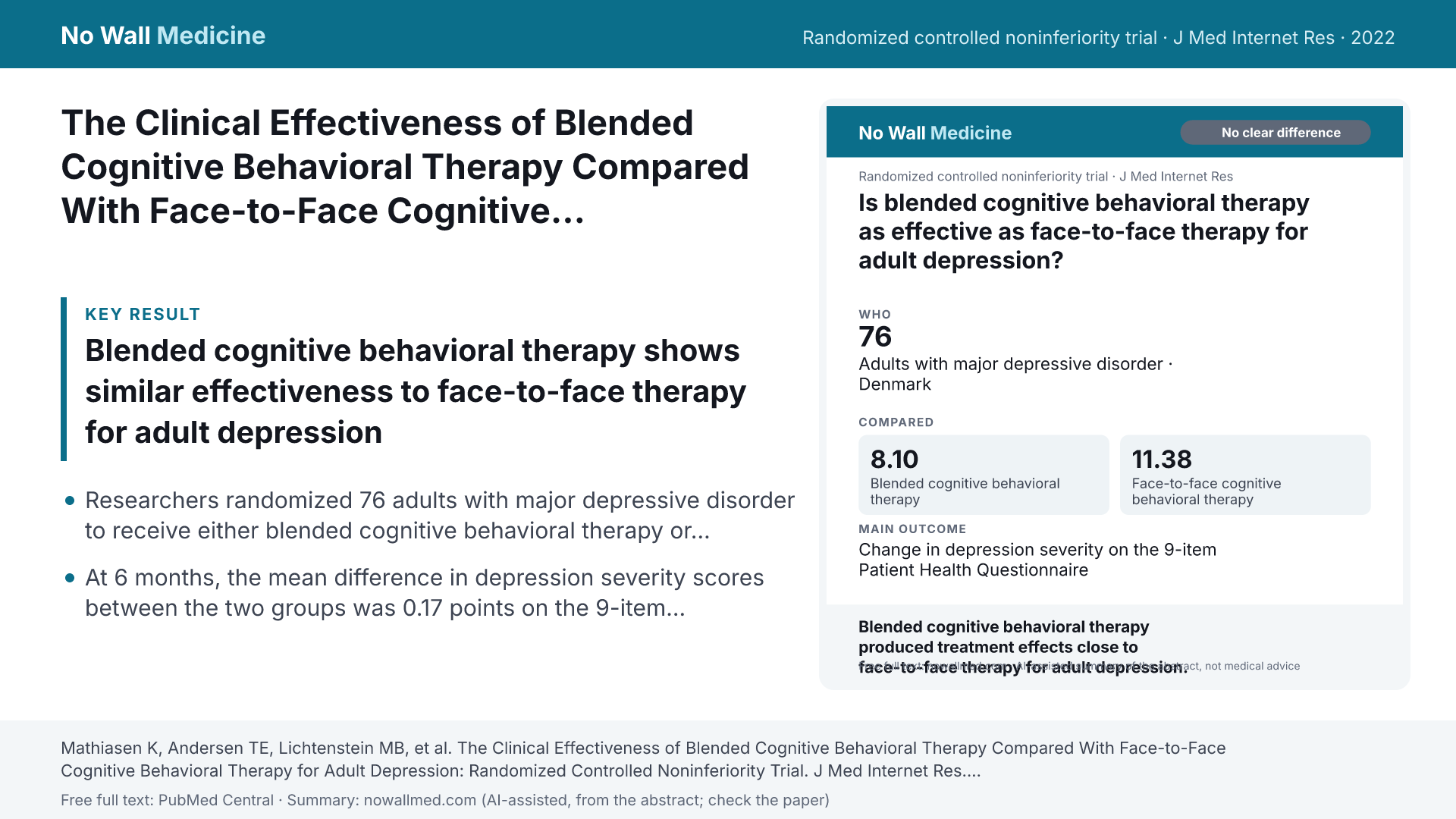
Blended cognitive behavioral therapy shows similar effectiveness to face-to-face therapy for adult depression
The Clinical Effectiveness of Blended Cognitive Behavioral Therapy Compared With Face-to-Face Cognitive Behavioral Therapy for Adult Depression: Randomized Controlled Noninferiority Trial
Randomized controlled noninferiority trialNo clear difference
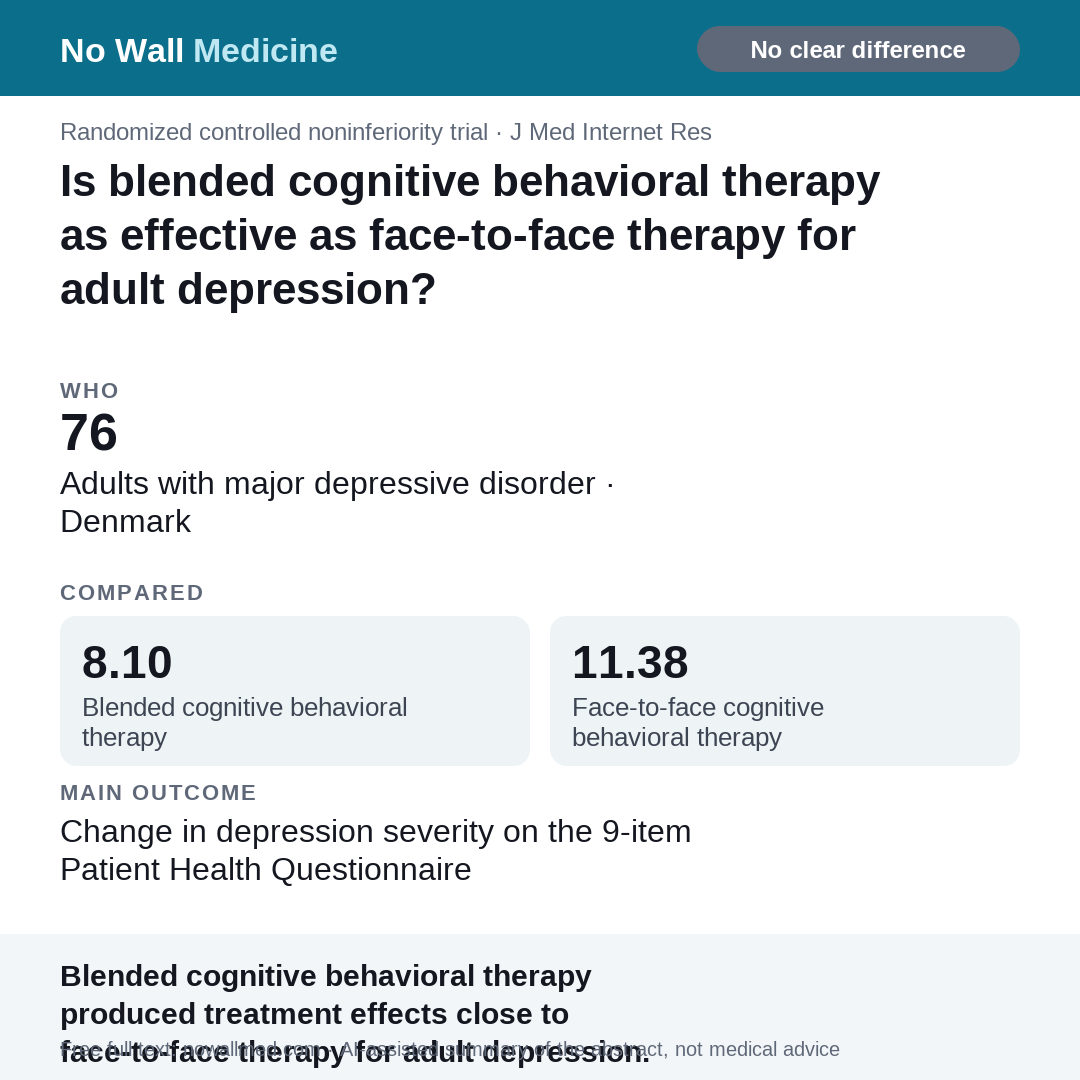
Is blended cognitive behavioral therapy as effective as face-to-face therapy for adult depression?
Who
76
Adults with major depressive disorder · Denmark
Compared
8.10Blended cognitive behavioral therapy
11.38Face-to-face cognitive behavioral therapy
Main outcome
Change in depression severity on the 9-item Patient Health Questionnaire
Result: mean difference 0.17 points
Bottom line: Blended cognitive behavioral therapy produced treatment effects close to face-to-face therapy for adult depression.
Limitation: The study was limited by small sample size.
J Med Internet Res · 2022-09-07Download image
Clinical question: Is blended cognitive behavioral therapy as effective as face-to-face therapy for adult depression?
Why it matters: It is unknown if combining internet-based modules with traditional face-to-face consultations is as effective as standard face-to-face therapy for adults with major depressive disorder.
Key points
- Researchers randomized 76 adults with major depressive disorder to receive either blended cognitive behavioral therapy or 12 sessions of traditional face-to-face therapy.
- At 6 months, the mean difference in depression severity scores between the two groups was 0.17 points on the 9-item Patient Health Questionnaire.
- Both treatment groups showed significant reductions in depression severity scores, with the face-to-face group reducing by 11.38 points and the blended group by 8.10 points.
Limitation the authors note: The study was limited by small sample size.
Headline and key points written with AI from the paper’s abstract, with every number checked against it. Read the paper before relying on them.
Was this summary helpful?
Subject terms
Cite this article
Mathiasen K, Andersen TE, Lichtenstein MB, et al. The Clinical Effectiveness of Blended Cognitive Behavioral Therapy Compared With Face-to-Face Cognitive Behavioral Therapy for Adult Depression: Randomized Controlled Noninferiority Trial. J Med Internet Res. 2022. doi:10.2196/36577
Spotted a mistake? Suggest a correction