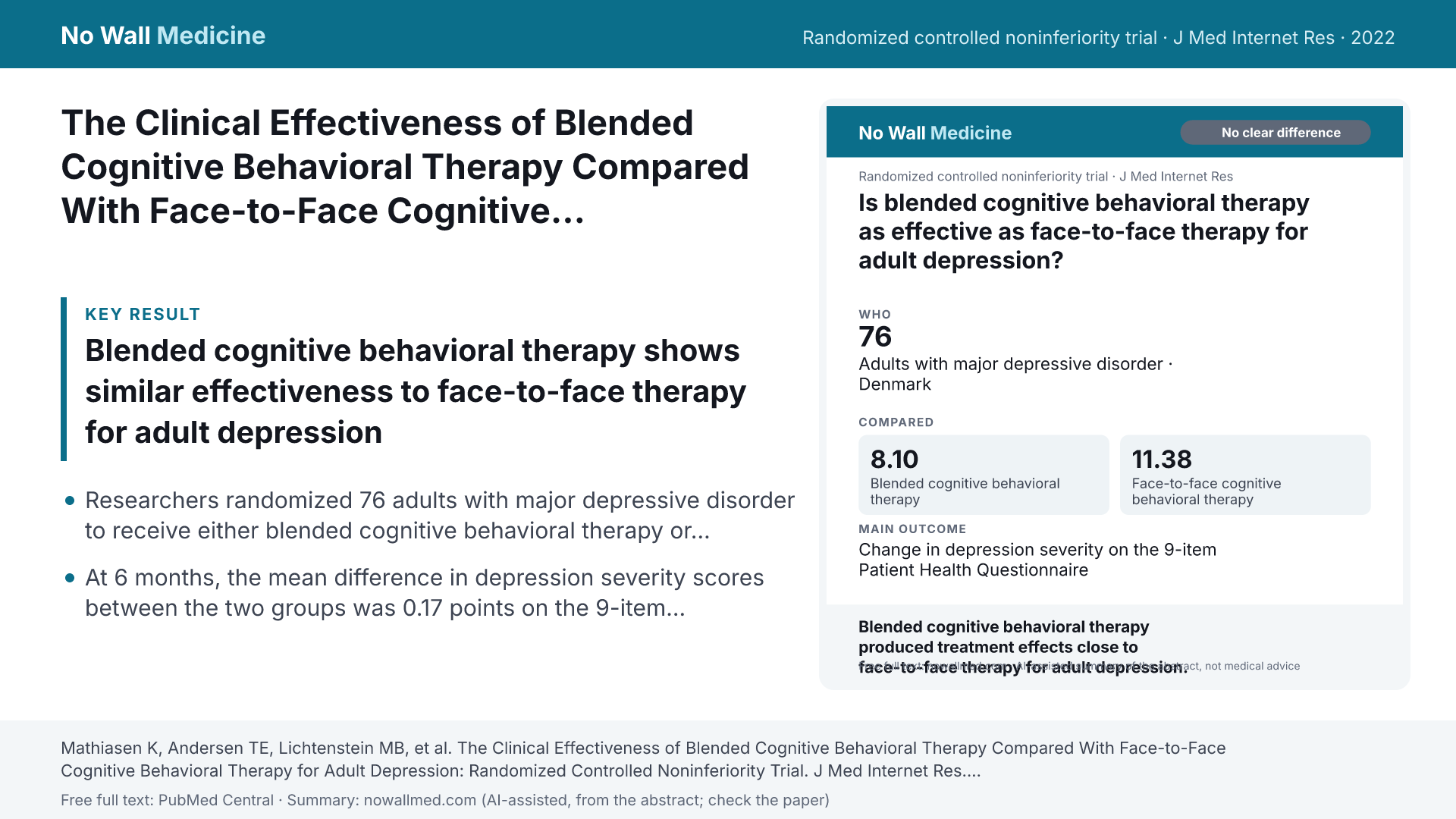
The Clinical Effectiveness of Blended Cognitive Behavioral Therapy Compared With Face-to-Face Cognitive Behavioral Therapy for Adult Depression: Randomized Controlled Noninferiority Trial
Key result: Blended cognitive behavioral therapy shows similar effectiveness to face-to-face therapy for adult depression
Randomized controlled noninferiority trialNo clear difference
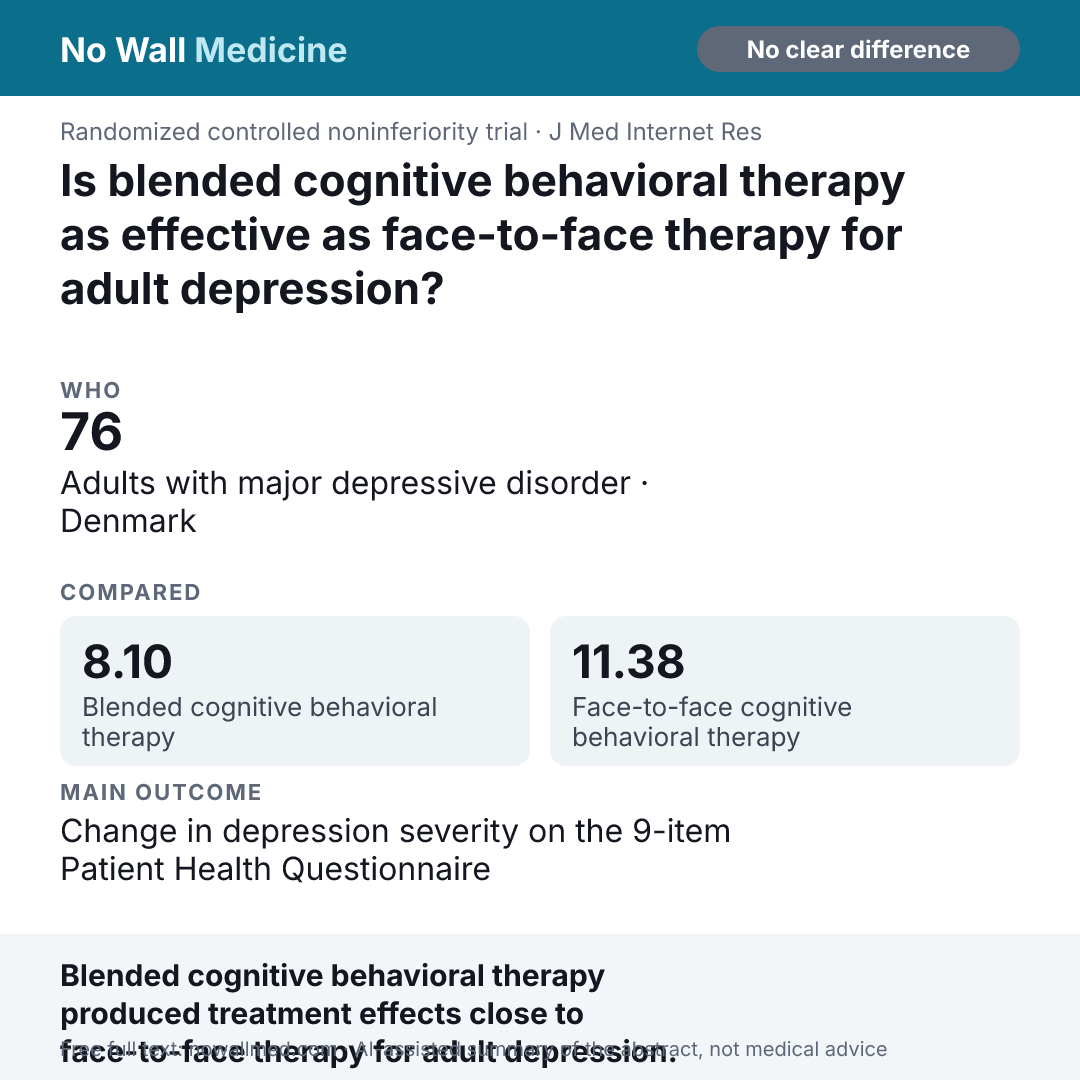
Is blended cognitive behavioral therapy as effective as face-to-face therapy for adult depression?
Who
76
Adults with major depressive disorder · Denmark
Compared
8.10Blended cognitive behavioral therapy
11.38Face-to-face cognitive behavioral therapy
Main outcome
Change in depression severity on the 9-item Patient Health Questionnaire
Result: mean difference 0.17 points
Bottom line: Blended cognitive behavioral therapy produced treatment effects close to face-to-face therapy for adult depression.
Limitation: The study was limited by small sample size.
J Med Internet Res · 2022-09-07 · Save PNG
Key points
- Researchers randomized 76 adults with major depressive disorder to receive either blended cognitive behavioral therapy or 12 sessions of traditional face-to-face therapy.
- At 6 months, the mean difference in depression severity scores between the two groups was 0.17 points on the 9-item Patient Health Questionnaire.
- Both treatment groups showed significant reductions in depression severity scores, with the face-to-face group reducing by 11.38 points and the blended group by 8.10 points.
Limitation the authors note: The study was limited by small sample size.
Discussion prompts
- Would these patients look like yours? Who was left out?
- Is the main outcome one that matters to patients?
- Is the difference large enough to change what you do?
Cite: Mathiasen K, Andersen TE, Lichtenstein MB, et al. The Clinical Effectiveness of Blended Cognitive Behavioral Therapy Compared With Face-to-Face Cognitive Behavioral Therapy for Adult Depression: Randomized Controlled Noninferiority Trial. J Med Internet Res. 2022;24(9):e36577. doi:10.2196/36577
Free full text: PubMed Central · Summary and visual abstract: nowallmed.com/a/the-clinical-effectiveness-of-blended-cognitive-behavioral-therapy-tn98rp/ (AI-assisted from the abstract; check the paper before relying on it).