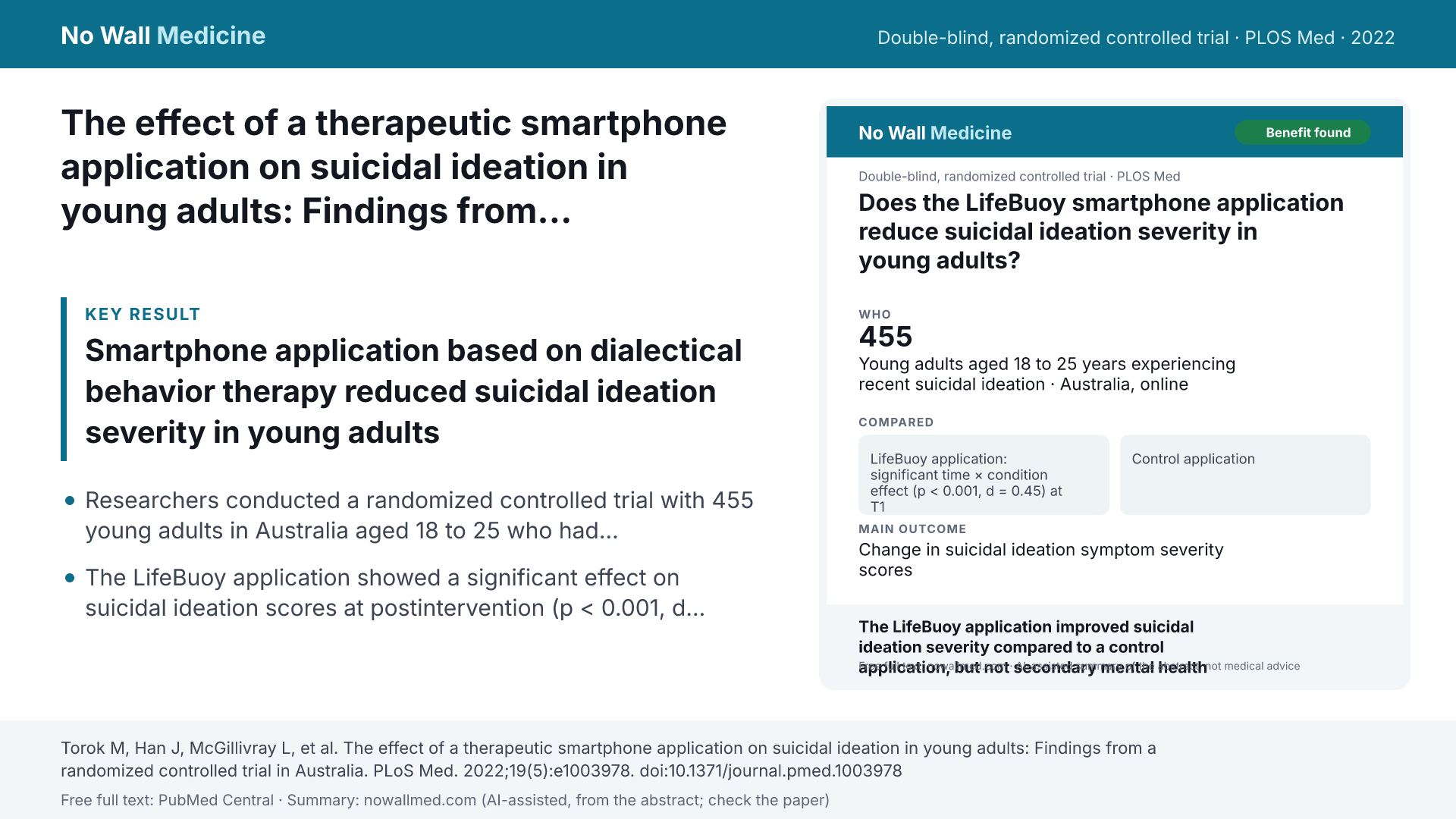
Smartphone application based on dialectical behavior therapy reduced suicidal ideation severity in young adults
The effect of a therapeutic smartphone application on suicidal ideation in young adults: Findings from a randomized controlled trial in Australia
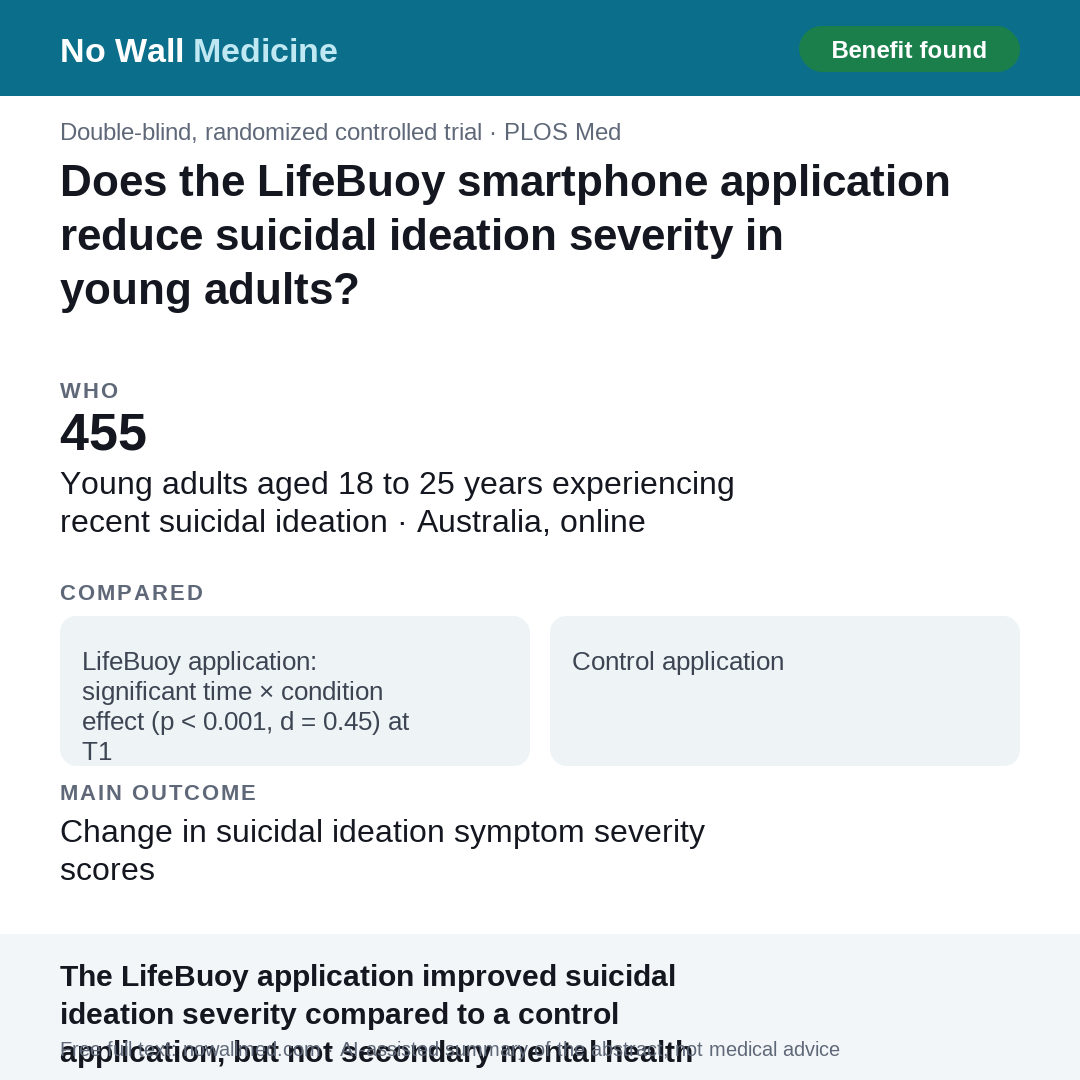
Double-blind, randomized controlled trialBenefit found
Does the LifeBuoy smartphone application reduce suicidal ideation severity in young adults?
Who
455
Young adults aged 18 to 25 years experiencing recent suicidal ideation · Australia, online
Compared
LifeBuoy application: significant time × condition effect (p < 0.001, d = 0.45) at T1
Control application
Main outcome
Change in suicidal ideation symptom severity scores
Result: d = 0.45 at T1 and d = 0.34 at T2
Bottom line: The LifeBuoy application improved suicidal ideation severity compared to a control application, but not secondary mental health outcomes.
Limitation: Lack of sample size calculations for secondary outcomes and high attrition rate at 3-month follow-up.
PLOS Med · 2022-05-31Download image
Clinical question: Does the LifeBuoy smartphone application reduce suicidal ideation severity in young adults?
Why it matters: Confirmatory evidence from randomized trials regarding the efficacy of smartphone applications for managing suicidal ideation in young adults is lacking.
Key points
- Researchers conducted a randomized controlled trial with 455 young adults in Australia aged 18 to 25 who had experienced recent suicidal ideation.
- The LifeBuoy application showed a significant effect on suicidal ideation scores at postintervention (p < 0.001, d = 0.45) and at 3-month follow-up (p = 0.007, d = 0.34).
- The application did not show superior effects for secondary outcomes including depression, anxiety, distress, or well-being.
Limitation the authors note: The authors state there was a lack of sample size calculations for secondary outcomes and a high attrition rate at the 3-month follow-up.
Headline and key points written with AI from the paper’s abstract, with every number checked against it. Read the paper before relying on them.
Was this summary helpful?
Subject terms
Cite this article
Torok M, Han J, McGillivray L, et al. The effect of a therapeutic smartphone application on suicidal ideation in young adults: Findings from a randomized controlled trial in Australia. PLOS Med. 2022. doi:10.1371/journal.pmed.1003978
Spotted a mistake? Suggest a correction