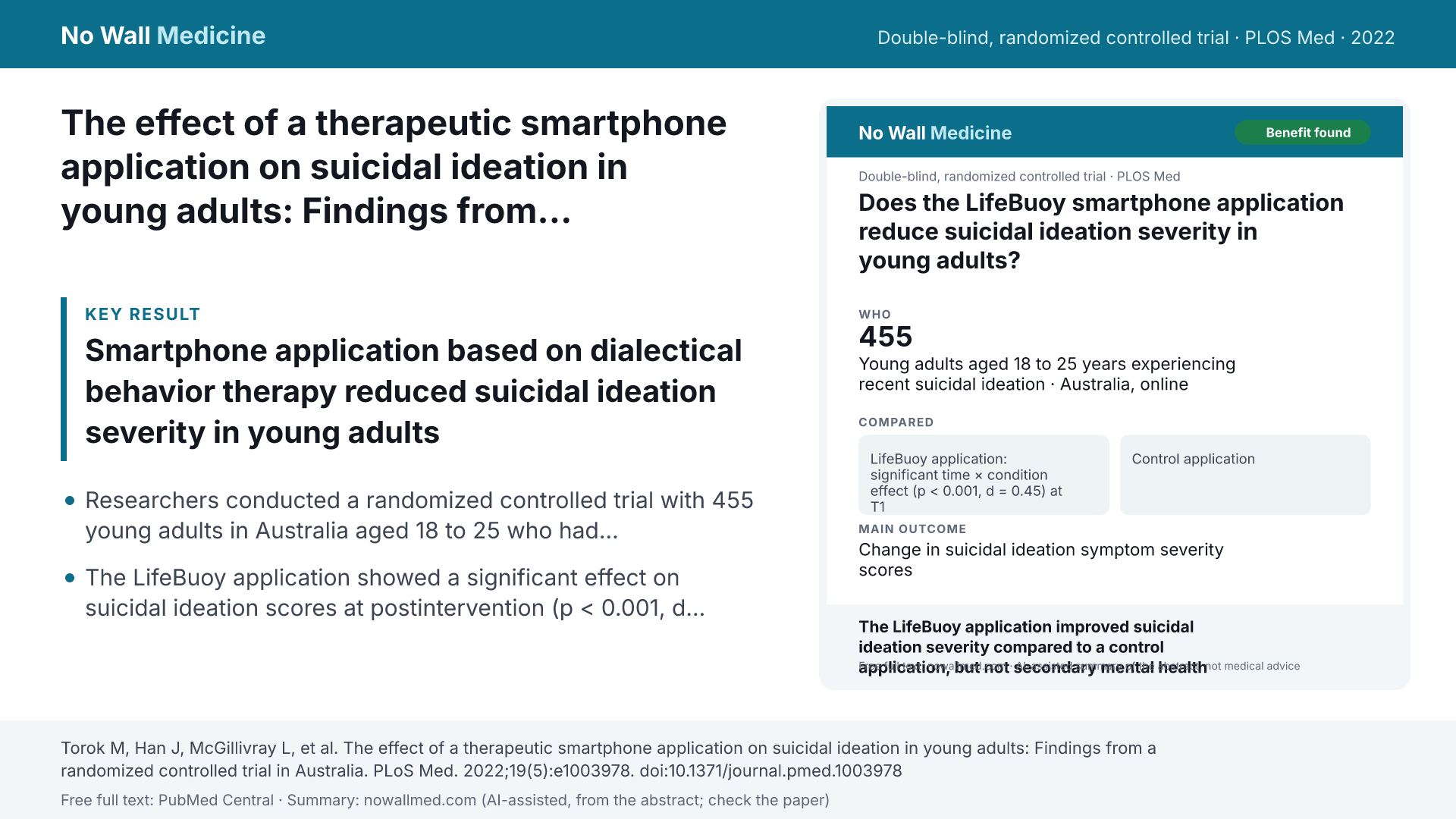
The effect of a therapeutic smartphone application on suicidal ideation in young adults: Findings from a randomized controlled trial in Australia
Key result: Smartphone application based on dialectical behavior therapy reduced suicidal ideation severity in young adults
Key points
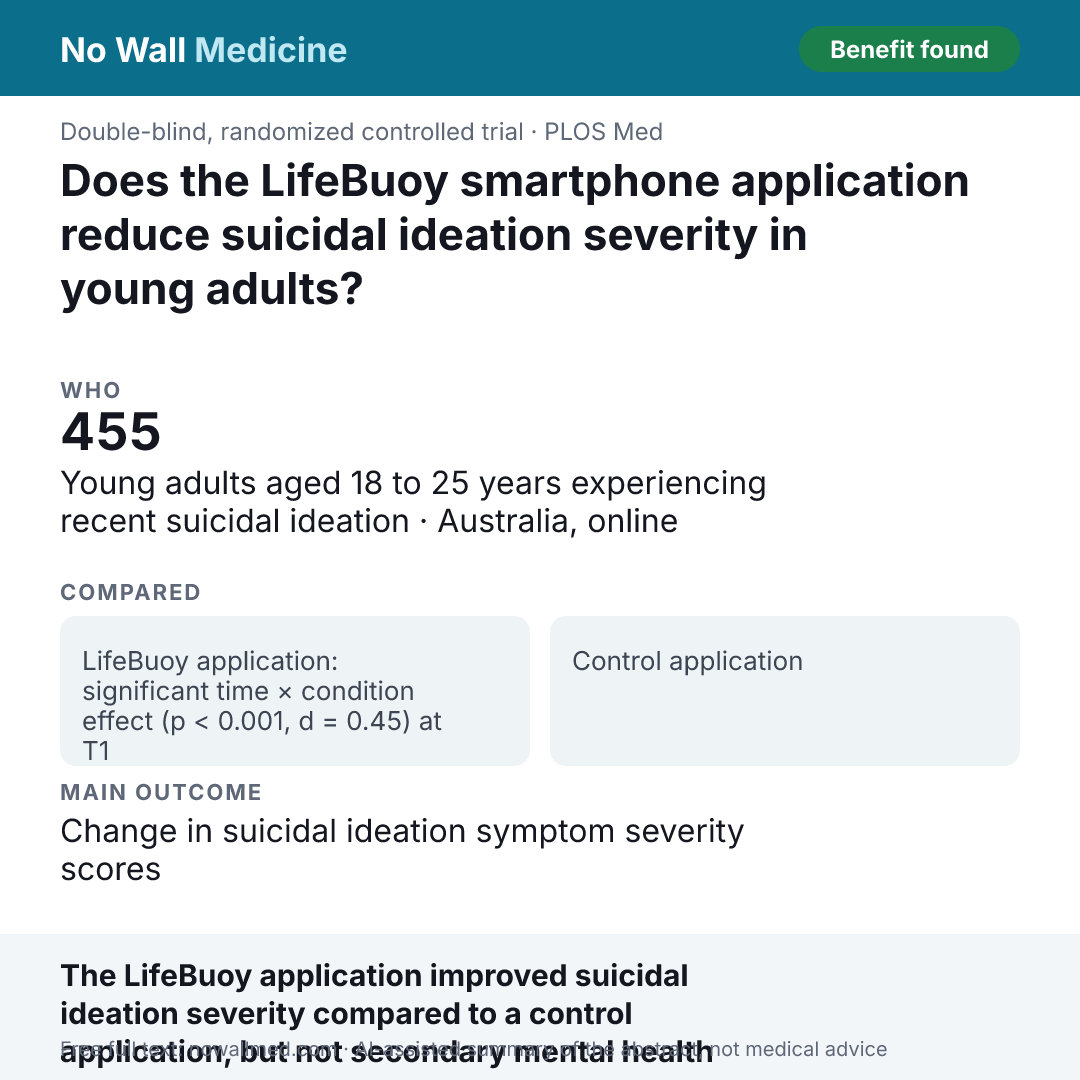
- Researchers conducted a randomized controlled trial with 455 young adults in Australia aged 18 to 25 who had experienced recent suicidal ideation.
- The LifeBuoy application showed a significant effect on suicidal ideation scores at postintervention (p < 0.001, d = 0.45) and at 3-month follow-up (p = 0.007, d = 0.34).
- The application did not show superior effects for secondary outcomes including depression, anxiety, distress, or well-being.
Why it matters: Confirmatory evidence from randomized trials regarding the efficacy of smartphone applications for managing suicidal ideation in young adults is lacking.
Limitation the authors note: The authors state there was a lack of sample size calculations for secondary outcomes and a high attrition rate at the 3-month follow-up.
Discussion prompts
- Would these patients look like yours? Who was left out?
- Is the main outcome one that matters to patients?
- Is the difference large enough to change what you do?
Cite: Torok M, Han J, McGillivray L, et al. The effect of a therapeutic smartphone application on suicidal ideation in young adults: Findings from a randomized controlled trial in Australia. PLoS Med. 2022;19(5):e1003978. doi:10.1371/journal.pmed.1003978
Free full text: PubMed Central · Summary and visual abstract: nowallmed.com/a/the-effect-of-a-therapeutic-smartphone-application-on-suicidal-g7ixmc/ (AI-assisted from the abstract; check the paper before relying on it).