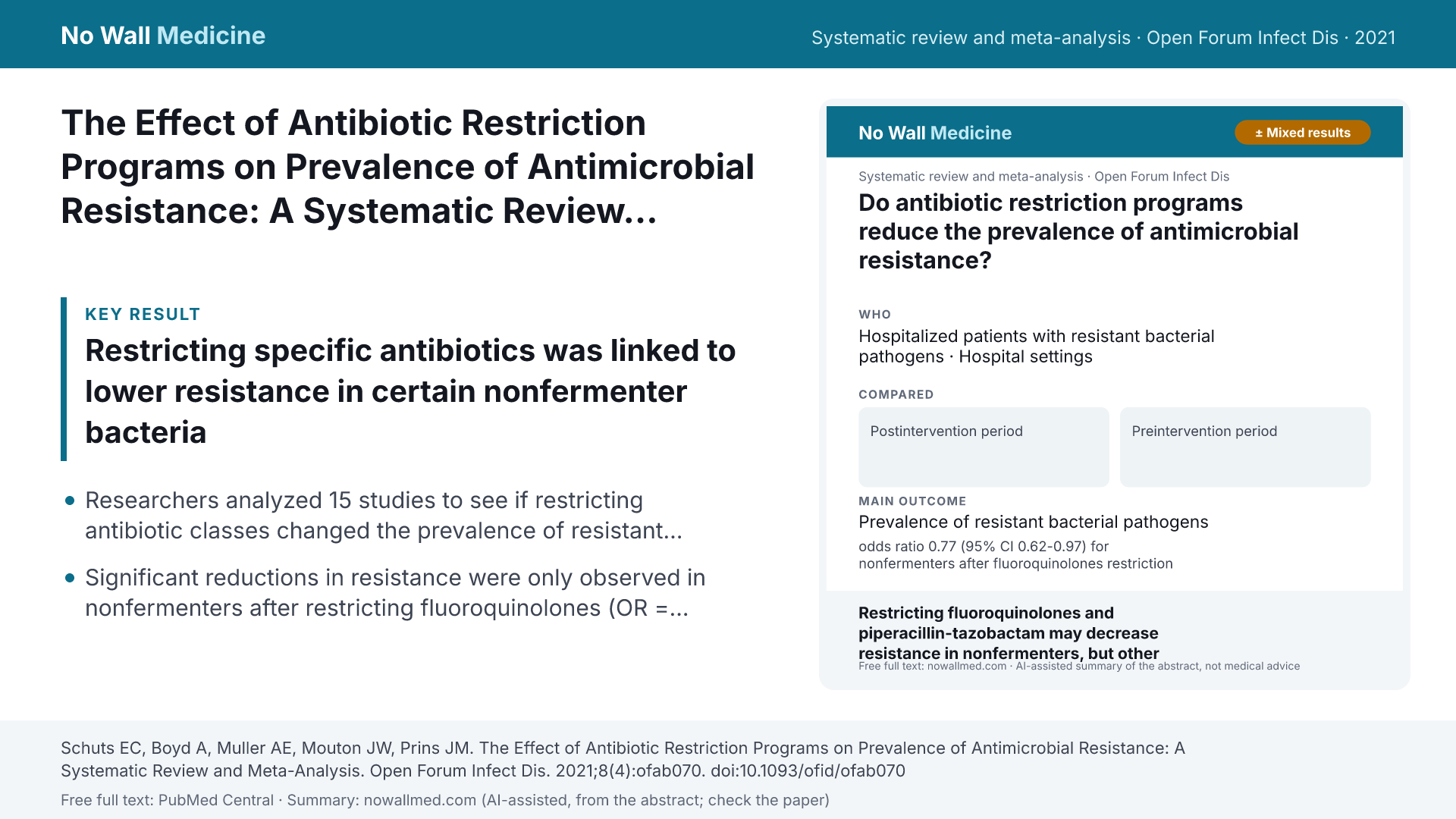
Restricting specific antibiotics was linked to lower resistance in certain nonfermenter bacteria
The Effect of Antibiotic Restriction Programs on Prevalence of Antimicrobial Resistance: A Systematic Review and Meta-Analysis
Systematic review and meta-analysisMixed results
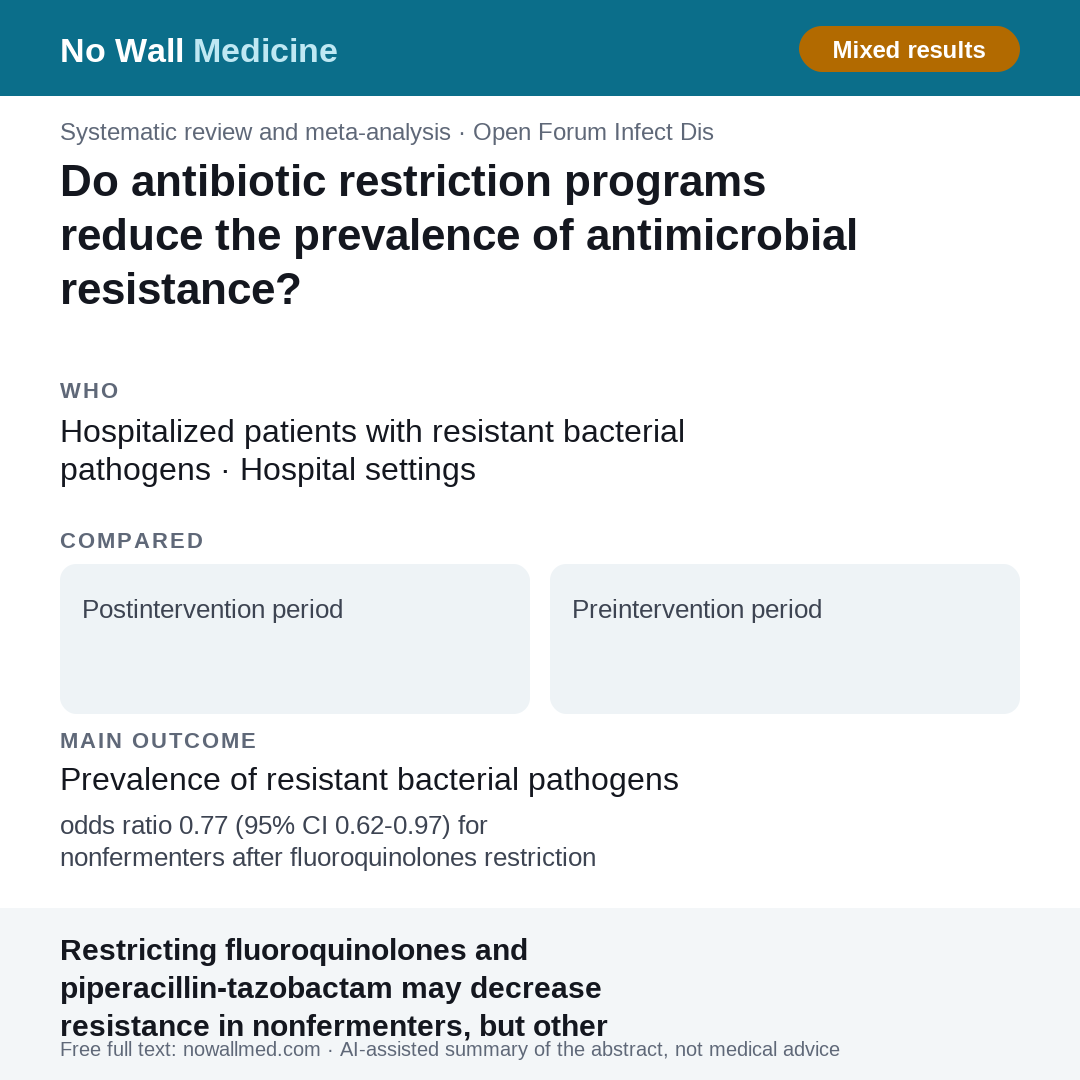
Do antibiotic restriction programs reduce the prevalence of antimicrobial resistance?
Who
Hospitalized patients with resistant bacterial pathogens · Hospital settings
Compared
Postintervention period
Preintervention period
Main outcome
Prevalence of resistant bacterial pathogens
Result: odds ratio 0.77 (95% CI 0.62-0.97) for nonfermenters after fluoroquinolones restriction
Bottom line: Restricting fluoroquinolones and piperacillin-tazobactam may decrease resistance in nonfermenters, but other restrictions showed no confirmed benefit.
Limitation: Overall low quality of evidence and high degrees of heterogeneity observed.
Open Forum Infect Dis · 2021-02-13Download image
Clinical question: Do antibiotic restriction programs reduce the prevalence of antimicrobial resistance?
Why it matters: It is unclear if restricting specific classes of antibiotics in hospital settings effectively contains the development of resistant bacterial pathogens.
Key points
- Researchers analyzed 15 studies to see if restricting antibiotic classes changed the prevalence of resistant bacteria in hospitals.
- Significant reductions in resistance were only observed in nonfermenters after restricting fluoroquinolones (OR = 0.77, 95% CI = 0.62-0.97) and piperacillin-tazobactam (OR = 0.81, 95% CI = 0.72-0.92).
- Restricting carbapenems or third-generation cephalosporins was not linked to a decrease in resistance among Enterobacterales, nonfermenters, or Gram-positive bacteria.
Limitation the authors note: The authors reported an overall low quality of evidence.
Headline and key points written with AI from the paper’s abstract, with every number checked against it. Read the paper before relying on them.
Was this summary helpful?
Cite this article
Schuts EC, Boyd A, Muller AE, Mouton JW, Prins JM. The Effect of Antibiotic Restriction Programs on Prevalence of Antimicrobial Resistance: A Systematic Review and Meta-Analysis. Open Forum Infect Dis. 2021. doi:10.1093/ofid/ofab070
Spotted a mistake? Suggest a correction