The effect of high-definition transcranial direct current stimulation intensity on motor performance in healthy adults: a randomized controlled trial
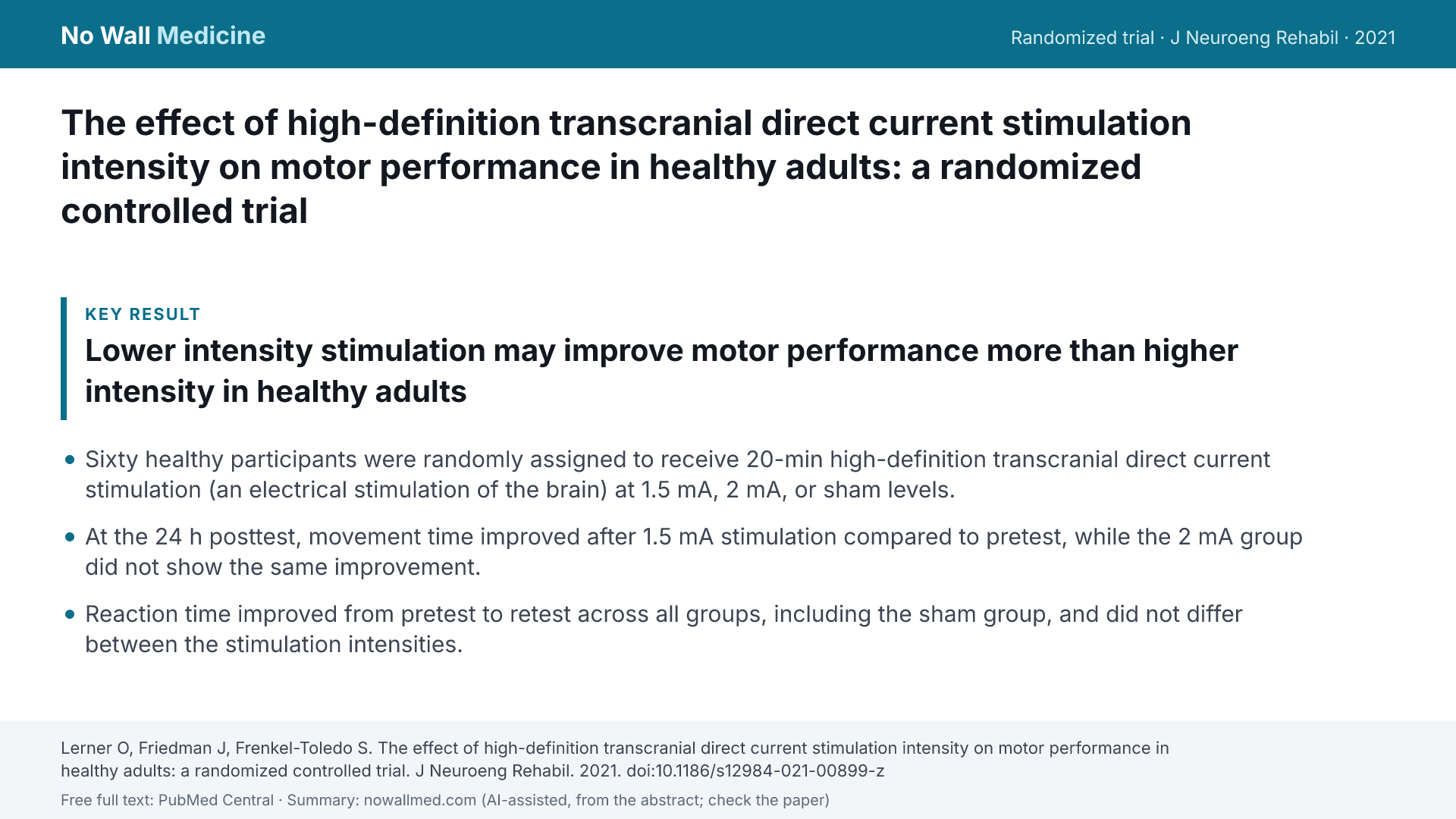
Key result: Lower intensity stimulation may improve motor performance more than higher intensity in healthy adults
Key points
- Sixty healthy participants were randomly assigned to receive 20-min high-definition transcranial direct current stimulation (an electrical stimulation of the brain) at 1.5 mA, 2 mA, or sham levels.
- At the 24 h posttest, movement time improved after 1.5 mA stimulation compared to pretest, while the 2 mA group did not show the same improvement.
- Reaction time improved from pretest to retest across all groups, including the sham group, and did not differ between the stimulation intensities.
Why it matters: The optimal current intensity for enhancing motor performance using high-definition transcranial direct current stimulation has not yet been determined.
Discussion prompts
- Would these patients look like yours? Who was left out?
- Is the main outcome one that matters to patients?
- Is the difference large enough to change what you do?
Cite: Lerner O, Friedman J, Frenkel-Toledo S. The effect of high-definition transcranial direct current stimulation intensity on motor performance in healthy adults: a randomized controlled trial. J Neuroeng Rehabil. 2021. doi:10.1186/s12984-021-00899-z
Free full text: PubMed Central · Summary and visual abstract: nowallmed.com/a/the-effect-of-high-definition-transcranial-direct-current-stimulation-1jcmv2a/ (AI-assisted from the abstract; check the paper before relying on it).