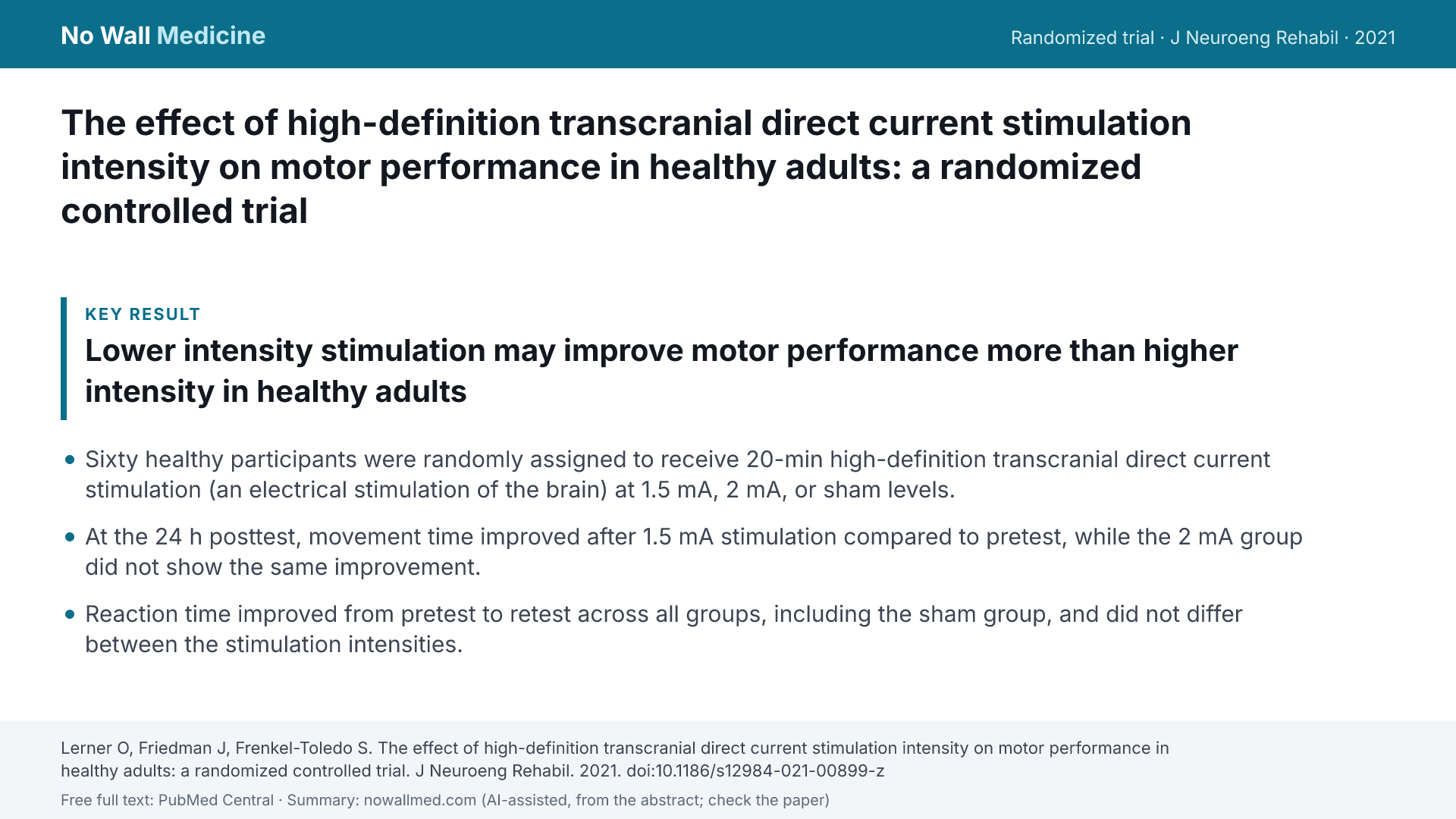
Lower intensity stimulation may improve motor performance more than higher intensity in healthy adults
The effect of high-definition transcranial direct current stimulation intensity on motor performance in healthy adults: a randomized controlled trial
Why it matters: The optimal current intensity for enhancing motor performance using high-definition transcranial direct current stimulation has not yet been determined.
Key points
- Sixty healthy participants were randomly assigned to receive 20-min high-definition transcranial direct current stimulation (an electrical stimulation of the brain) at 1.5 mA, 2 mA, or sham levels.
- At the 24 h posttest, movement time improved after 1.5 mA stimulation compared to pretest, while the 2 mA group did not show the same improvement.
- Reaction time improved from pretest to retest across all groups, including the sham group, and did not differ between the stimulation intensities.
Headline and key points written with AI from the paper’s abstract, with every number checked against it. Read the paper before relying on them.
Was this summary helpful?
Subject terms
Cite this article
Lerner O, Friedman J, Frenkel-Toledo S. The effect of high-definition transcranial direct current stimulation intensity on motor performance in healthy adults: a randomized controlled trial. J Neuroeng Rehabil. 2021. doi:10.1186/s12984-021-00899-z
Spotted a mistake? Suggest a correction
Top studies every Monday
The week’s key trials and guidelines in your specialties, plus any topics you follow. By email, free.
Get the weekly digest