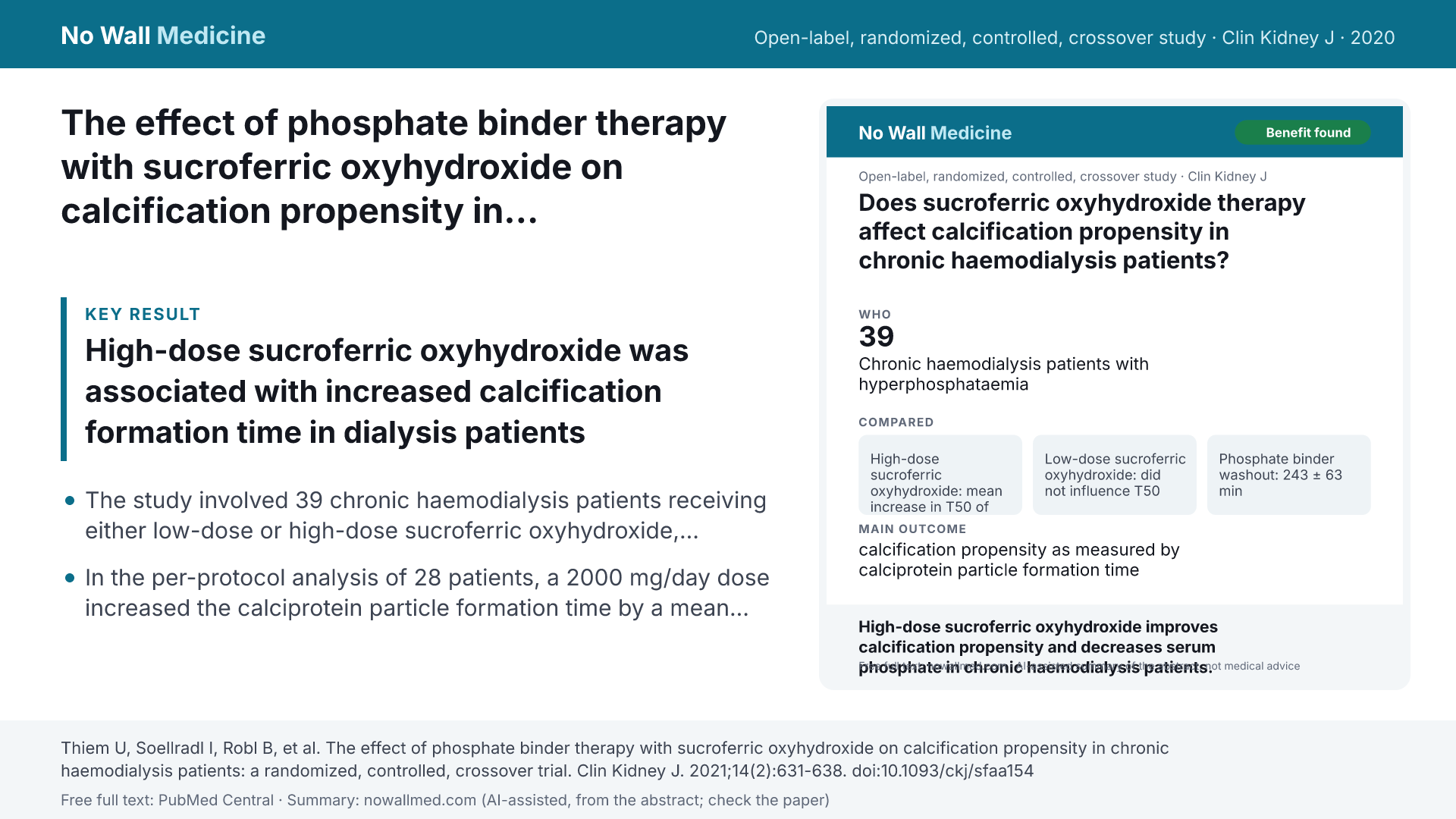
High-dose sucroferric oxyhydroxide was associated with increased calcification formation time in dialysis patients
The effect of phosphate binder therapy with sucroferric oxyhydroxide on calcification propensity in chronic haemodialysis patients: a randomized, controlled, crossover trial
Open-label, randomized, controlled, crossover studyBenefit found
Does sucroferric oxyhydroxide therapy affect calcification propensity in chronic haemodialysis patients?
Who
39
Chronic haemodialysis patients with hyperphosphataemia
Compared
High-dose sucroferric oxyhydroxide: mean increase in T50 of 66 min (95% CI 49-84 min)
Low-dose sucroferric oxyhydroxide: did not influence T50
Phosphate binder washout: 243 ± 63 min
Main outcome
calcification propensity as measured by calciprotein particle formation time
Result: mean increase in T50 of 66 min (95% CI 49-84 min)
Bottom line: High-dose sucroferric oxyhydroxide improves calcification propensity and decreases serum phosphate in chronic haemodialysis patients.
Clin Kidney J · 2020-10-28Download image
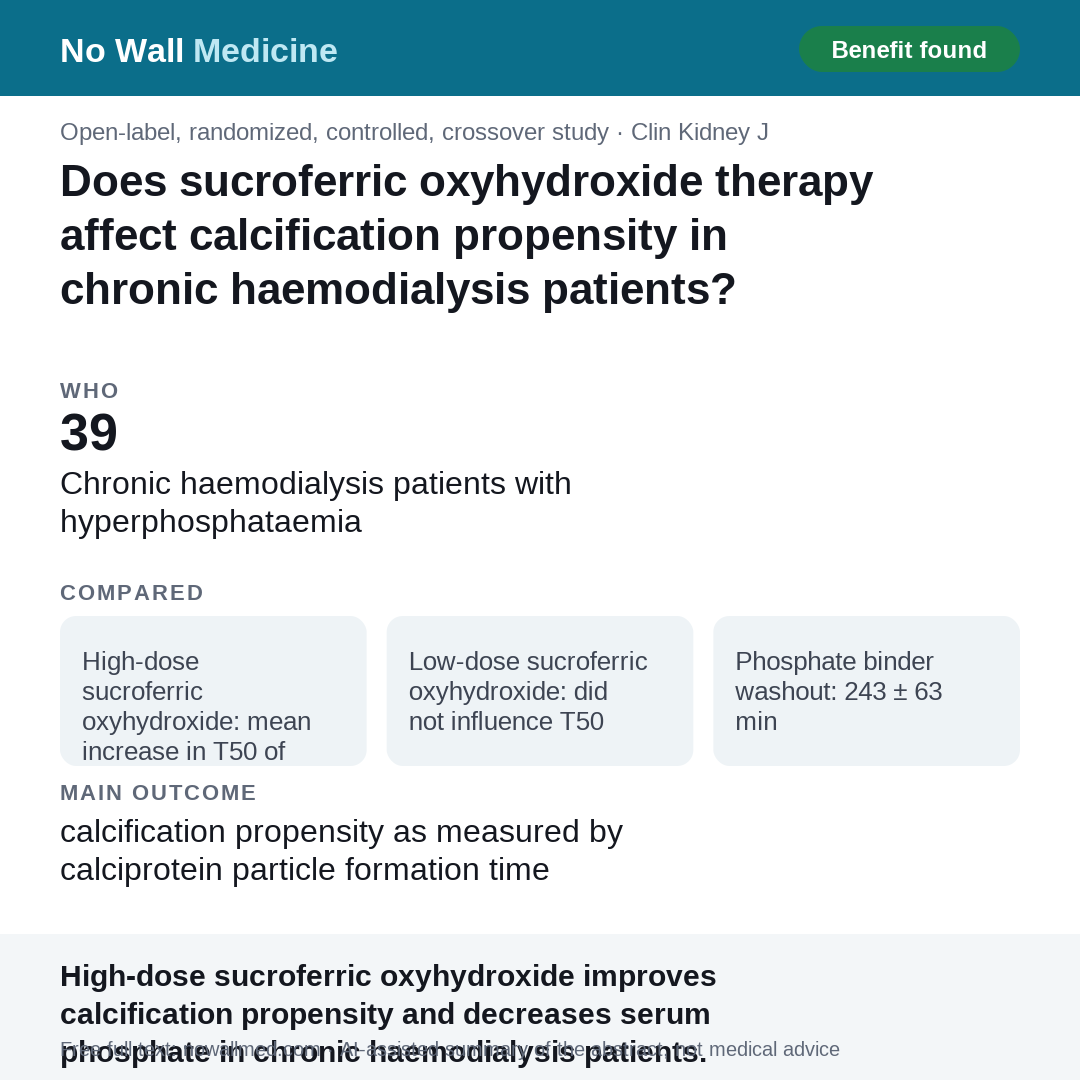
Clinical question: Does sucroferric oxyhydroxide therapy affect calcification propensity in chronic haemodialysis patients?
Why it matters: It was unknown if lowering serum phosphate with oral phosphate binder therapy affects calcification propensity in patients with end-stage renal disease.
Key points
- The study involved 39 chronic haemodialysis patients receiving either low-dose or high-dose sucroferric oxyhydroxide, a medication used to bind phosphate in the gut.
- In the per-protocol analysis of 28 patients, a 2000 mg/day dose increased the calciprotein particle formation time by a mean of 66 min compared to washout.
- High-dose treatment was associated with a decrease in serum phosphate from 2.28 ± 0.5 to 1.63 ± 0.43 mmol/L.
Headline and key points written with AI from the paper’s abstract, with every number checked against it. Read the paper before relying on them.
Was this summary helpful?
Cite this article
Thiem U, Soellradl I, Robl B, et al. The effect of phosphate binder therapy with sucroferric oxyhydroxide on calcification propensity in chronic haemodialysis patients: a randomized, controlled, crossover trial. Clin Kidney J. 2020. doi:10.1093/ckj/sfaa154
Spotted a mistake? Suggest a correction