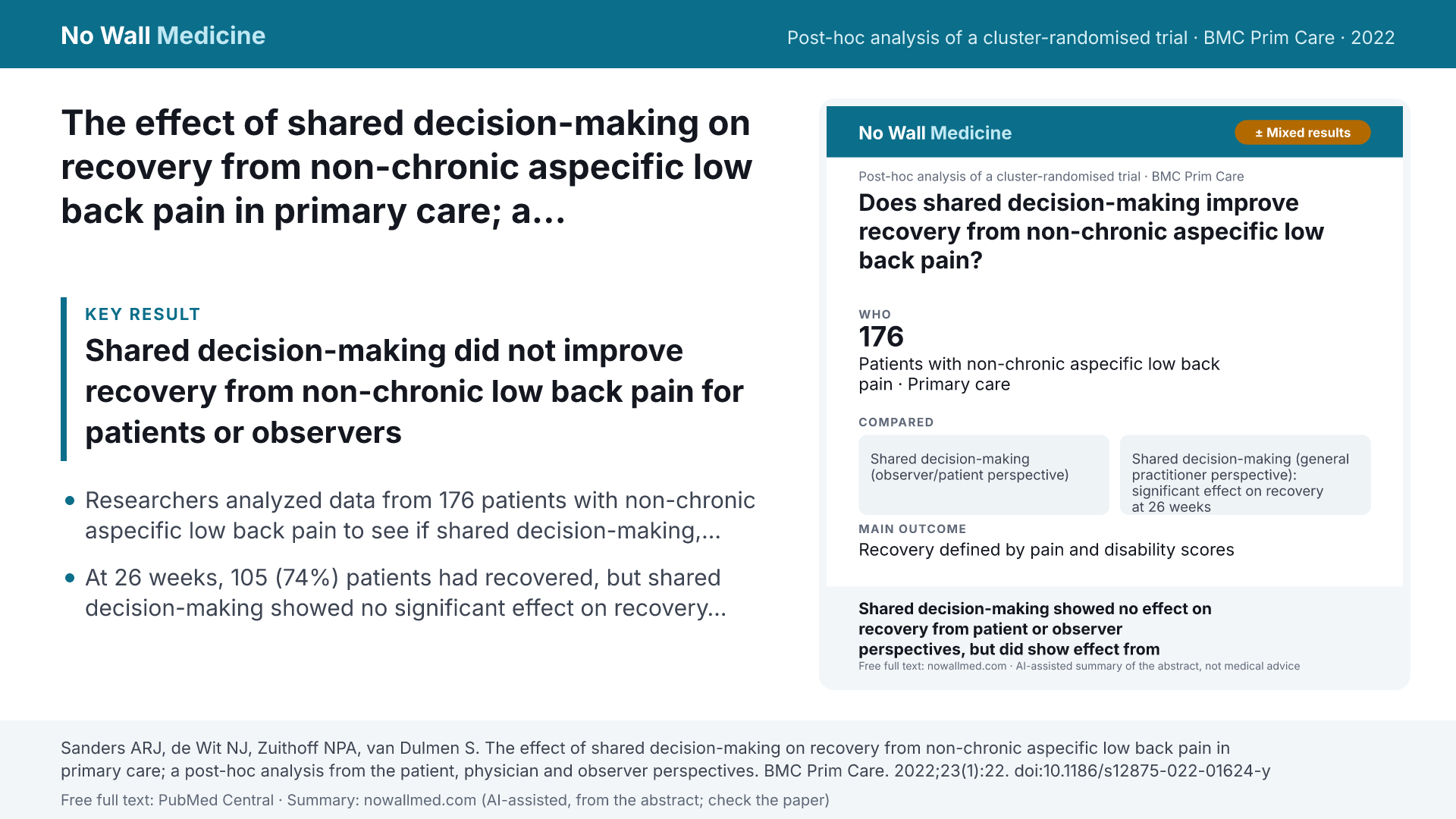
Shared decision-making did not improve recovery from non-chronic low back pain for patients or observers
The effect of shared decision-making on recovery from non-chronic aspecific low back pain in primary care; a post-hoc analysis from the patient, physician and observer perspectives
Post-hoc analysis of a cluster-randomised trialMixed results
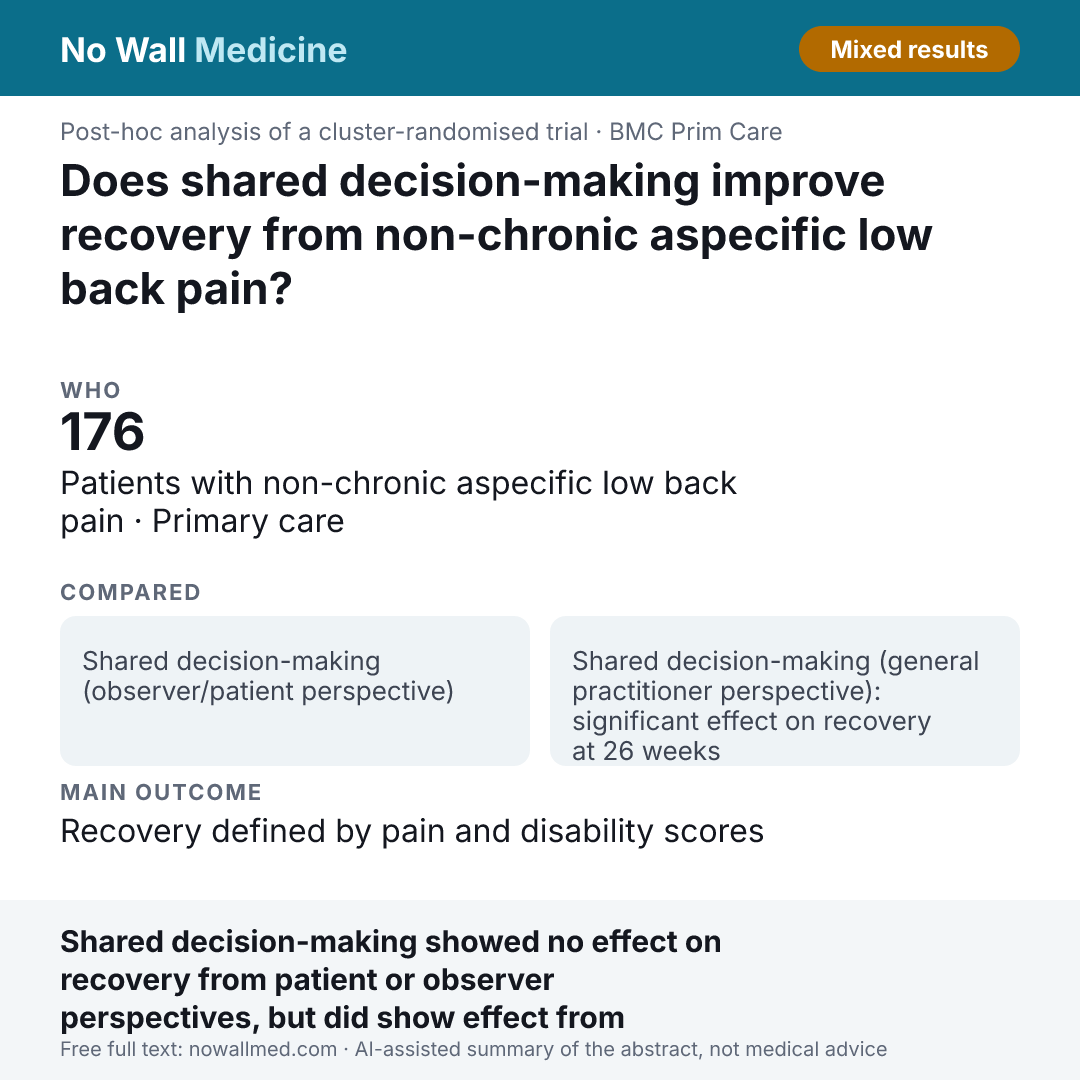
Does shared decision-making improve recovery from non-chronic aspecific low back pain?
Who
176
Patients with non-chronic aspecific low back pain · Primary care
Compared
Shared decision-making (observer/patient perspective)
Shared decision-making (general practitioner perspective): significant effect on recovery at 26 weeks
Main outcome
Recovery defined by pain and disability scores
Bottom line: Shared decision-making showed no effect on recovery from patient or observer perspectives, but did show effect from general practitioner perspectives.
BMC Prim Care · 2022-02-02 · Save PNG
Clinical question: Does shared decision-making improve recovery from non-chronic aspecific low back pain?
Why it matters: The effect of shared decision-making on recovery from physical somatic conditions remains a subject of debate.
Key points
- Researchers analyzed data from 176 patients with non-chronic aspecific low back pain to see if shared decision-making, or collaborative treatment planning, affected recovery.
- At 26 weeks, 105 (74%) patients had recovered, but shared decision-making showed no significant effect on recovery from the patient or observer perspectives.
- From the general practitioner perspective, shared decision-making was associated with recovery at 26 weeks, though the lowest recovery probability occurred at a medium level of perceived decision-making.
Headline and key points written with AI from the paper’s abstract, with every number checked against it. Read the paper before relying on them.
Was this summary helpful?
Subject terms
Headline, design, result, key points, caveat and citation as plain text.
Cite this article
Sanders ARJ, de Wit NJ, Zuithoff NPA, van Dulmen S. The effect of shared decision-making on recovery from non-chronic aspecific low back pain in primary care; a post-hoc analysis from the patient, physician and observer perspectives. BMC Prim Care. 2022. doi:10.1186/s12875-022-01624-y
Spotted a mistake? Suggest a correction