The effect of shared decision-making on recovery from non-chronic aspecific low back pain in primary care; a post-hoc analysis from the patient, physician and observer perspectives
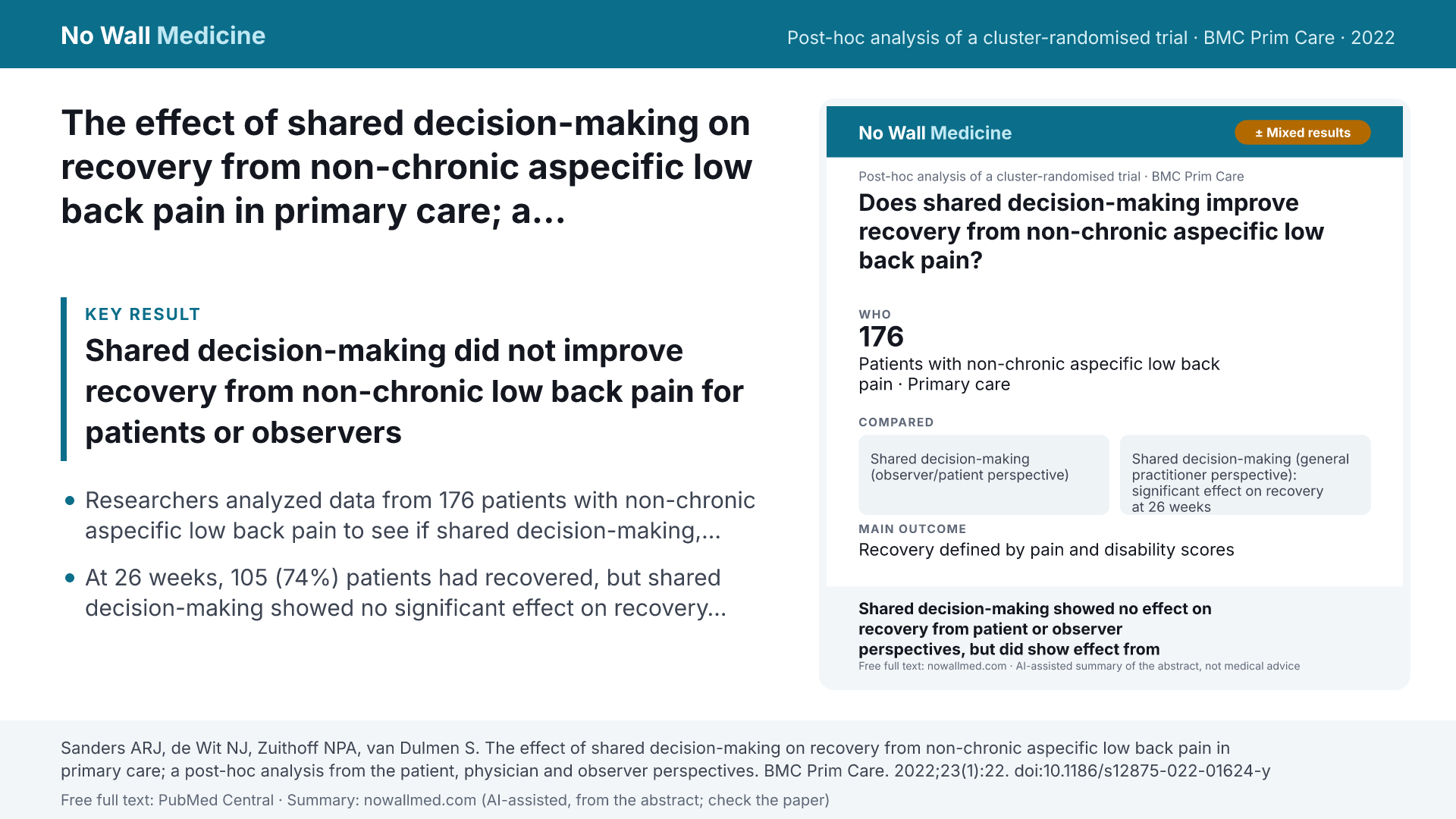
Key result: Shared decision-making did not improve recovery from non-chronic low back pain for patients or observers
Key points
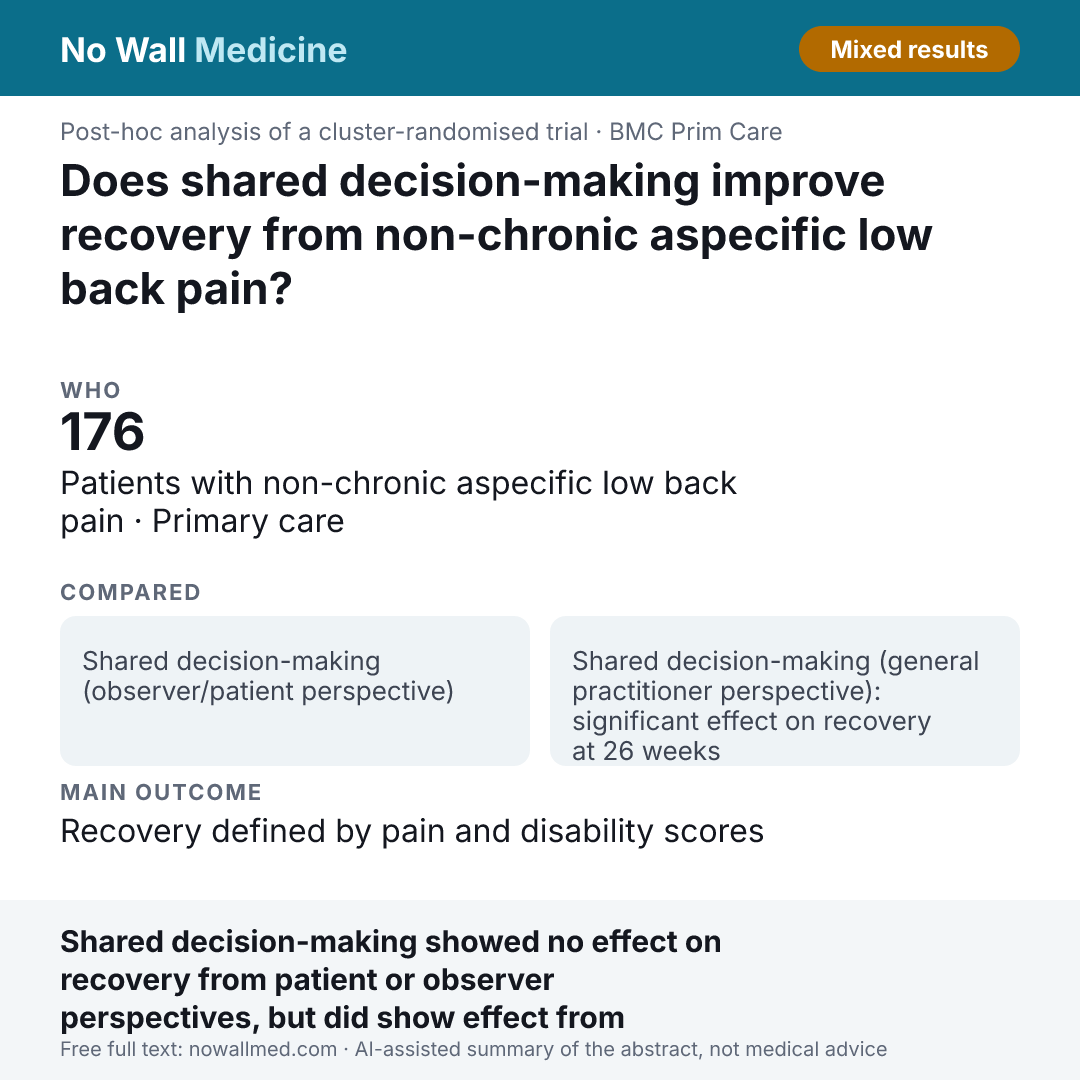
- Researchers analyzed data from 176 patients with non-chronic aspecific low back pain to see if shared decision-making, or collaborative treatment planning, affected recovery.
- At 26 weeks, 105 (74%) patients had recovered, but shared decision-making showed no significant effect on recovery from the patient or observer perspectives.
- From the general practitioner perspective, shared decision-making was associated with recovery at 26 weeks, though the lowest recovery probability occurred at a medium level of perceived decision-making.
Why it matters: The effect of shared decision-making on recovery from physical somatic conditions remains a subject of debate.
Discussion prompts
- Would these patients look like yours? Who was left out?
- Is the main outcome one that matters to patients?
- Is the difference large enough to change what you do?
Cite: Sanders ARJ, de Wit NJ, Zuithoff NPA, van Dulmen S. The effect of shared decision-making on recovery from non-chronic aspecific low back pain in primary care; a post-hoc analysis from the patient, physician and observer perspectives. BMC Prim Care. 2022. doi:10.1186/s12875-022-01624-y
Free full text: PubMed Central · Summary and visual abstract: nowallmed.com/a/the-effect-of-shared-decision-making-on-recovery-from-non-chronic-vq547a/ (AI-assisted from the abstract; check the paper before relying on it).