Brief intervention showed no significant difference in alcohol intake for intensive care unit survivors
The effectiveness of a brief intervention for intensive care unit patients with hazardous alcohol use: a randomized controlled trial
Randomized controlled trialUnclear result
Is a brief intervention effective in reducing alcohol intake in intensive care unit survivors?
Who
234
Adult intensive care unit patients with hazardous alcohol use · Three Finnish university hospitals
Compared
Brief intervention: 6.5 g (interquartile range [IQR] 0-141) at 6 months
Treatment as usual: 0 g (0-72) at 6 months
Main outcome
Self-reported alcohol consumption during the preceding week
Bottom line: The study cannot confirm or reject if brief intervention reduces alcohol consumption compared to usual care.
Limitation: The trial was terminated early due to slow recruitment during the pandemic and was underpowered.
Crit Care · 2024-04-30Download image
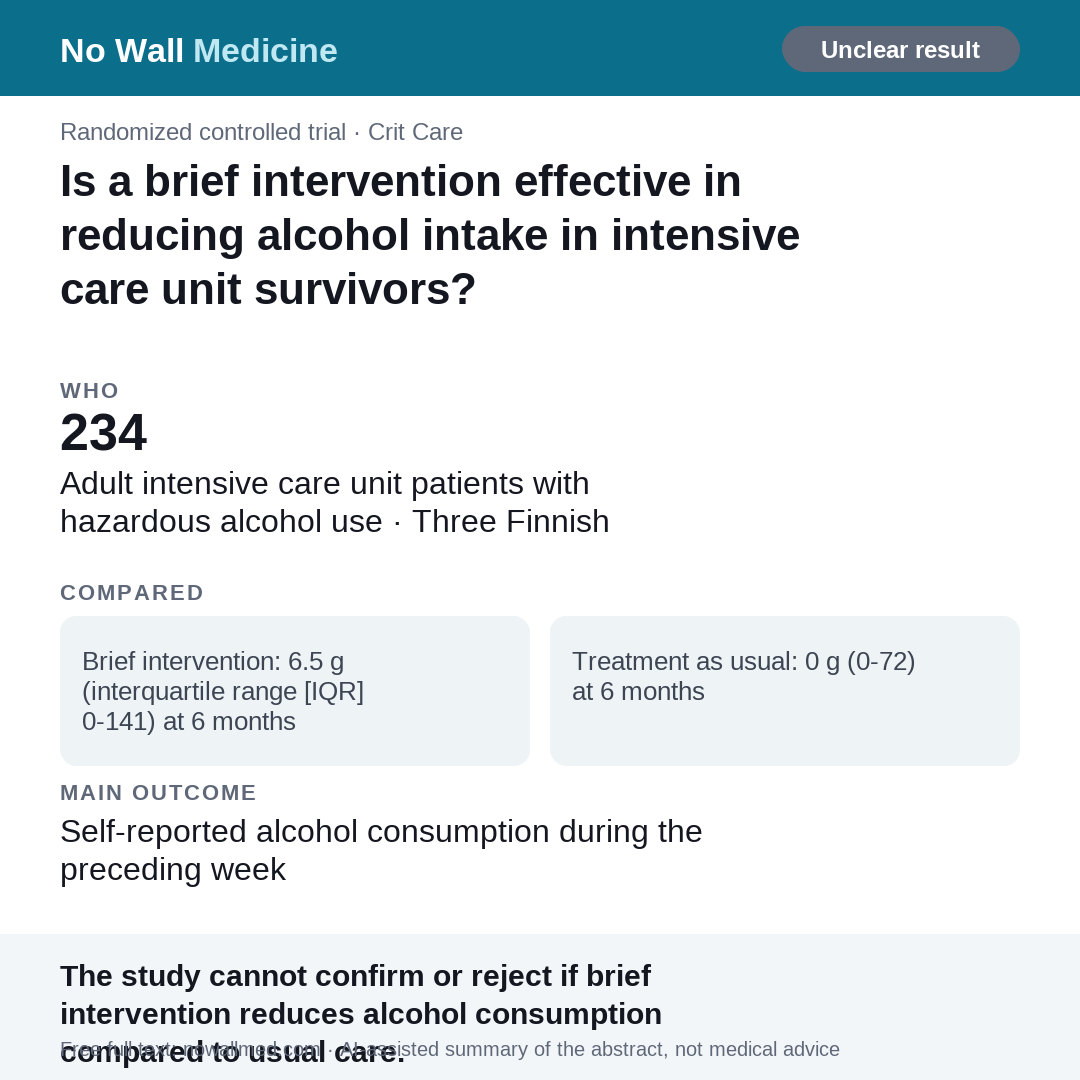
Clinical question: Is a brief intervention effective in reducing alcohol intake in intensive care unit survivors?
Why it matters: It is unknown if a single brief intervention delivered shortly after critical illness can reduce alcohol consumption in intensive care unit survivors.
Key points
- Researchers randomized 234 adult intensive care unit patients with hazardous alcohol use to receive either a brief intervention or treatment as usual.
- At 6 months, median alcohol intake was 6.5 g in the intervention group and 0 g in the control group (p = 0.544).
- At 12 months, median alcohol intake was 24 g in the intervention group and 0 g in the control group (p = 0.157).
Limitation the authors note: The trial was terminated early due to slow recruitment during the pandemic and was underpowered to confirm or reject the hypothesis.
Headline and key points written with AI from the paper’s abstract, with every number checked against it. Read the paper before relying on them.
Was this summary helpful?
Subject terms
Cite this article
Nissilä E, Hynninen M, Jalkanen V, Kuitunen A, Bäcklund M, Inkinen O. The effectiveness of a brief intervention for intensive care unit patients with hazardous alcohol use: a randomized controlled trial. Crit Care. 2024. doi:10.1186/s13054-024-04925-z
Spotted a mistake? Suggest a correction
Top studies every Monday
The week’s key trials and guidelines in your specialties, plus any topics you follow. By email, free.
Get the weekly digest