The effectiveness of cognitive behavioral therapy for insomnia on sleep outcomes in the context of pain among older adult veterans
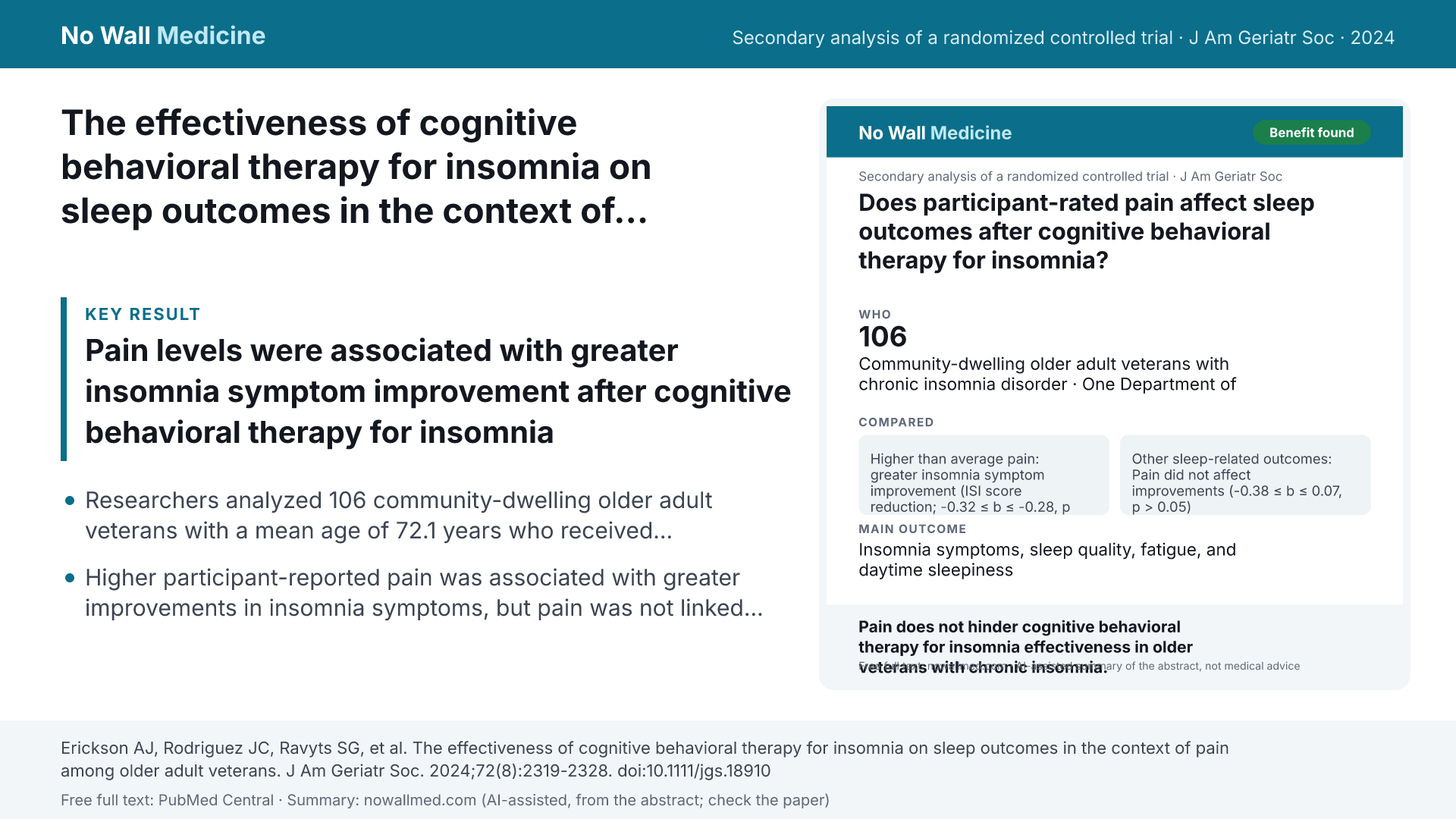
Key result: Pain levels were associated with greater insomnia symptom improvement after cognitive behavioral therapy for insomnia
Secondary analysis of a randomized controlled trialBenefit found
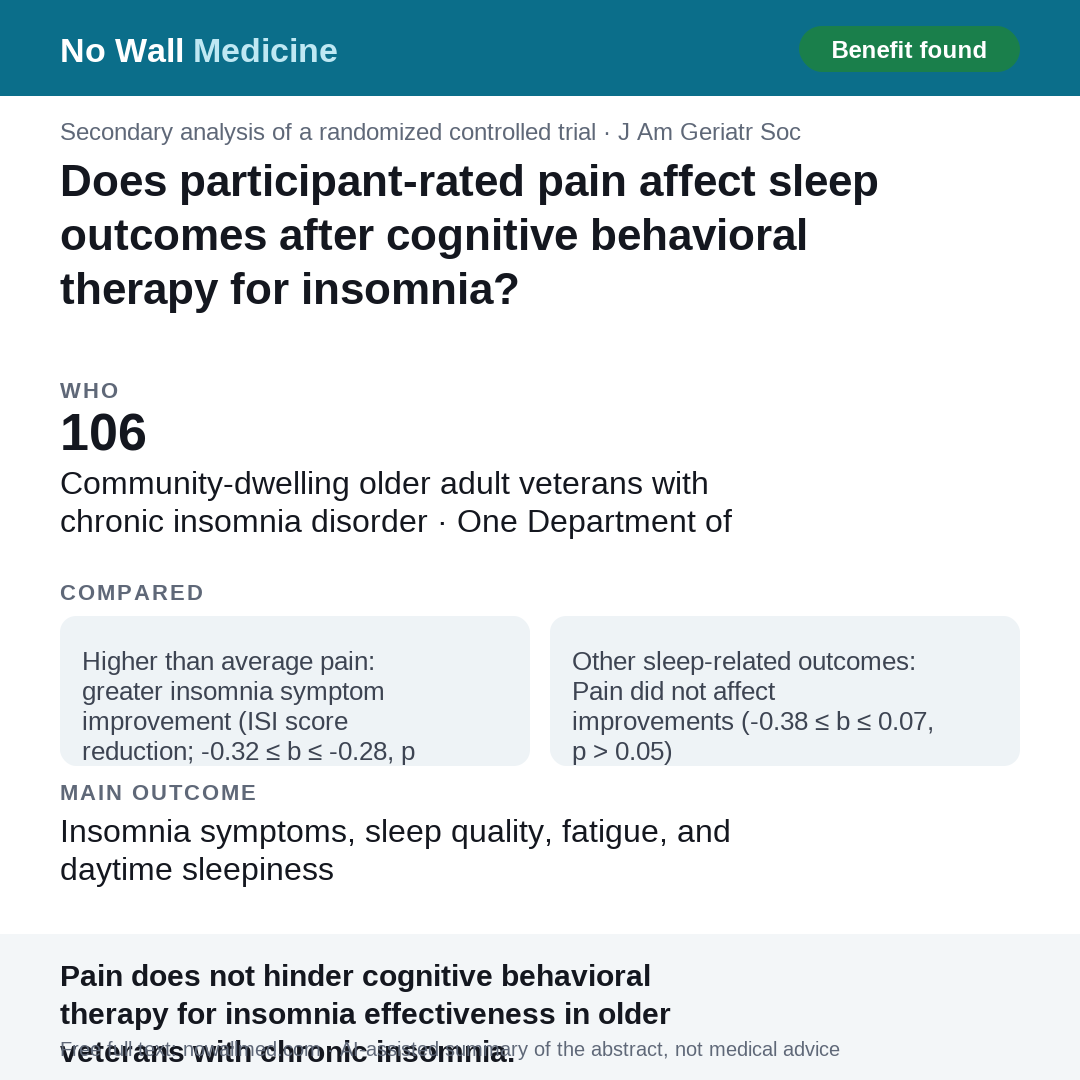
Does participant-rated pain affect sleep outcomes after cognitive behavioral therapy for insomnia?
Who
106
Community-dwelling older adult veterans with chronic insomnia disorder · One Department of Veterans Affairs healthcare system
Compared
Higher than average pain: greater insomnia symptom improvement (ISI score reduction; -0.32 ≤ b ≤ -0.28, p ≤ 0.005)
Other sleep-related outcomes: Pain did not affect improvements (-0.38 ≤ b ≤ 0.07, p > 0.05)
Main outcome
Insomnia symptoms, sleep quality, fatigue, and daytime sleepiness
Bottom line: Pain does not hinder cognitive behavioral therapy for insomnia effectiveness in older veterans with chronic insomnia.
J Am Geriatr Soc · 2024-06-18Download image
Key points
- Researchers analyzed 106 community-dwelling older adult veterans with a mean age of 72.1 years who received five sessions of cognitive behavioral therapy for insomnia.
- Higher participant-reported pain was associated with greater improvements in insomnia symptoms, but pain was not linked to changes in sleep quality, fatigue, or daytime sleepiness.
- Individuals with higher-than-average pain showed an insomnia severity index score reduction of -0.32 ≤ b ≤ -0.28, p ≤ 0.005 at posttreatment.
Discussion prompts
- Would these patients look like yours? Who was left out?
- Is the main outcome one that matters to patients?
- Is the difference large enough to change what you do?
Cite: Erickson AJ, Rodriguez JC, Ravyts SG, et al. The effectiveness of cognitive behavioral therapy for insomnia on sleep outcomes in the context of pain among older adult veterans. J Am Geriatr Soc. 2024. doi:10.1111/jgs.18910
Free full text: PubMed Central · Summary and visual abstract: nowallmed.com/a/the-effectiveness-of-cognitive-behavioral-therapy-for-insomnia-on-mc6akm/ (AI-assisted from the abstract; check the paper before relying on it).