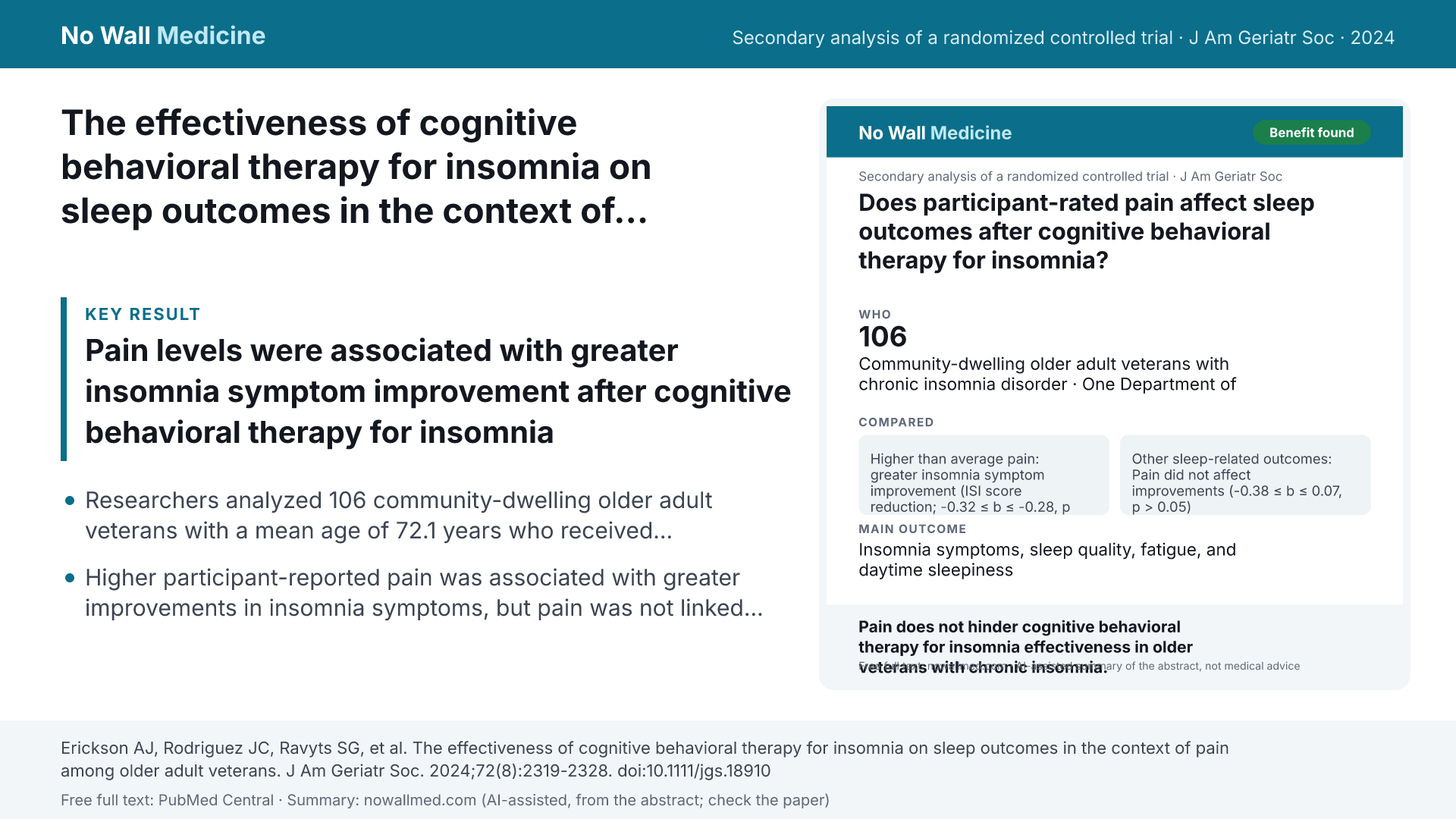
Pain levels were associated with greater insomnia symptom improvement after cognitive behavioral therapy for insomnia
The effectiveness of cognitive behavioral therapy for insomnia on sleep outcomes in the context of pain among older adult veterans
Secondary analysis of a randomized controlled trialBenefit found
Does participant-rated pain affect sleep outcomes after cognitive behavioral therapy for insomnia?
Who
106
Community-dwelling older adult veterans with chronic insomnia disorder · One Department of Veterans Affairs healthcare system
Compared
Higher than average pain: greater insomnia symptom improvement (ISI score reduction; -0.32 ≤ b ≤ -0.28, p ≤ 0.005)
Other sleep-related outcomes: Pain did not affect improvements (-0.38 ≤ b ≤ 0.07, p > 0.05)
Main outcome
Insomnia symptoms, sleep quality, fatigue, and daytime sleepiness
Bottom line: Pain does not hinder cognitive behavioral therapy for insomnia effectiveness in older veterans with chronic insomnia.
J Am Geriatr Soc · 2024-06-18Download image
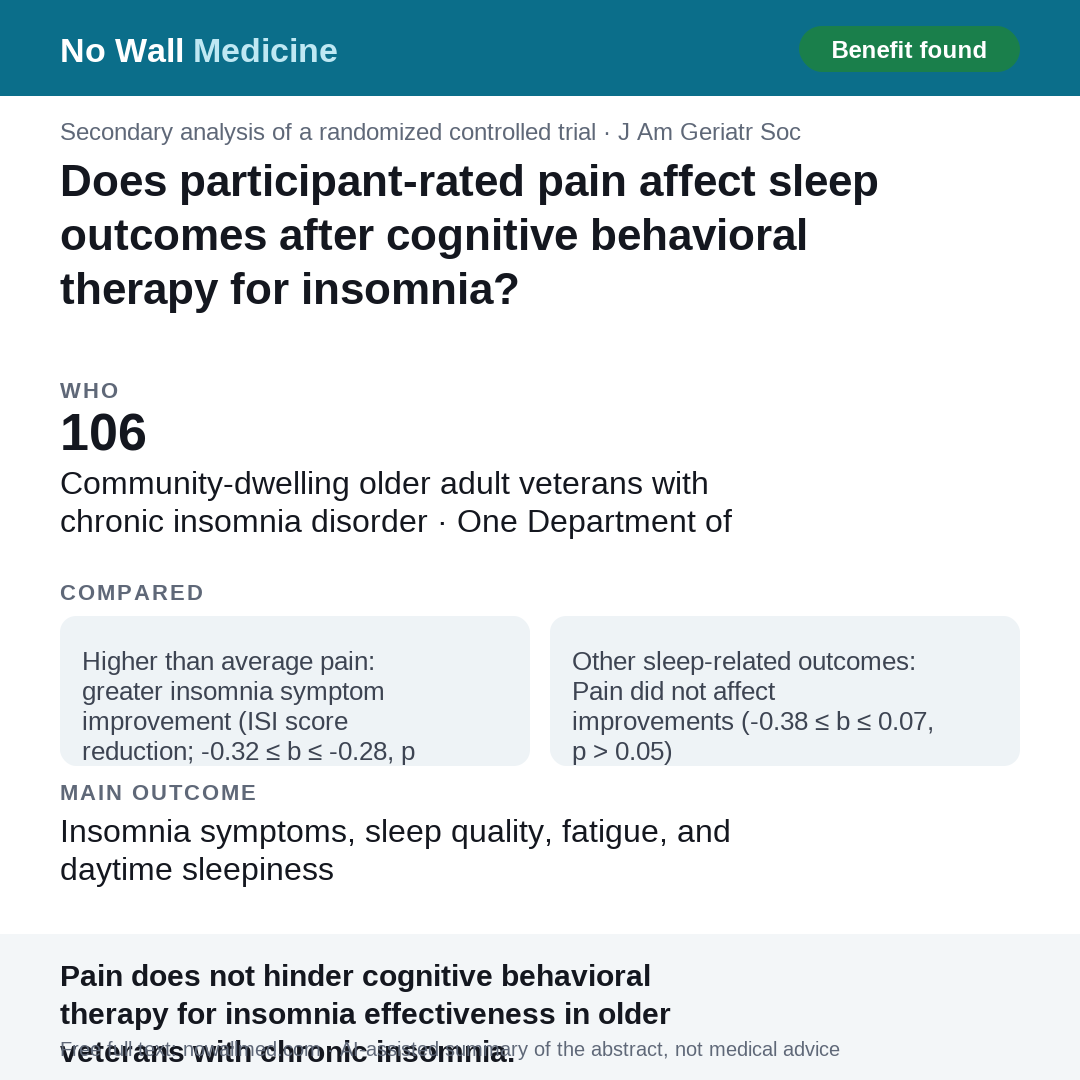
Clinical question: Does participant-rated pain affect sleep outcomes after cognitive behavioral therapy for insomnia?
Why it matters: It was unknown if chronic pain impacts the effectiveness of cognitive behavioral therapy for insomnia in older adults.
Key points
- Researchers analyzed 106 community-dwelling older adult veterans with a mean age of 72.1 years who received five sessions of cognitive behavioral therapy for insomnia.
- Higher participant-reported pain was associated with greater improvements in insomnia symptoms, but pain was not linked to changes in sleep quality, fatigue, or daytime sleepiness.
- Individuals with higher-than-average pain showed an insomnia severity index score reduction of -0.32 ≤ b ≤ -0.28, p ≤ 0.005 at posttreatment.
Headline and key points written with AI from the paper’s abstract, with every number checked against it. Read the paper before relying on them.
Was this summary helpful?
Subject terms
Cite this article
Erickson AJ, Rodriguez JC, Ravyts SG, Dzierzewski JM, Fung CH, Kelly MR. The effectiveness of cognitive behavioral therapy for insomnia on sleep outcomes in the context of pain among older adult veterans. J Am Geriatr Soc. 2024. doi:10.1111/jgs.18910
Spotted a mistake? Suggest a correction
Top studies every Monday
The week’s key trials and guidelines in your specialties, plus any topics you follow. By email, free.
Get the weekly digest