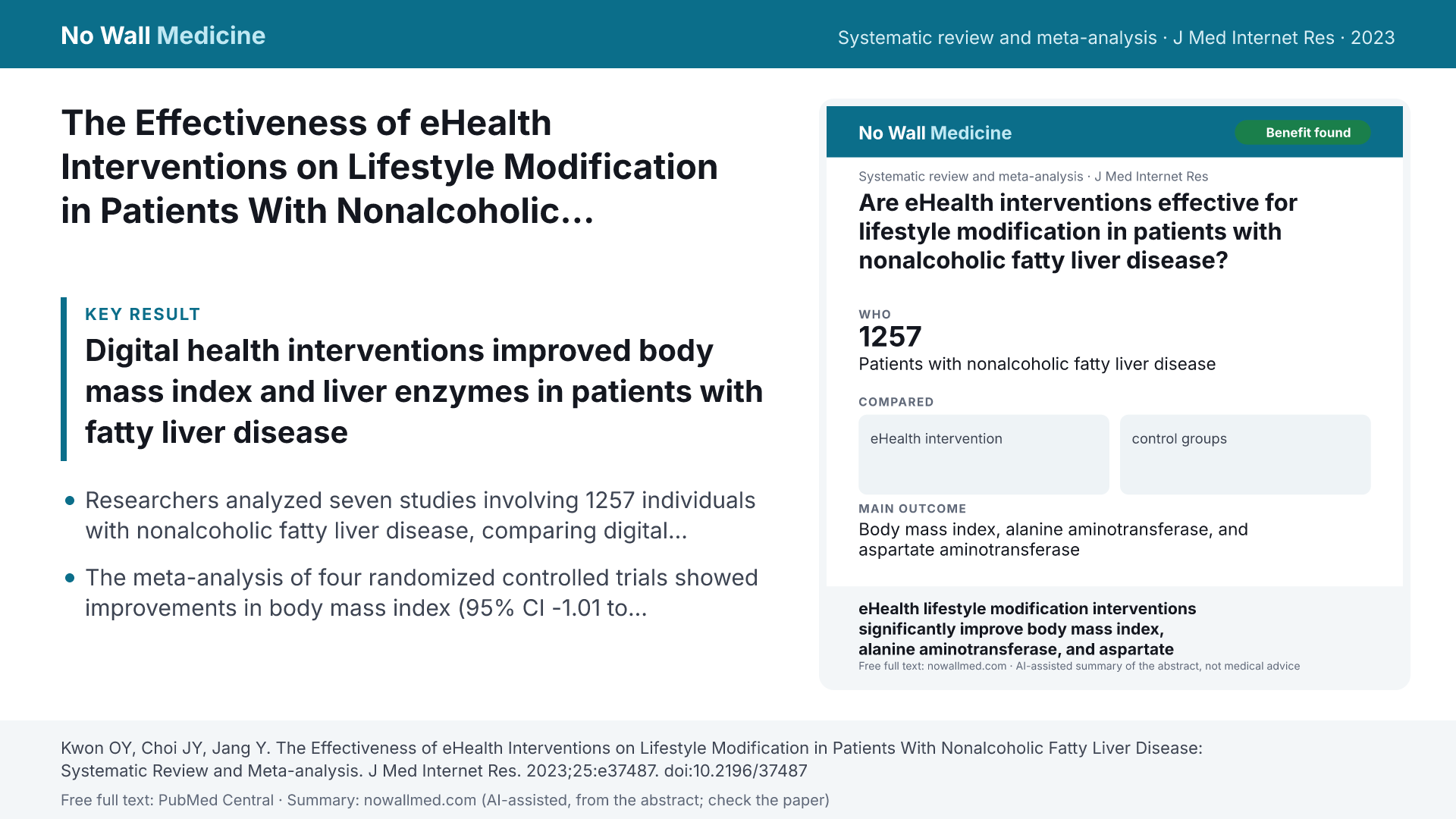
Digital health interventions improved body mass index and liver enzymes in patients with fatty liver disease
The Effectiveness of eHealth Interventions on Lifestyle Modification in Patients With Nonalcoholic Fatty Liver Disease: Systematic Review and Meta-analysis
Systematic review and meta-analysisBenefit found
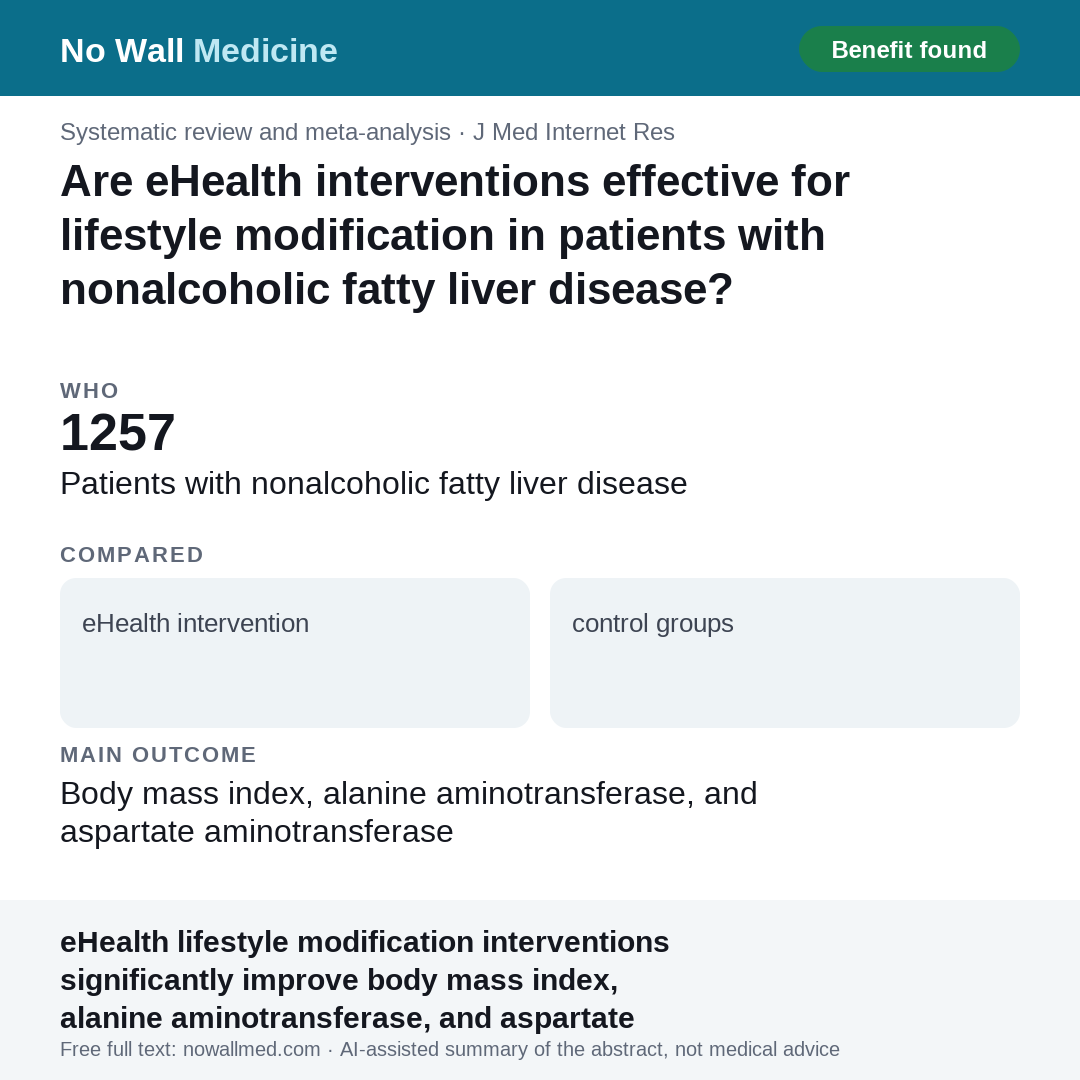
Are eHealth interventions effective for lifestyle modification in patients with nonalcoholic fatty liver disease?
Who
1257
Patients with nonalcoholic fatty liver disease
Compared
eHealth intervention
control groups
Main outcome
Body mass index, alanine aminotransferase, and aspartate aminotransferase
Result: BMI 95% CI -1.01 to -0.10; AST 95% CI -1.22 to -0.13; ALT 95% CI -1.28 to -0.15
Bottom line: eHealth lifestyle modification interventions significantly improve body mass index, alanine aminotransferase, and aspartate aminotransferase in patients with nonalcoholic fatty liver disease.
Limitation: Future research should use larger sample sizes and evaluate sustained benefits.
J Med Internet Res · 2023-01-23Download image
Clinical question: Are eHealth interventions effective for lifestyle modification in patients with nonalcoholic fatty liver disease?
Why it matters: It was unknown how effective digital health technologies are for improving lifestyle modifications and liver health markers in people with nonalcoholic fatty liver disease.
Key points
- Researchers analyzed seven studies involving 1257 individuals with nonalcoholic fatty liver disease, comparing digital health tools like mobile apps and telephones to control groups.
- The meta-analysis of four randomized controlled trials showed improvements in body mass index (95% CI -1.01 to -0.10), aspartate aminotransferase (95% CI -1.22 to -0.13), and alanine aminotransferase (95% CI -1.28 to -0.15).
- The interventions used in the studies lasted between 3 and 24 months and included internet-based computers, telephones, and mobile applications.
Limitation the authors note: Future research is needed to determine if these benefits are sustained and to evaluate interventions with larger sample sizes.
Headline and key points written with AI from the paper’s abstract, with every number checked against it. Read the paper before relying on them.
Was this summary helpful?
Subject terms
Cite this article
Kwon OY, Choi JY, Jang Y. The Effectiveness of eHealth Interventions on Lifestyle Modification in Patients With Nonalcoholic Fatty Liver Disease: Systematic Review and Meta-analysis. J Med Internet Res. 2023. doi:10.2196/37487
Spotted a mistake? Suggest a correction