The effectiveness of high versus lower enteral protein intake, considering energy intake, on clinical outcomes in critically ill children: A systematic review and meta-analysis
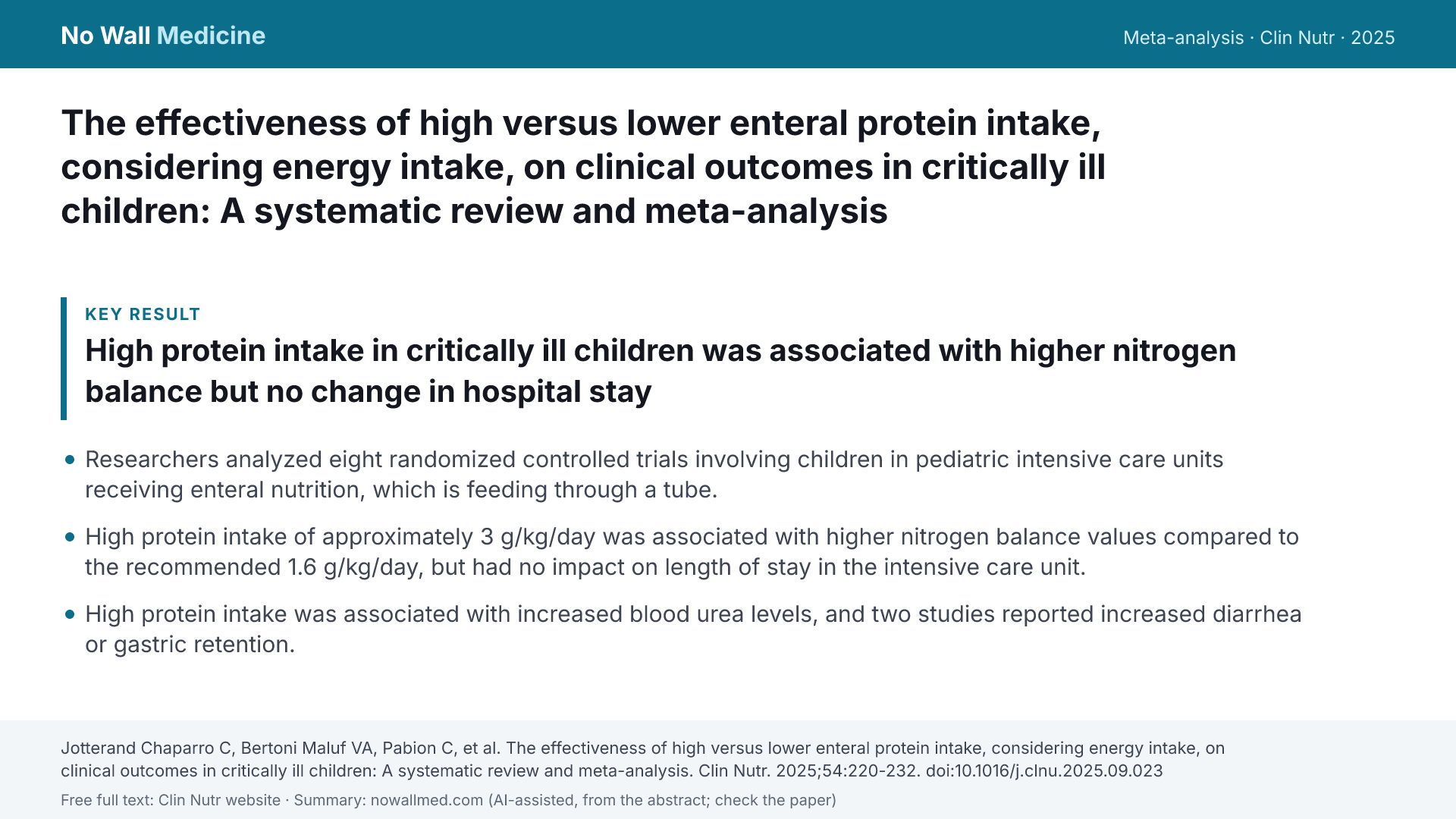
Key result: High protein intake in critically ill children was associated with higher nitrogen balance but no change in hospital stay
Key points
- Researchers analyzed eight randomized controlled trials involving children in pediatric intensive care units receiving enteral nutrition, which is feeding through a tube.
- High protein intake of approximately 3 g/kg/day was associated with higher nitrogen balance values compared to the recommended 1.6 g/kg/day, but had no impact on length of stay in the intensive care unit.
- High protein intake was associated with increased blood urea levels, and two studies reported increased diarrhea or gastric retention.
Limitation the authors note: Four studies had an unclear risk of bias and four had a high risk of bias.
Discussion prompts
- Would these patients look like yours? Who was left out?
- Is the main outcome one that matters to patients?
- Is the difference large enough to change what you do?
Cite: Jotterand Chaparro C, Bertoni Maluf VA, Pabion C, et al. The effectiveness of high versus lower enteral protein intake, considering energy intake, on clinical outcomes in critically ill children: A systematic review and meta-analysis. Clin Nutr. 2025;54:220-232. doi:10.1016/j.clnu.2025.09.023
Free full text: Clin Nutr website · Summary and visual abstract: nowallmed.com/a/the-effectiveness-of-high-versus-lower-enteral-protein-intake-471its/ (AI-assisted from the abstract; check the paper before relying on it).