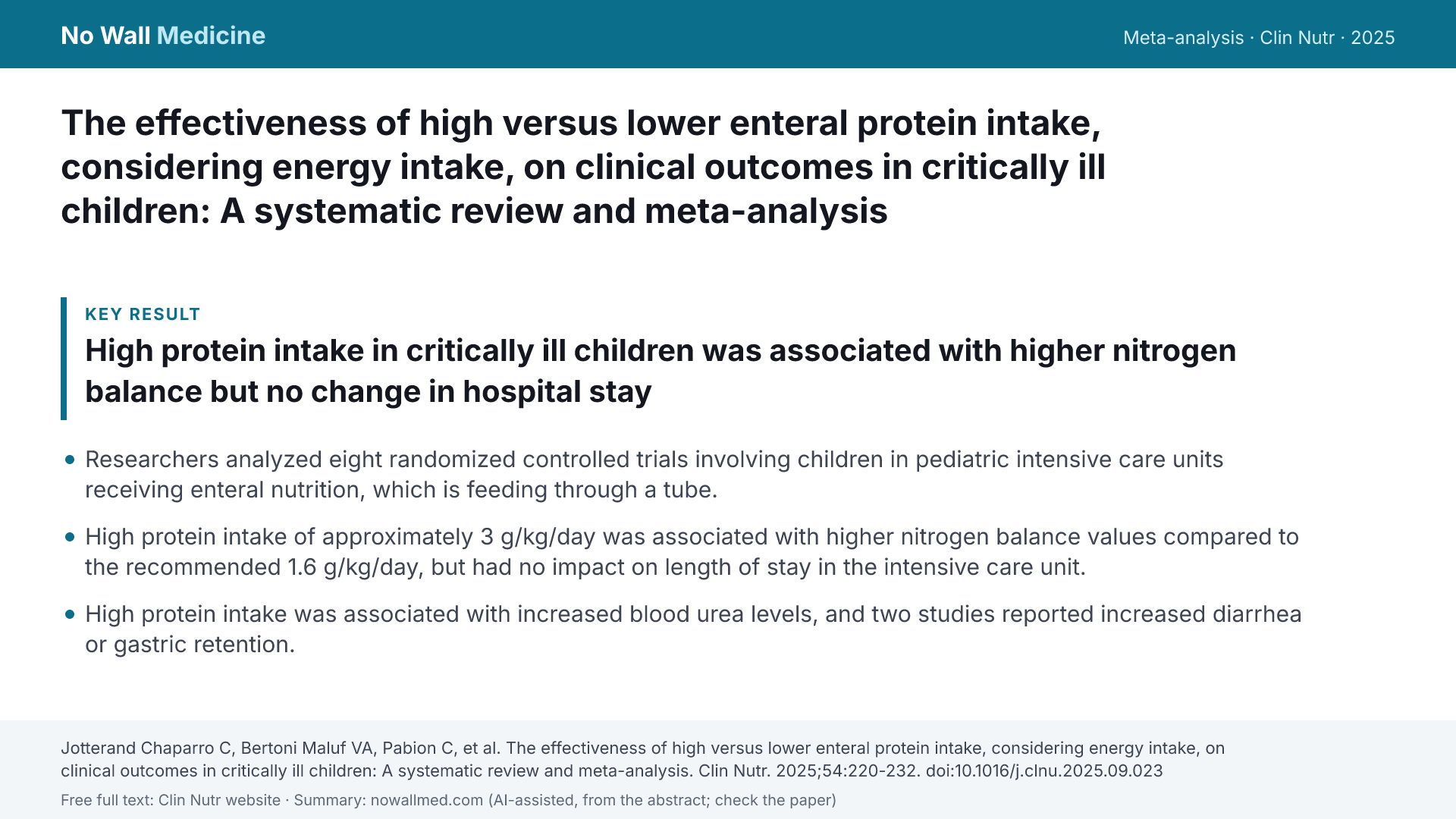
High protein intake in critically ill children was associated with higher nitrogen balance but no change in hospital stay
The effectiveness of high versus lower enteral protein intake, considering energy intake, on clinical outcomes in critically ill children: A systematic review and meta-analysis
Why it matters: The optimal amount of protein to provide to critically ill children through tube feeding remains uncertain.
Key points
- Researchers analyzed eight randomized controlled trials involving children in pediatric intensive care units receiving enteral nutrition, which is feeding through a tube.
- High protein intake of approximately 3 g/kg/day was associated with higher nitrogen balance values compared to the recommended 1.6 g/kg/day, but had no impact on length of stay in the intensive care unit.
- High protein intake was associated with increased blood urea levels, and two studies reported increased diarrhea or gastric retention.
Limitation the authors note: Four studies had an unclear risk of bias and four had a high risk of bias.
Headline and key points written with AI from the paper’s abstract, with every number checked against it. Read the paper before relying on them.
Was this summary helpful?
Subject terms
Cite this article
Jotterand Chaparro C, Bertoni Maluf VA, Pabion C, et al. The effectiveness of high versus lower enteral protein intake, considering energy intake, on clinical outcomes in critically ill children: A systematic review and meta-analysis. Clin Nutr. 2025. doi:10.1016/j.clnu.2025.09.023
Spotted a mistake? Suggest a correction