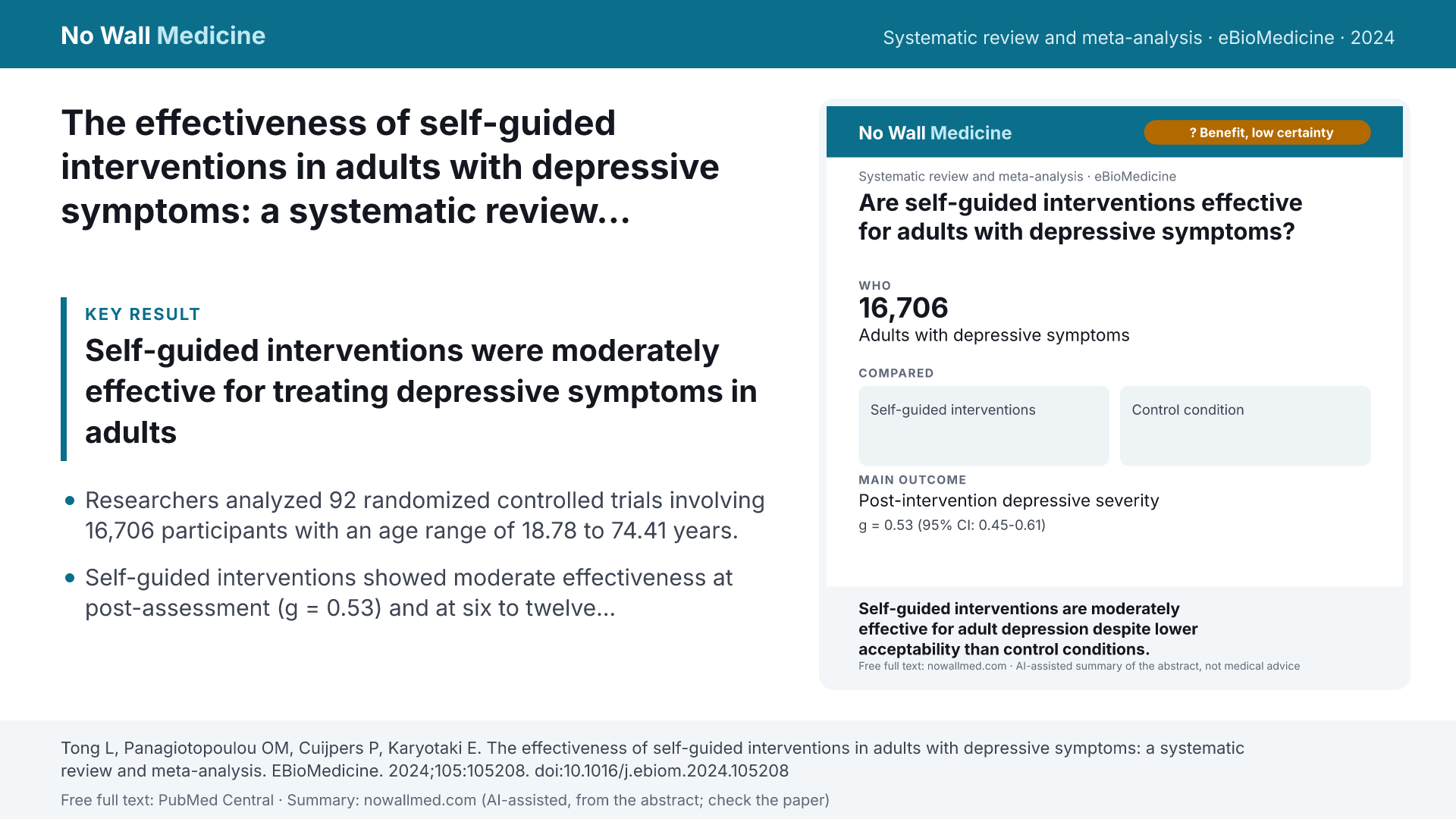
The effectiveness of self-guided interventions in adults with depressive symptoms: a systematic review and meta-analysis
Key result: Self-guided interventions were moderately effective for treating depressive symptoms in adults
Key points
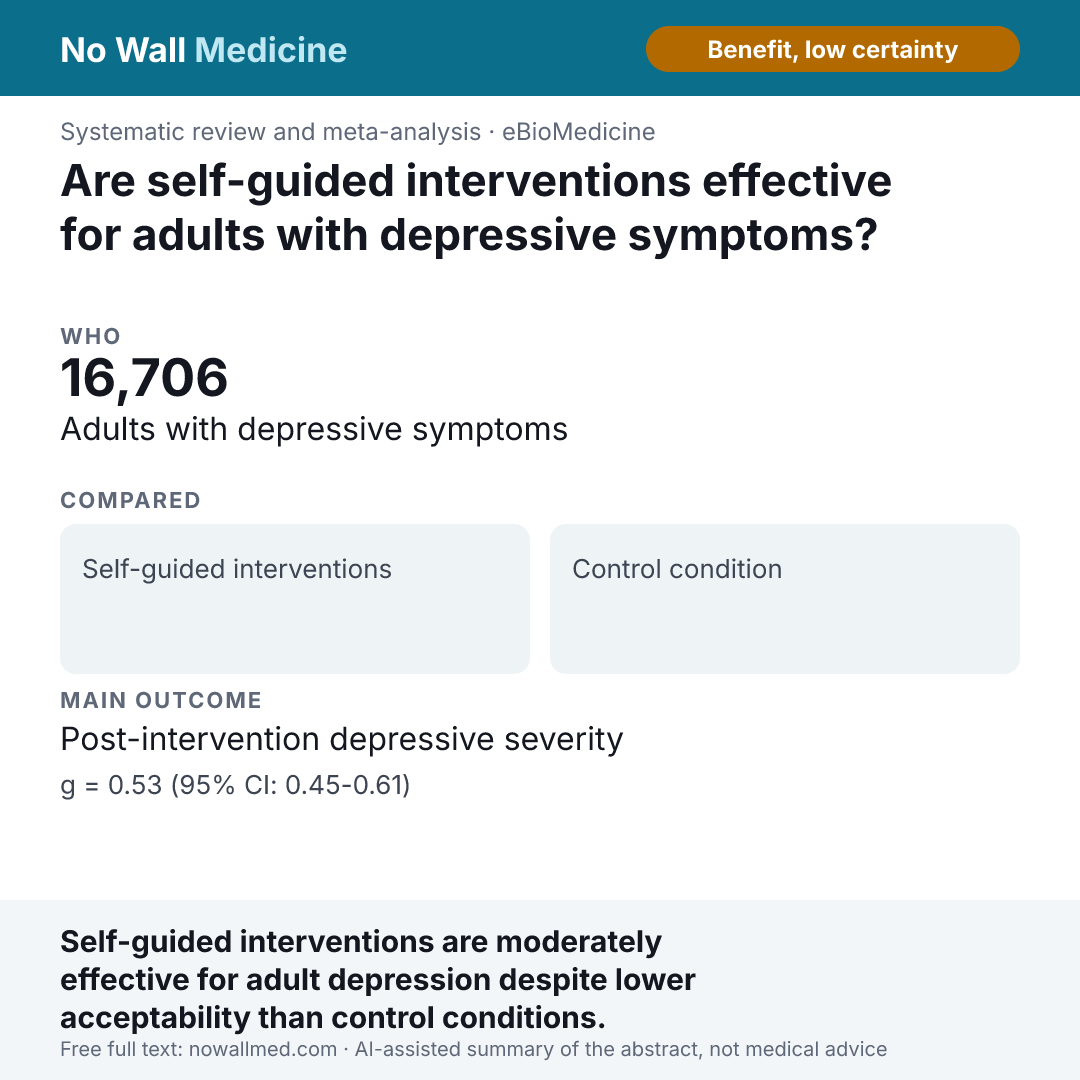
- Researchers analyzed 92 randomized controlled trials involving 16,706 participants with an age range of 18.78 to 74.41 years.
- Self-guided interventions showed moderate effectiveness at post-assessment (g = 0.53) and at six to twelve months follow-up (g = 0.32).
- Computer programs (g = 1.04) and trials with initial human screening (g = 0.59) showed the largest effect sizes, though interventions were less acceptable than controls (RR = 0.92).
Why it matters: Evidence regarding the effectiveness and acceptability of self-guided interventions for adult depression remains inconclusive across different delivery formats and support levels.
Limitation the authors note: Most studies included in the analysis showed a moderate to high risk of bias.
Discussion prompts
- Would these patients look like yours? Who was left out?
- Is the main outcome one that matters to patients?
- Is the difference large enough to change what you do?
Cite: Tong L, Panagiotopoulou OM, Cuijpers P, Karyotaki E. The effectiveness of self-guided interventions in adults with depressive symptoms: a systematic review and meta-analysis. EBioMedicine. 2024;105:105208. doi:10.1016/j.ebiom.2024.105208
Free full text: PubMed Central · Summary and visual abstract: nowallmed.com/a/the-effectiveness-of-self-guided-interventions-in-adults-with-58i9mj/ (AI-assisted from the abstract; check the paper before relying on it).