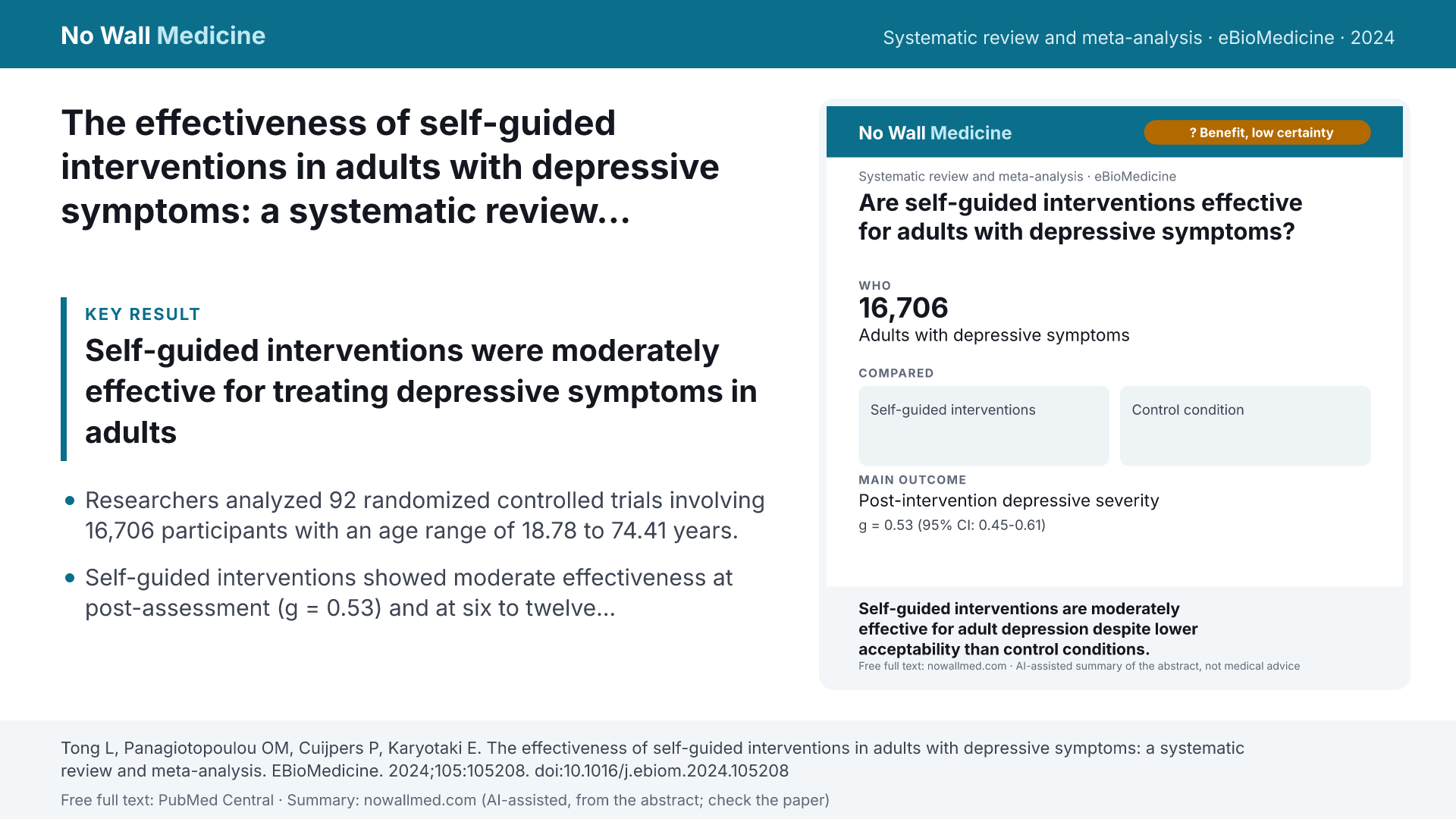
Self-guided interventions were moderately effective for treating depressive symptoms in adults
The effectiveness of self-guided interventions in adults with depressive symptoms: a systematic review and meta-analysis
Systematic review and meta-analysisBenefit found
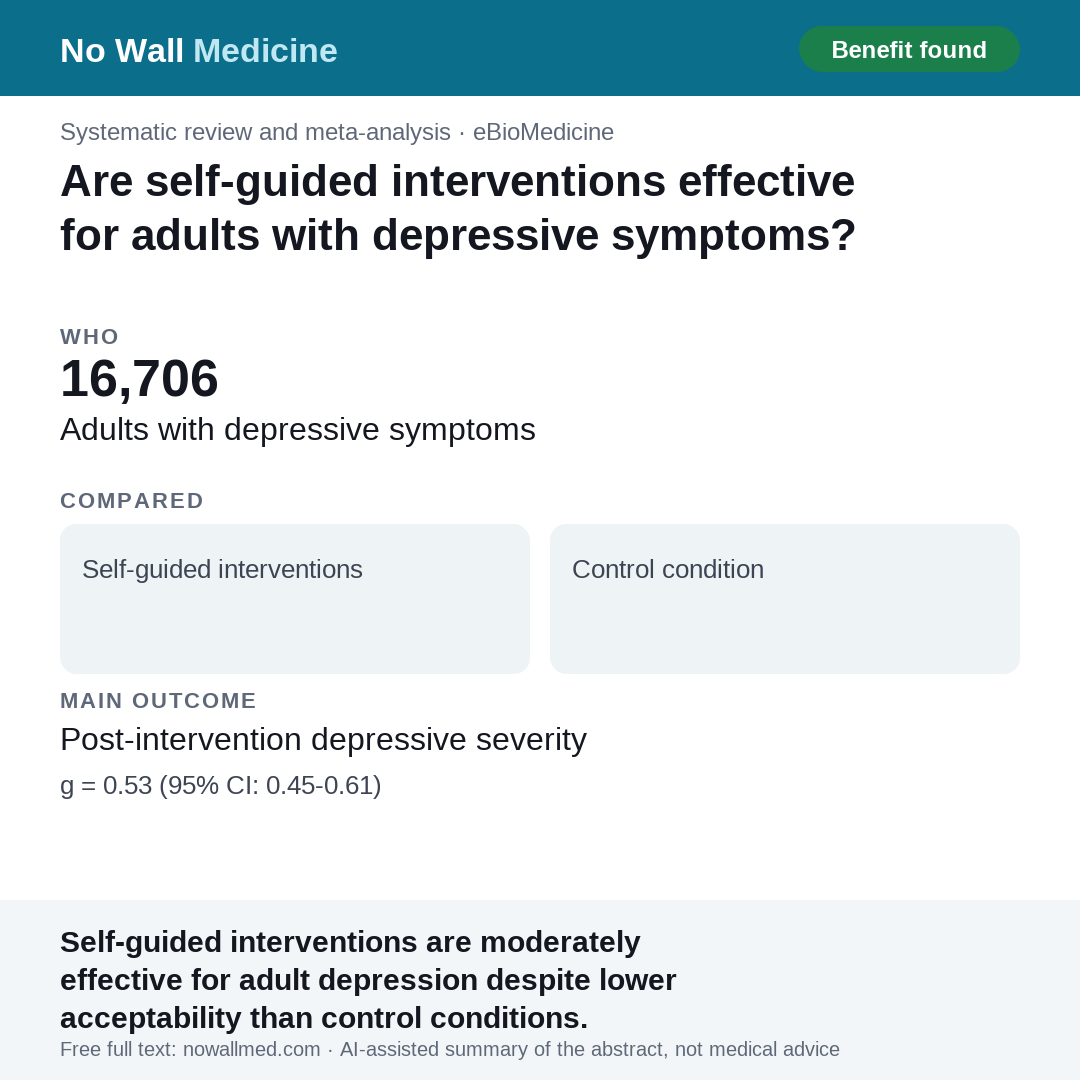
Are self-guided interventions effective for adults with depressive symptoms?
Who
16,706
Adults with depressive symptoms
Compared
Self-guided interventions
Control condition
Main outcome
Post-intervention depressive severity
Result: g = 0.53 (95% CI: 0.45-0.61)
Bottom line: Self-guided interventions are moderately effective for adult depression despite lower acceptability than control conditions.
Limitation: Most studies showed a moderate to high risk of bias.
eBioMedicine · 2024-06-14Download image
Clinical question: Are self-guided interventions effective for adults with depressive symptoms?
Why it matters: Evidence regarding the effectiveness and acceptability of self-guided interventions for adult depression remains inconclusive across different delivery formats and support levels.
Key points
- Researchers analyzed 92 randomized controlled trials involving 16,706 participants with an age range of 18.78 to 74.41 years.
- Self-guided interventions showed moderate effectiveness at post-assessment (g = 0.53) and at six to twelve months follow-up (g = 0.32).
- Computer programs (g = 1.04) and trials with initial human screening (g = 0.59) showed the largest effect sizes, though interventions were less acceptable than controls (RR = 0.92).
Limitation the authors note: Most studies included in the analysis showed a moderate to high risk of bias.
Headline and key points written with AI from the paper’s abstract, with every number checked against it. Read the paper before relying on them.
Was this summary helpful?
Subject terms
Cite this article
Tong L, Panagiotopoulou OM, Cuijpers P, Karyotaki E. The effectiveness of self-guided interventions in adults with depressive symptoms: a systematic review and meta-analysis. eBioMedicine. 2024. doi:10.1016/j.ebiom.2024.105208
Spotted a mistake? Suggest a correction
Top studies every Monday
The week’s key trials and guidelines in your specialties, plus any topics you follow. By email, free.
Get the weekly digest