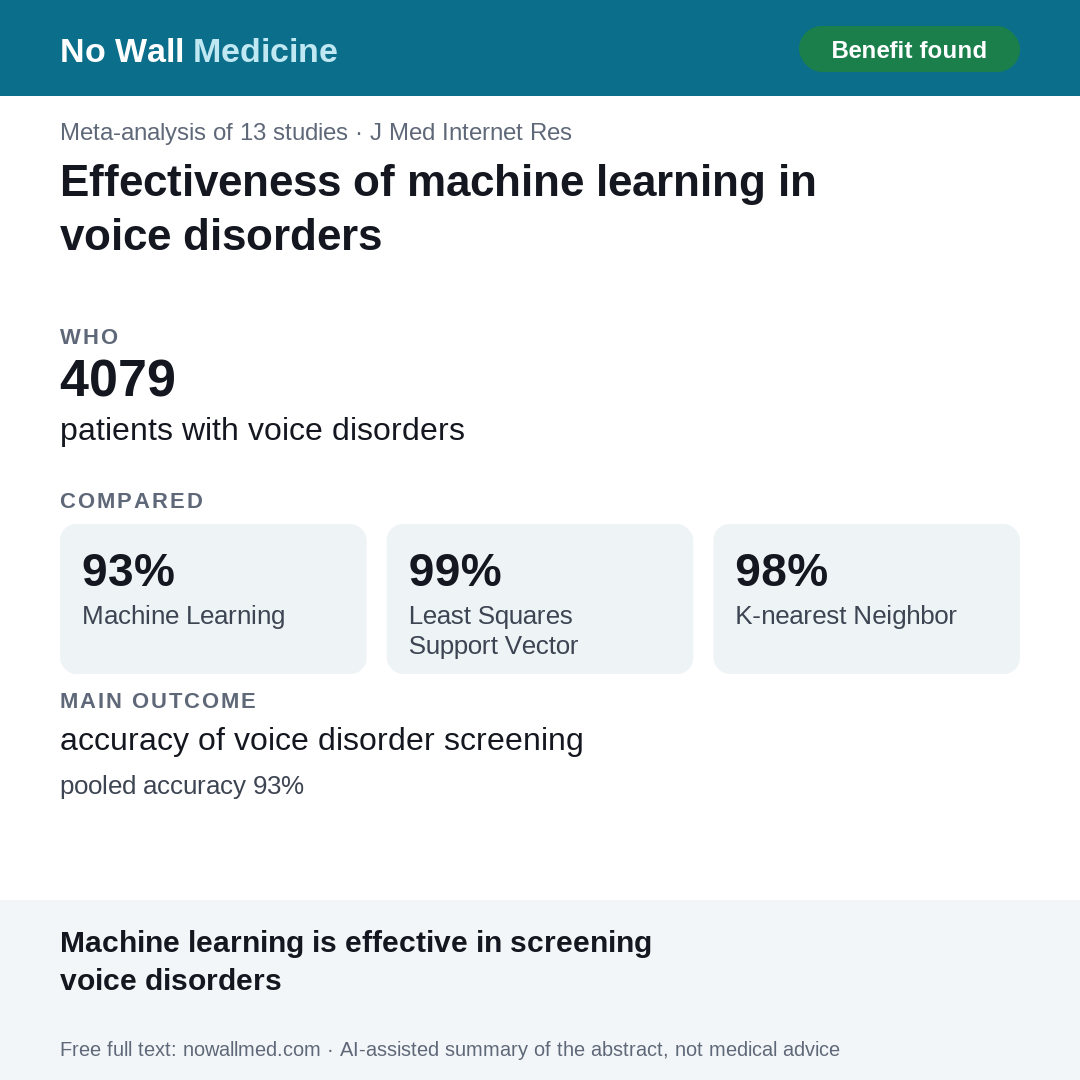
Machine learning algorithms showed 93% accuracy in screening for various voice disorders
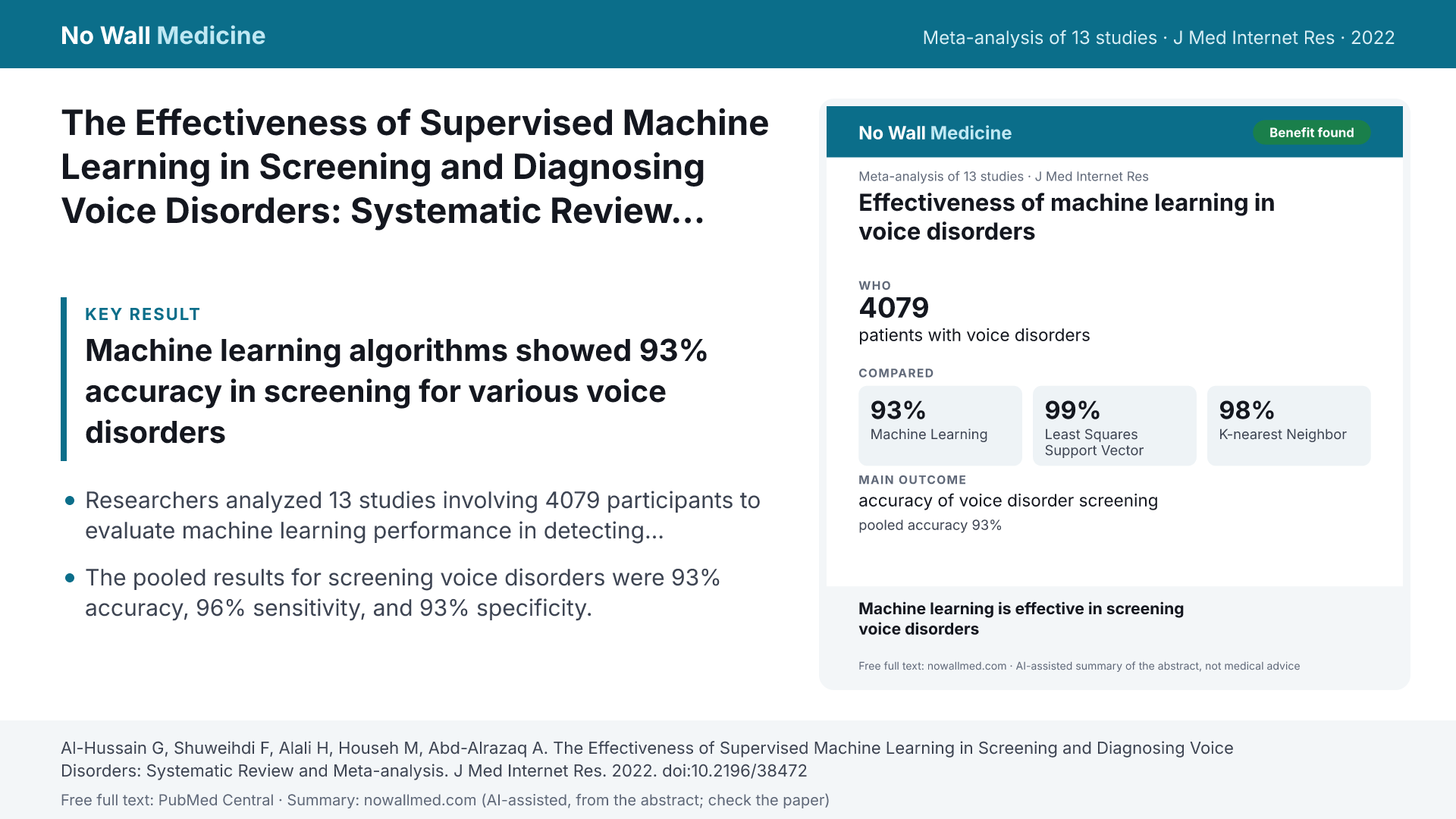
The Effectiveness of Supervised Machine Learning in Screening and Diagnosing Voice Disorders: Systematic Review and Meta-analysis
Meta-analysis of 13 studiesBenefit found
Effectiveness of machine learning in voice disorders
Who
4079
patients with voice disorders
Compared
93%Machine Learning
99%Least Squares Support Vector Machine
98%K-nearest Neighbor
Main outcome
accuracy of voice disorder screening
Result: pooled accuracy 93%
Bottom line: Machine learning is effective in screening voice disorders
Limitation: limited number of diagnostic studies
J Med Internet Res · 2022-10-14Download image
Why it matters: Standardized tests for voice screening and diagnosis are limited and can be affected by a clinician's subjective judgment and experience.
Key points
- Researchers analyzed 13 studies involving 4079 participants to evaluate machine learning performance in detecting pathological voice samples.
- The pooled results for screening voice disorders were 93% accuracy, 96% sensitivity, and 93% specificity.
- Least squares support vector machine had the highest accuracy at 99%, while quadric discriminant analysis had the lowest accuracy at 91%.
Limitation the authors note: The findings were not conclusive in diagnosing voice disorders because of the limited number of studies that used machine learning for diagnostic purposes.
Headline and key points written with AI from the paper’s abstract, with every number checked against it. Read the paper before relying on them.
Was this summary helpful?
Subject terms
Cite this article
Al-Hussain G, Shuweihdi F, Alali H, Househ M, Abd-Alrazaq A. The Effectiveness of Supervised Machine Learning in Screening and Diagnosing Voice Disorders: Systematic Review and Meta-analysis. J Med Internet Res. 2022. doi:10.2196/38472
Spotted a mistake? Suggest a correction