The Effectiveness of Supervised Machine Learning in Screening and Diagnosing Voice Disorders: Systematic Review and Meta-analysis
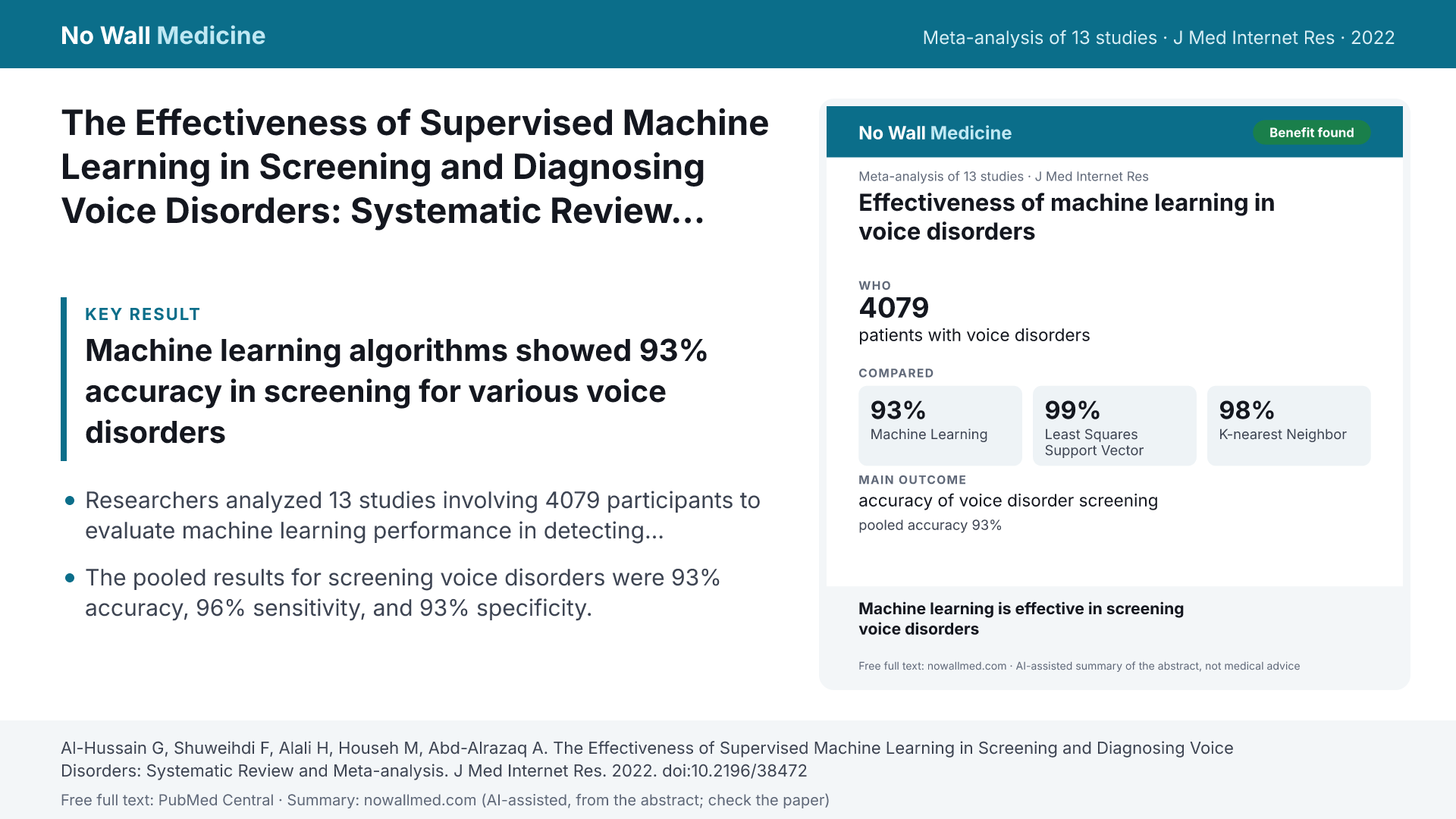
Key result: Machine learning algorithms showed 93% accuracy in screening for various voice disorders
Key points
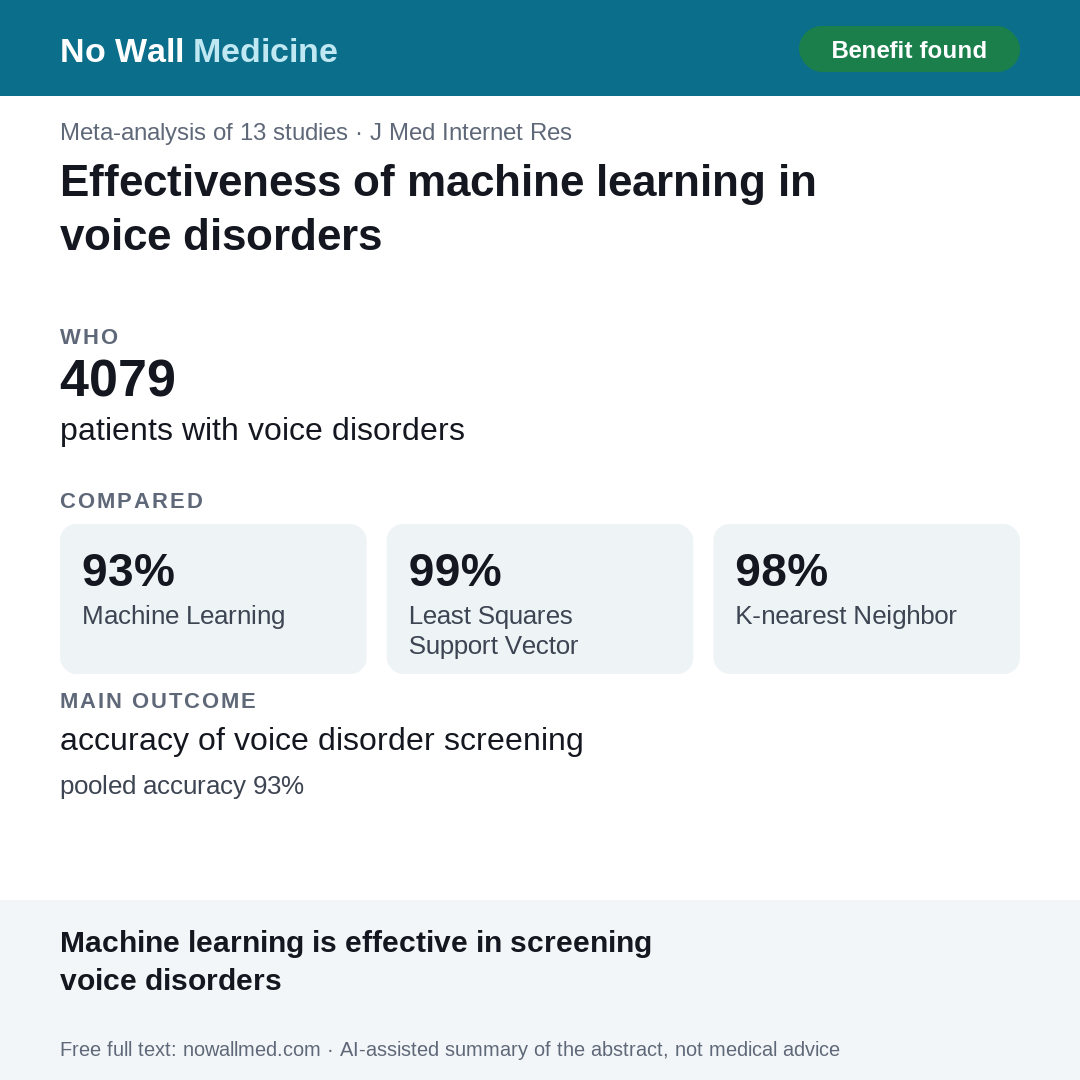
- Researchers analyzed 13 studies involving 4079 participants to evaluate machine learning performance in detecting pathological voice samples.
- The pooled results for screening voice disorders were 93% accuracy, 96% sensitivity, and 93% specificity.
- Least squares support vector machine had the highest accuracy at 99%, while quadric discriminant analysis had the lowest accuracy at 91%.
Why it matters: Standardized tests for voice screening and diagnosis are limited and can be affected by a clinician's subjective judgment and experience.
Limitation the authors note: The findings were not conclusive in diagnosing voice disorders because of the limited number of studies that used machine learning for diagnostic purposes.
Discussion prompts
- Would these patients look like yours? Who was left out?
- Is the main outcome one that matters to patients?
- Is the difference large enough to change what you do?
Cite: Al-Hussain G, Shuweihdi F, Alali H, Househ M, Abd-Alrazaq A. The Effectiveness of Supervised Machine Learning in Screening and Diagnosing Voice Disorders: Systematic Review and Meta-analysis. J Med Internet Res. 2022. doi:10.2196/38472
Free full text: PubMed Central · Summary and visual abstract: nowallmed.com/a/the-effectiveness-of-supervised-machine-learning-in-screening-and-1rdg03r/ (AI-assisted from the abstract; check the paper before relying on it).