The effects of balanced crystalloid versus plasma on endothelial injury, systemic inflammation, and coagulation in experimental endotoxaemia: a randomised human volunteer study
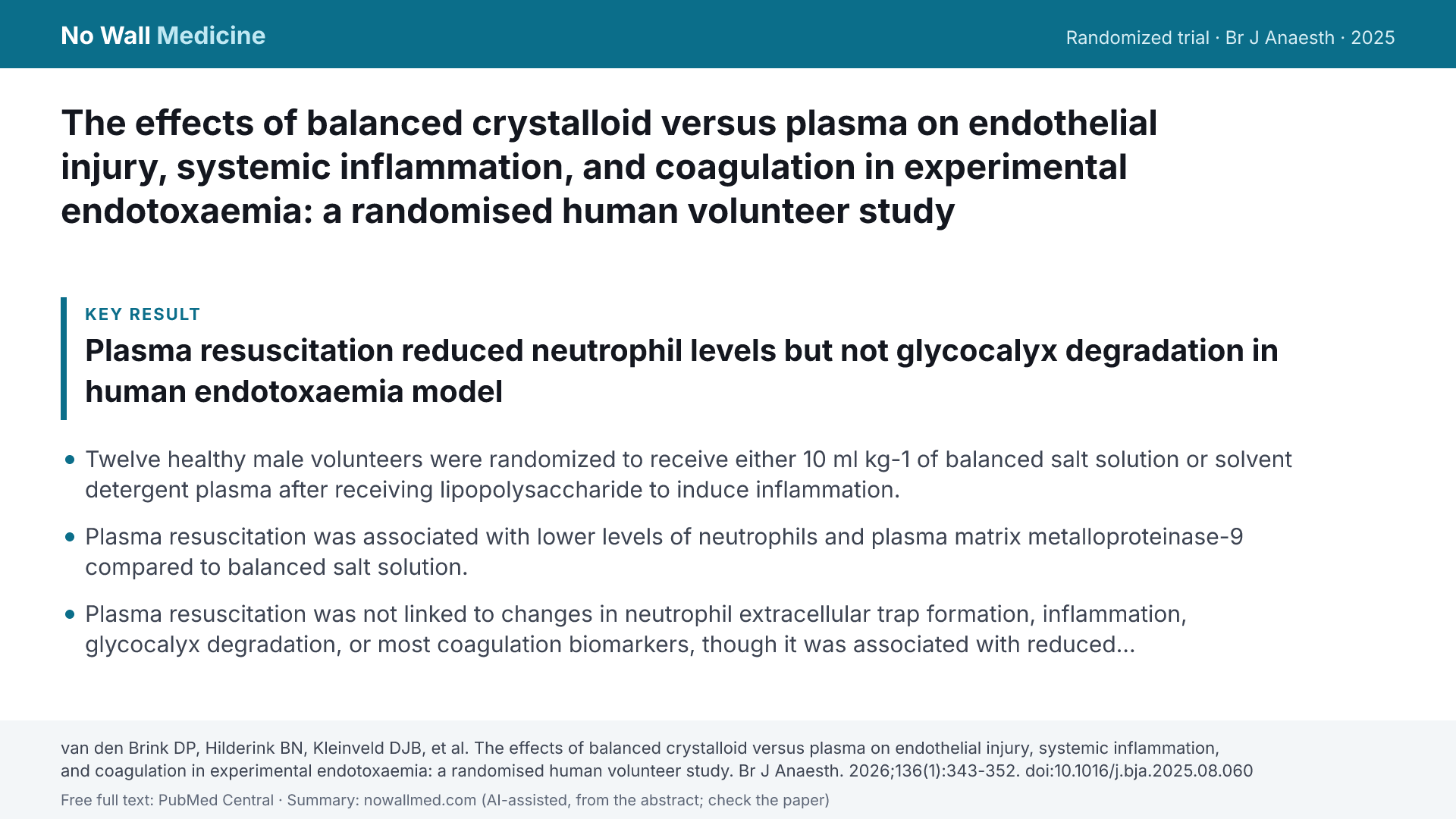
Key result: Plasma resuscitation reduced neutrophil levels but not glycocalyx degradation in human endotoxaemia model
Key points
- Twelve healthy male volunteers were randomized to receive either 10 ml kg-1 of balanced salt solution or solvent detergent plasma after receiving lipopolysaccharide to induce inflammation.
- Plasma resuscitation was associated with lower levels of neutrophils and plasma matrix metalloproteinase-9 compared to balanced salt solution.
- Plasma resuscitation was not linked to changes in neutrophil extracellular trap formation, inflammation, glycocalyx degradation, or most coagulation biomarkers, though it was associated with reduced prolonged prothrombin time.
Discussion prompts
- Would these patients look like yours? Who was left out?
- Is the main outcome one that matters to patients?
- Is the difference large enough to change what you do?
Cite: van den Brink DP, Hilderink BN, Kleinveld DJB, et al. The effects of balanced crystalloid versus plasma on endothelial injury, systemic inflammation, and coagulation in experimental endotoxaemia: a randomised human volunteer study. Br J Anaesth. 2026;136(1):343-352. doi:10.1016/j.bja.2025.08.060
Free full text: PubMed Central · Summary and visual abstract: nowallmed.com/a/the-effects-of-balanced-crystalloid-versus-plasma-on-endothelial-s8wd4x/ (AI-assisted from the abstract; check the paper before relying on it).