Alzheimer disease clinical trials have become larger and longer between 1992 and 2024
The Evolution of Randomized Clinical Trial Designs to Assess Therapeutics in Alzheimer Disease
Evidence review of 203 randomized clinical trialsMixed results
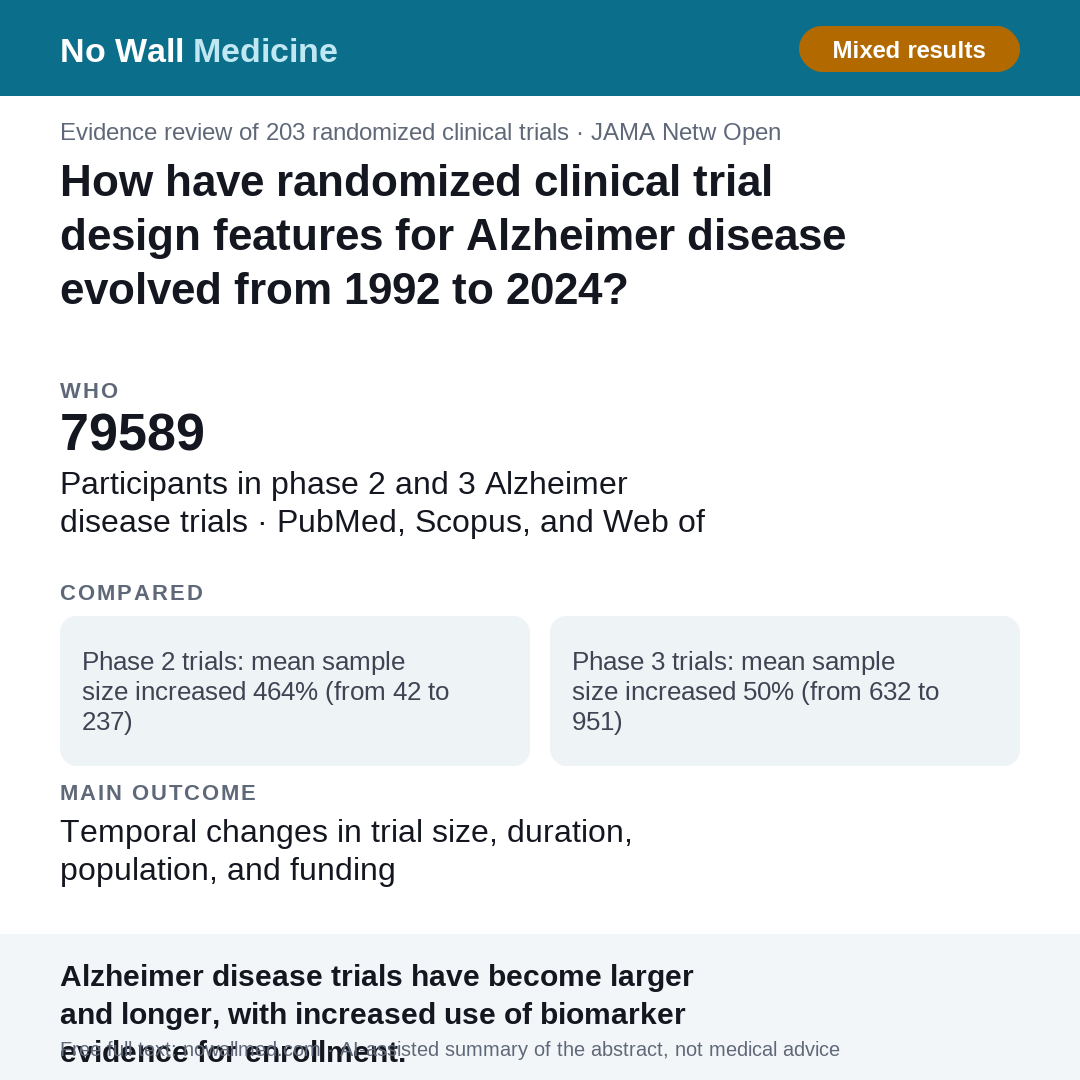
How have randomized clinical trial design features for Alzheimer disease evolved from 1992 to 2024?
Who
79589
Participants in phase 2 and 3 Alzheimer disease trials · PubMed, Scopus, and Web of Science databases
Compared
Phase 2 trials: mean sample size increased 464% (from 42 to 237)
Phase 3 trials: mean sample size increased 50% (from 632 to 951)
Main outcome
Temporal changes in trial size, duration, population, and funding
Bottom line: Alzheimer disease trials have become larger and longer, with increased use of biomarker evidence for enrollment.
JAMA Netw Open · 2025-08-01Download image
Clinical question: How have randomized clinical trial design features for Alzheimer disease evolved from 1992 to 2024?
Why it matters: The evolution of design features in randomized clinical trials for Alzheimer disease preceding recent successes in anti-amyloid therapies remains underexplored.
Key points
- Researchers analyzed 203 randomized clinical trials involving 79,589 participants to track changes in study designs for Alzheimer disease interventions.
- From 1992 to 2024, mean phase 2 sample sizes increased by 464% and phase 3 sample sizes increased by 50%.
- The use of biological markers for enrollment increased from 2.7% before 2006 to 52.6% since 2019.
Headline and key points written with AI from the paper’s abstract, with every number checked against it. Read the paper before relying on them.
Was this summary helpful?
Subject terms
Cite this article
Aumont E, Therriault J, Kwan ATH, Carello-Collar G, Arfaie S, Hall BJ. The Evolution of Randomized Clinical Trial Designs to Assess Therapeutics in Alzheimer Disease. JAMA Netw Open. 2025. doi:10.1001/jamanetworkopen.2025.29665
Spotted a mistake? Suggest a correction
Top studies every Monday
The week’s key trials and guidelines in your specialties, plus any topics you follow. By email, free.
Get the weekly digest