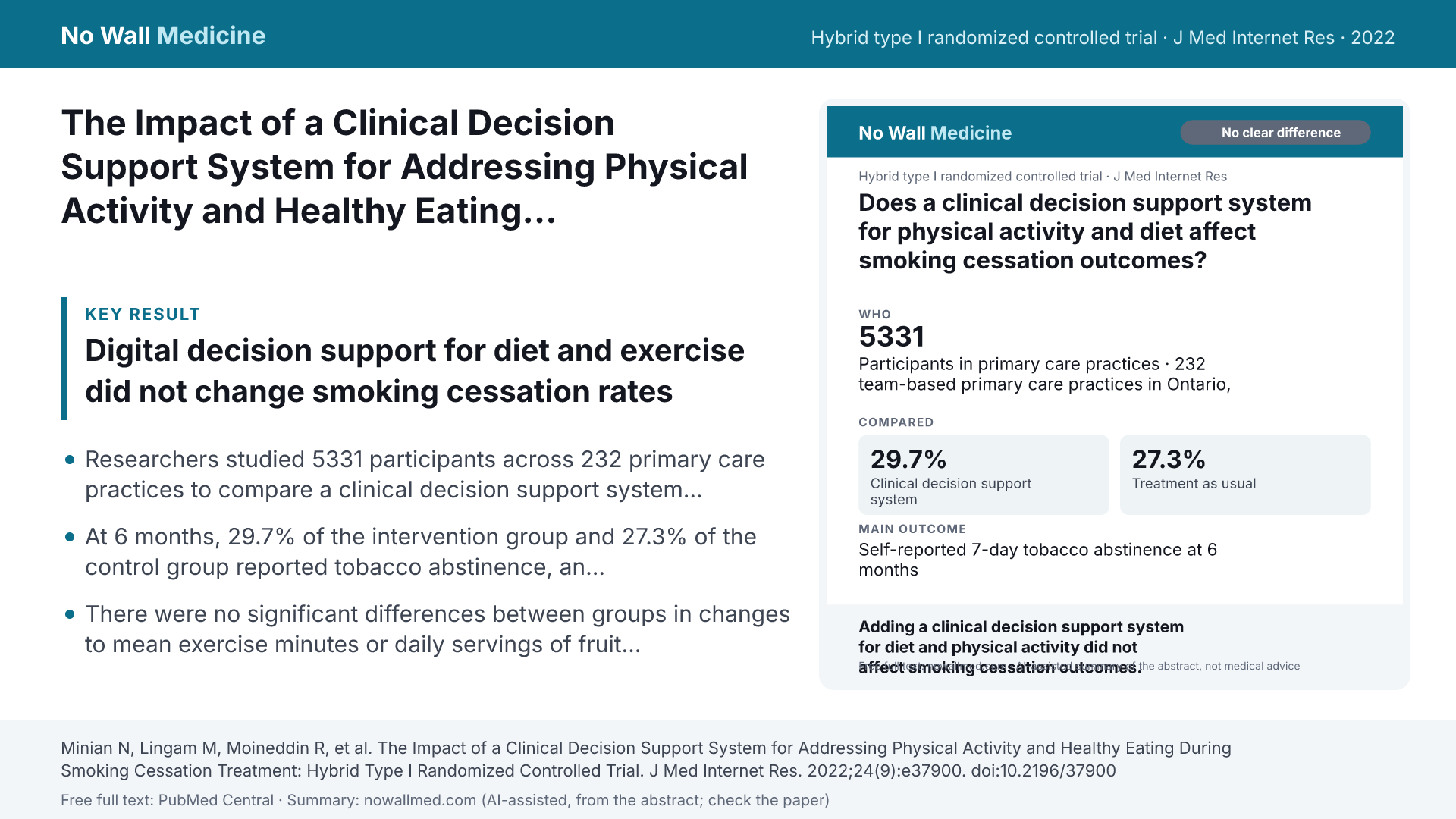
Digital decision support for diet and exercise did not change smoking cessation rates
The Impact of a Clinical Decision Support System for Addressing Physical Activity and Healthy Eating During Smoking Cessation Treatment: Hybrid Type I Randomized Controlled Trial
Hybrid type I randomized controlled trialNo clear difference
Does a clinical decision support system for physical activity and diet affect smoking cessation outcomes?
Who
5331
Participants in primary care practices · 232 team-based primary care practices in Ontario, Canada
Compared
29.7%Clinical decision support system (634/2137)
27.3%Treatment as usual (552/2020)
Main outcome
Self-reported 7-day tobacco abstinence at 6 months
Result: absolute group difference 2.1% (95% CI -0.5 to 4.6)
Bottom line: Adding a clinical decision support system for diet and physical activity did not affect smoking cessation outcomes.
J Med Internet Res · 2022-09-30Download image
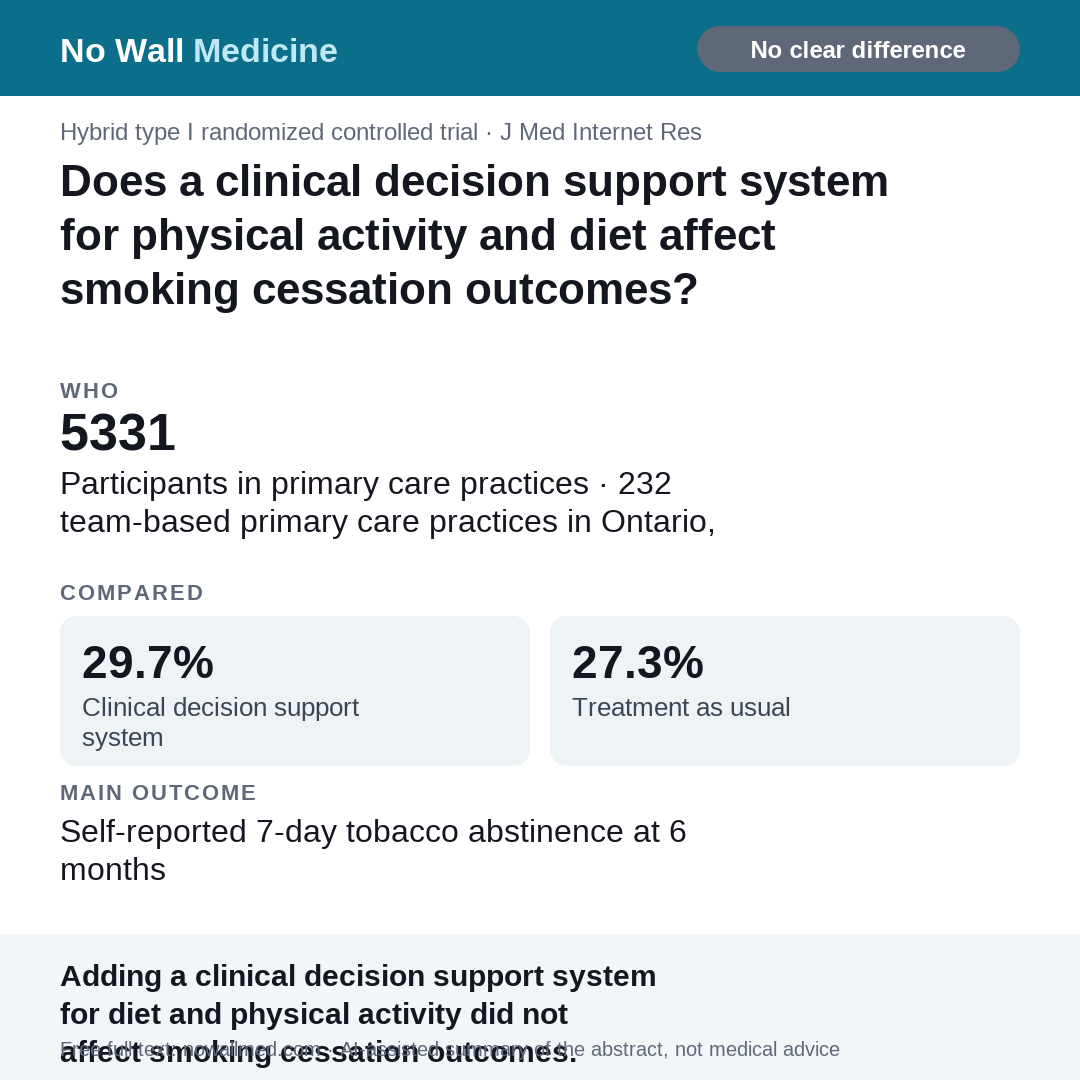
Clinical question: Does a clinical decision support system for physical activity and diet affect smoking cessation outcomes?
Why it matters: It was unknown if adding digital tools to help practitioners address diet and physical activity during smoking cessation would negatively affect tobacco abstinence rates.
Key points
- Researchers studied 5331 participants across 232 primary care practices to compare a clinical decision support system for diet and exercise against standard treatment.
- At 6 months, 29.7% of the intervention group and 27.3% of the control group reported tobacco abstinence, an absolute difference of 2.1% that was not statistically significant.
- There were no significant differences between groups in changes to mean exercise minutes or daily servings of fruit and vegetables.
Headline and key points written with AI from the paper’s abstract, with every number checked against it. Read the paper before relying on them.
Was this summary helpful?
Subject terms
Cite this article
Minian N, Lingam M, Moineddin R, et al. The Impact of a Clinical Decision Support System for Addressing Physical Activity and Healthy Eating During Smoking Cessation Treatment: Hybrid Type I Randomized Controlled Trial. J Med Internet Res. 2022. doi:10.2196/37900
Spotted a mistake? Suggest a correction