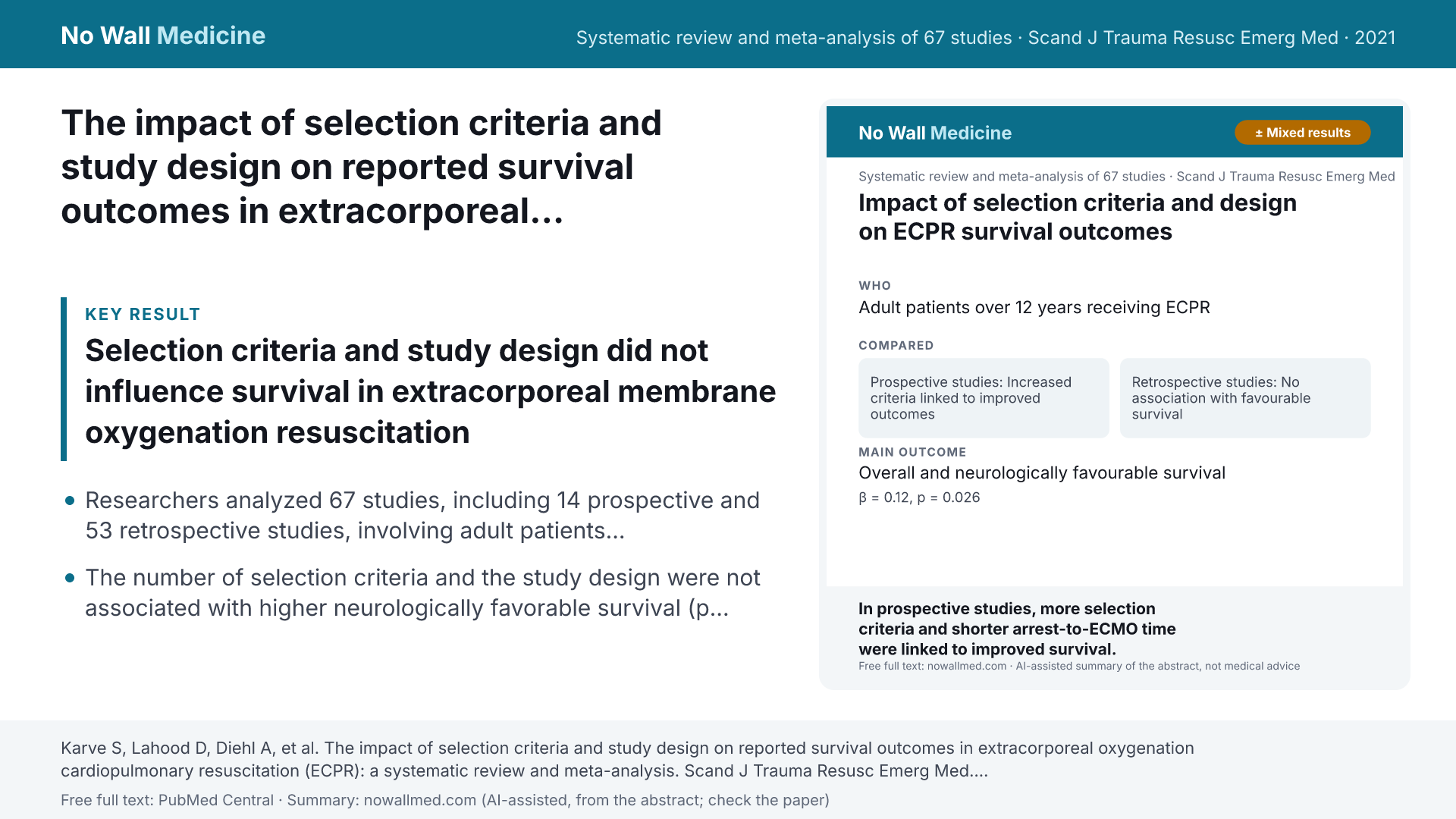
The impact of selection criteria and study design on reported survival outcomes in extracorporeal oxygenation cardiopulmonary resuscitation (ECPR): a systematic review and meta-analysis
Key result: Selection criteria and study design did not influence survival in extracorporeal membrane oxygenation resuscitation
Key points
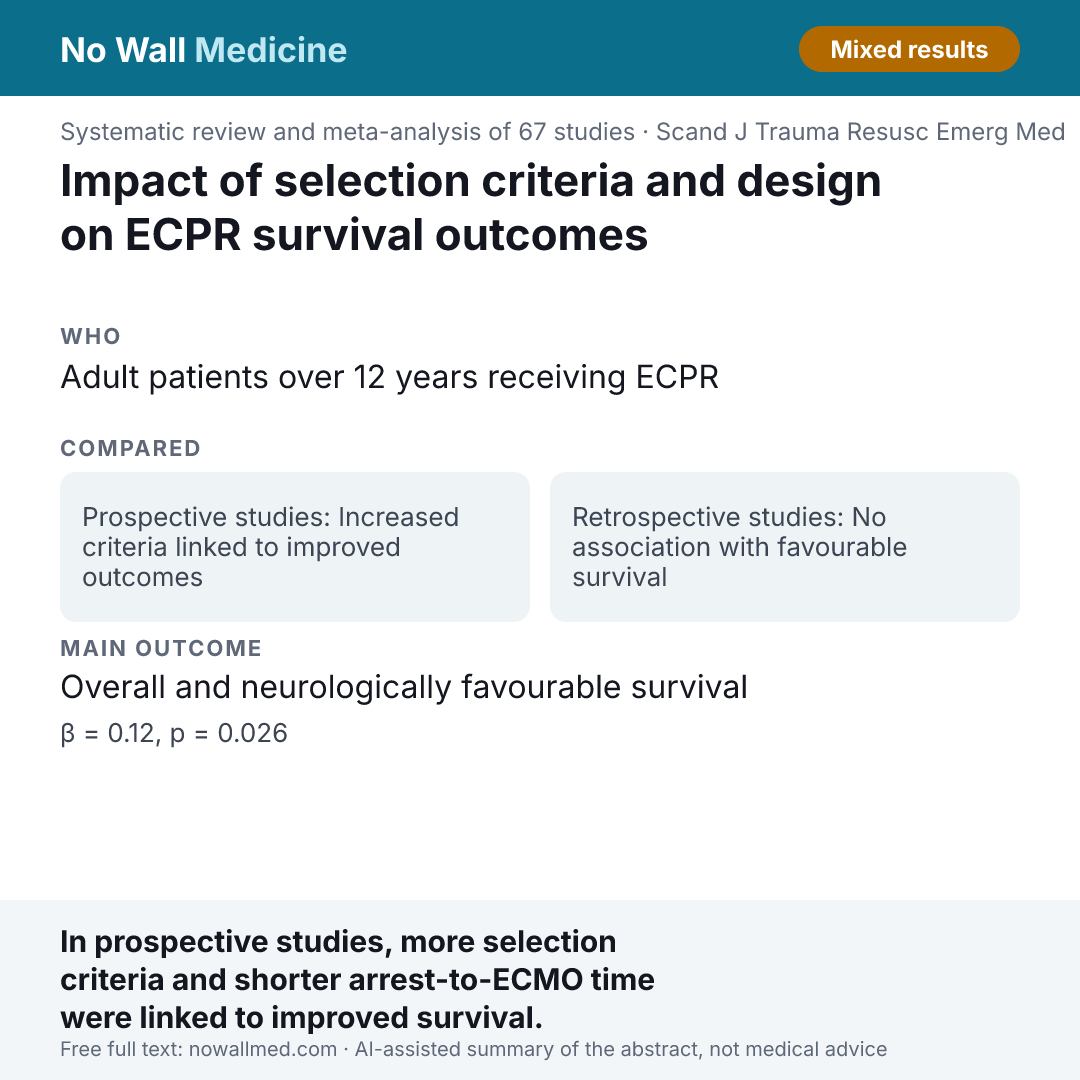
- Researchers analyzed 67 studies, including 14 prospective and 53 retrospective studies, involving adult patients receiving extracorporeal membrane oxygenation during cardiac arrest.
- The number of selection criteria and the study design were not associated with higher neurologically favorable survival (p = 0.292 and p = 0.962).
- In prospective studies, more inclusion criteria were associated with improved outcomes in out-of-hospital and in-hospital cardiac arrest cohorts (β = 0.12, p = 0.026).
Why it matters: Reported survival outcomes for extracorporeal membrane oxygenation during cardiac arrest vary significantly due to different study designs and patient selection criteria.
Limitation the authors note: No randomized controlled trials were identified during the search.
Discussion prompts
- Would these patients look like yours? Who was left out?
- Is the main outcome one that matters to patients?
- Is the difference large enough to change what you do?
Cite: Karve S, Lahood D, Diehl A, et al. The impact of selection criteria and study design on reported survival outcomes in extracorporeal oxygenation cardiopulmonary resuscitation (ECPR): a systematic review and meta-analysis. Scand J Trauma Resusc Emerg Med. 2021;29(1):142. doi:10.1186/s13049-021-00956-5
Free full text: PubMed Central · Summary and visual abstract: nowallmed.com/a/the-impact-of-selection-criteria-and-study-design-on-reported-g39bb8/ (AI-assisted from the abstract; check the paper before relying on it).