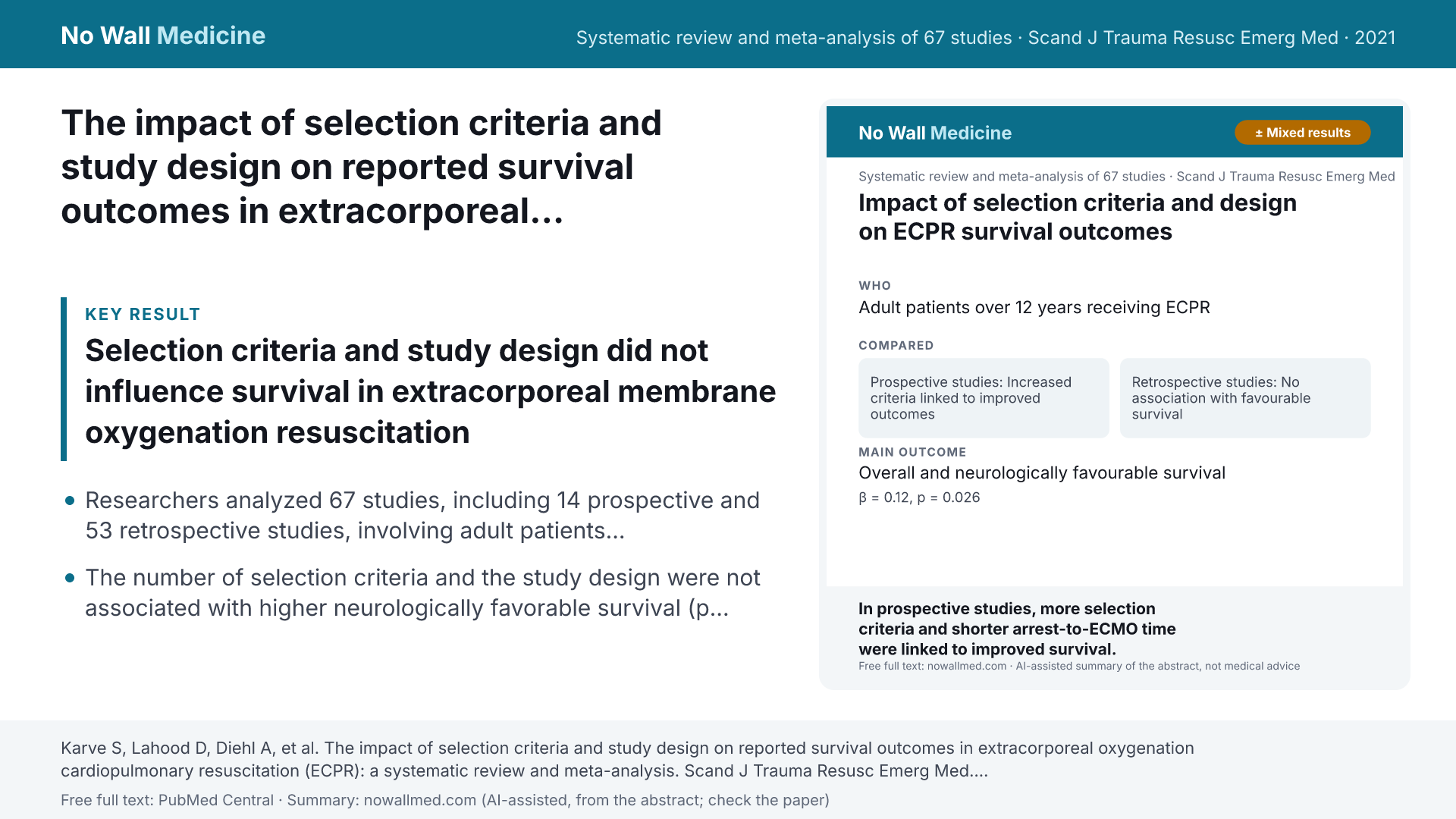
Selection criteria and study design did not influence survival in extracorporeal membrane oxygenation resuscitation
The impact of selection criteria and study design on reported survival outcomes in extracorporeal oxygenation cardiopulmonary resuscitation (ECPR): a systematic review and meta-analysis
Systematic review and meta-analysisMixed results
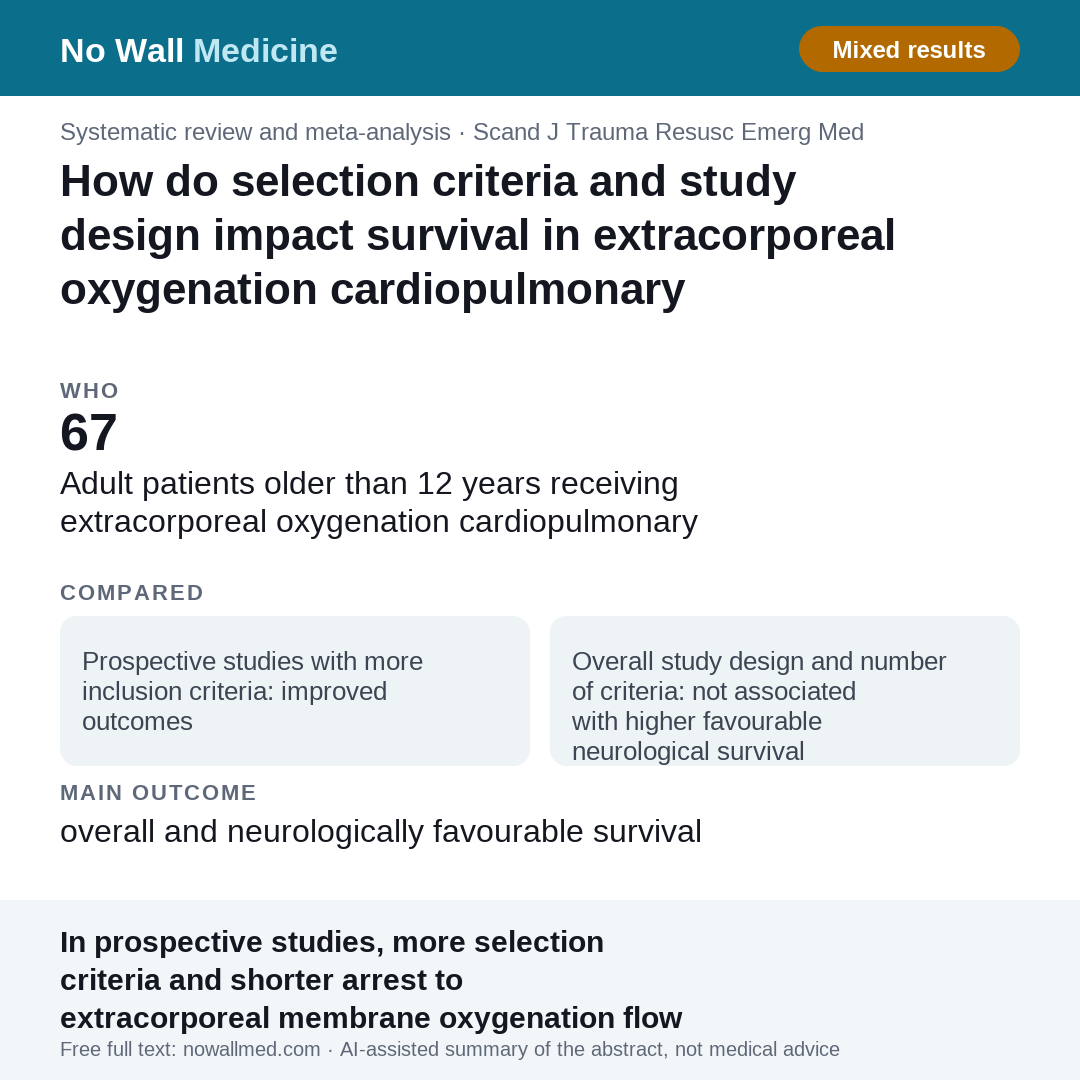
How do selection criteria and study design impact survival in extracorporeal oxygenation cardiopulmonary resuscitation?
Who
67
Adult patients older than 12 years receiving extracorporeal oxygenation cardiopulmonary resuscitation
Compared
Prospective studies with more inclusion criteria: improved outcomes
Overall study design and number of criteria: not associated with higher favourable neurological survival
Main outcome
overall and neurologically favourable survival
Bottom line: In prospective studies, more selection criteria and shorter arrest to extracorporeal membrane oxygenation flow time improved survival.
Limitation: No randomized controlled trials were identified at time of search.
Scand J Trauma Resusc Emerg Med · 2021-09-26Download image
Clinical question: How do selection criteria and study design impact survival in extracorporeal oxygenation cardiopulmonary resuscitation?
Why it matters: Reported survival outcomes for extracorporeal membrane oxygenation during cardiac arrest vary significantly due to different study designs and patient selection criteria.
Key points
- Researchers analyzed 67 studies, including 14 prospective and 53 retrospective studies, involving adult patients receiving extracorporeal membrane oxygenation during cardiac arrest.
- The number of selection criteria and the study design were not associated with higher neurologically favorable survival (p = 0.292 and p = 0.962).
- In prospective studies, more inclusion criteria were associated with improved outcomes in out-of-hospital and in-hospital cardiac arrest cohorts (β = 0.12, p = 0.026).
Limitation the authors note: No randomized controlled trials were identified during the search.
Headline and key points written with AI from the paper’s abstract, with every number checked against it. Read the paper before relying on them.
Was this summary helpful?
Subject terms
Cite this article
Karve S, Lahood D, Diehl A, Burrell A, Tian DH, Southwood T. The impact of selection criteria and study design on reported survival outcomes in extracorporeal oxygenation cardiopulmonary resuscitation (ECPR): a systematic review and meta-analysis. Scand J Trauma Resusc Emerg Med. 2021. doi:10.1186/s13049-021-00956-5
Spotted a mistake? Suggest a correction