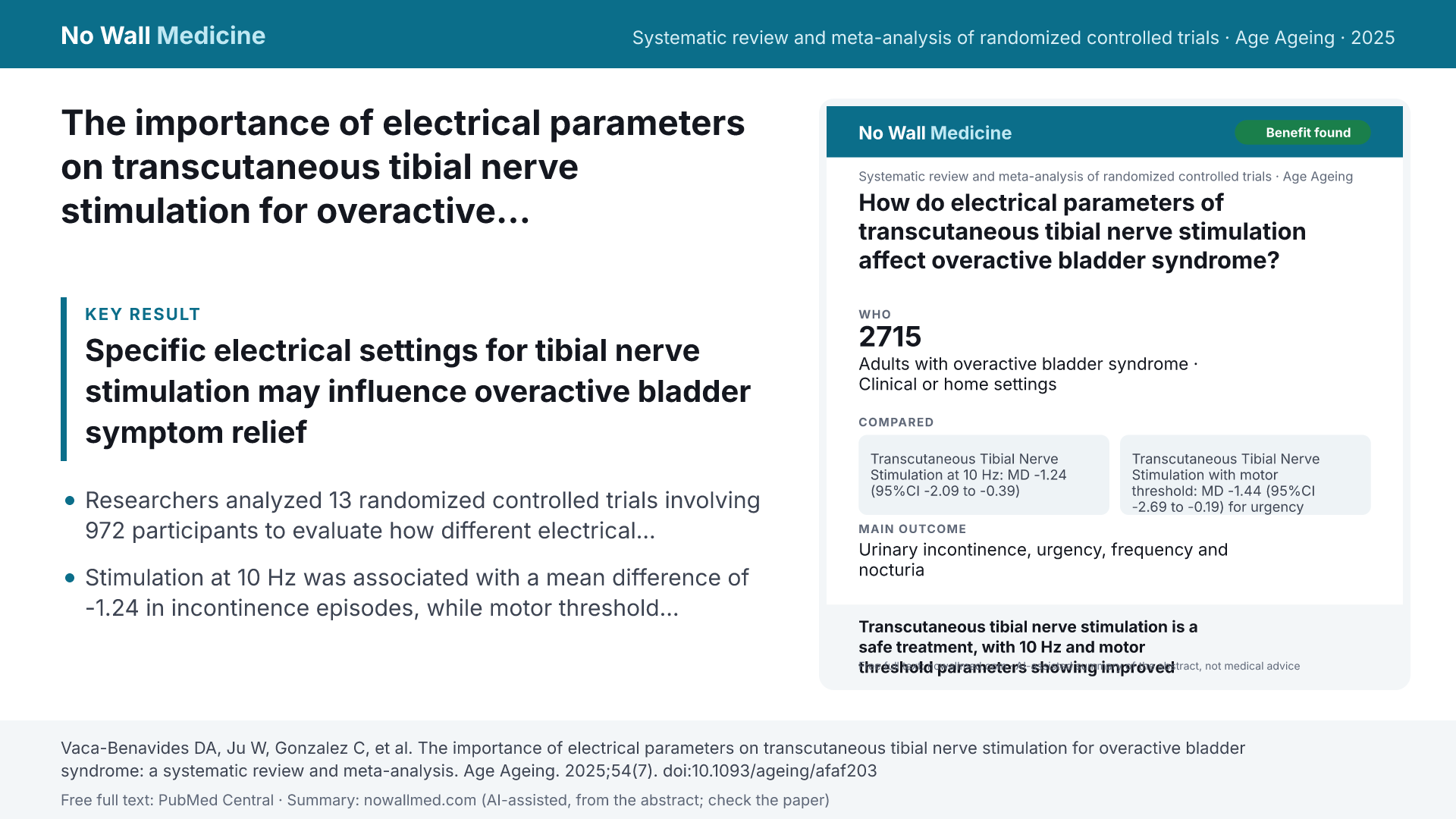
Specific electrical settings for tibial nerve stimulation may influence overactive bladder symptom relief
The importance of electrical parameters on transcutaneous tibial nerve stimulation for overactive bladder syndrome: a systematic review and meta-analysis
Systematic review and meta-analysis of randomized controlled trialsBenefit found
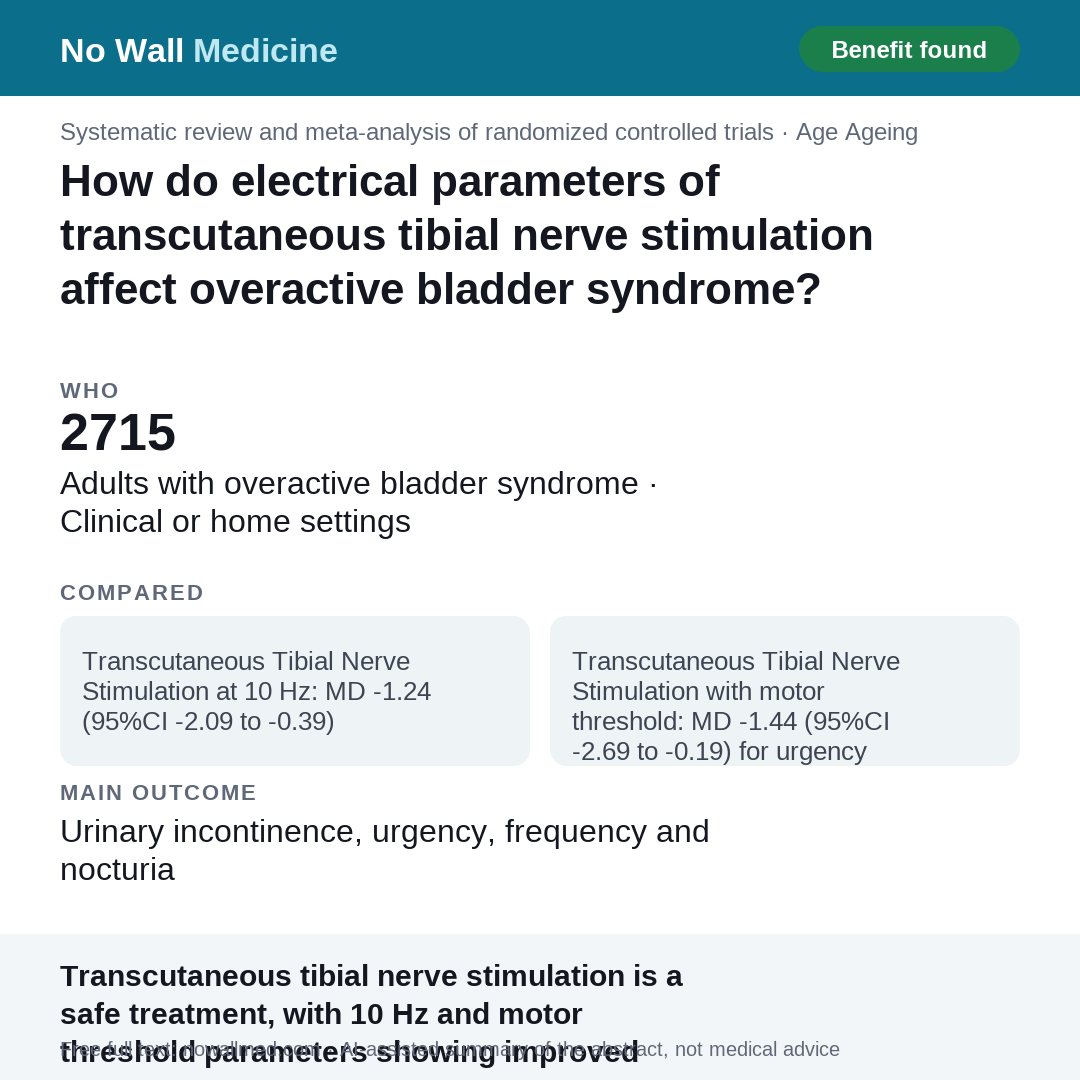
How do electrical parameters of transcutaneous tibial nerve stimulation affect overactive bladder syndrome?
Who
2715
Adults with overactive bladder syndrome · Clinical or home settings
Compared
Transcutaneous Tibial Nerve Stimulation at 10 Hz: MD -1.24 (95%CI -2.09 to -0.39)
Transcutaneous Tibial Nerve Stimulation with motor threshold: MD -1.44 (95%CI -2.69 to -0.19) for urgency
Main outcome
Urinary incontinence, urgency, frequency and nocturia
Bottom line: Transcutaneous tibial nerve stimulation is a safe treatment, with 10 Hz and motor threshold parameters showing improved symptoms.
Limitation: Certainty is reduced due to the small number of studies and participants.
Age Ageing · 2025-07-25Download image
Clinical question: How do electrical parameters of transcutaneous tibial nerve stimulation affect overactive bladder syndrome?
Why it matters: It is unclear which specific electrical frequency, intensity, or pulse width settings are most effective for treating overactive bladder symptoms.
Key points
- Researchers analyzed 13 randomized controlled trials involving 972 participants to evaluate how different electrical settings for transcutaneous tibial nerve stimulation affect overactive bladder symptoms.
- Stimulation at 10 Hz was associated with a mean difference of -1.24 in incontinence episodes, while motor threshold settings were associated with improvements in urgency and nocturia.
- No serious adverse effects were reported, though some participants experienced mild pain or discomfort during the treatment.
Limitation the authors note: The certainty of the results is reduced due to the small number of studies and participants included in the analysis.
Headline and key points written with AI from the paper’s abstract, with every number checked against it. Read the paper before relying on them.
Was this summary helpful?
Subject terms
Cite this article
Vaca-Benavides DA, Ju W, Gonzalez C, et al. The importance of electrical parameters on transcutaneous tibial nerve stimulation for overactive bladder syndrome: a systematic review and meta-analysis. Age Ageing. 2025. doi:10.1093/ageing/afaf203
Spotted a mistake? Suggest a correction