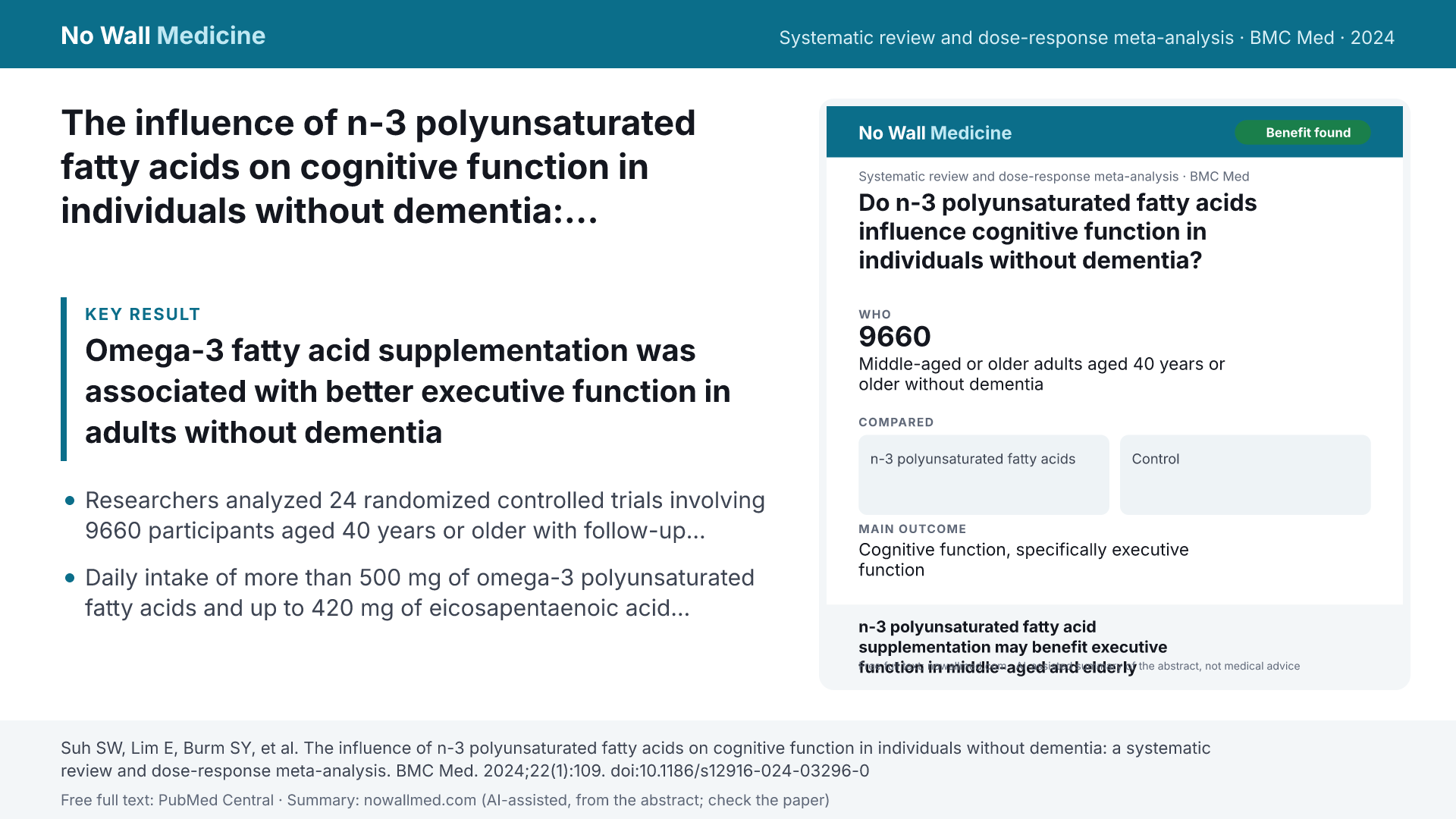
Omega-3 fatty acid supplementation was associated with better executive function in adults without dementia
The influence of n-3 polyunsaturated fatty acids on cognitive function in individuals without dementia: a systematic review and dose-response meta-analysis
Systematic review and dose-response meta-analysisBenefit found
Do n-3 polyunsaturated fatty acids influence cognitive function in individuals without dementia?
Who
9660
Middle-aged or older adults aged 40 years or older without dementia
Compared
n-3 polyunsaturated fatty acids
Control
Main outcome
Cognitive function, specifically executive function
Bottom line: n-3 polyunsaturated fatty acid supplementation may benefit executive function in middle-aged and elderly individuals.
BMC Med · 2024-03-12 · Save PNG
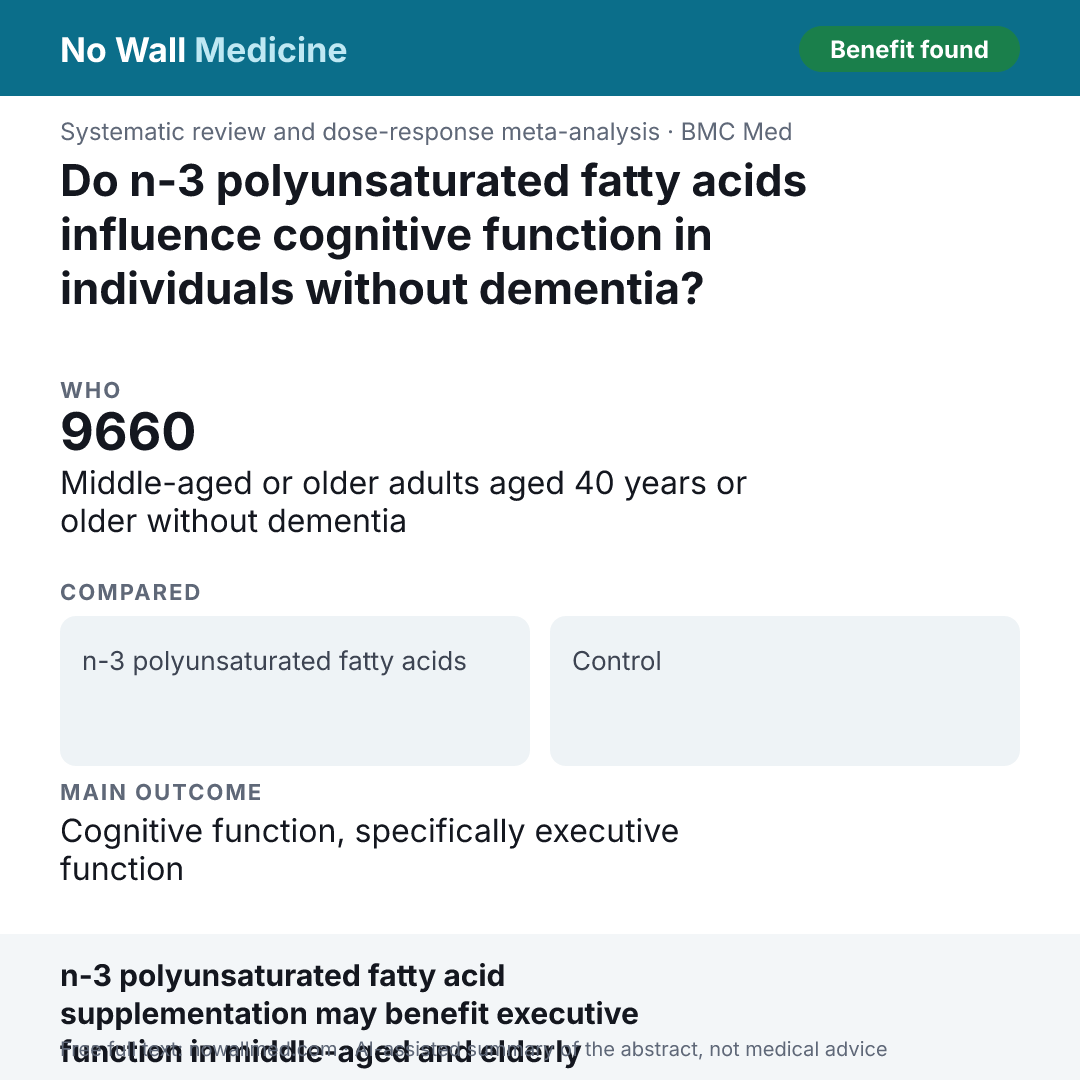
Clinical question: Do n-3 polyunsaturated fatty acids influence cognitive function in individuals without dementia?
Key points
- Researchers analyzed 24 randomized controlled trials involving 9660 participants aged 40 years or older with follow-up periods of 3 to 36 months.
- Daily intake of more than 500 mg of omega-3 polyunsaturated fatty acids and up to 420 mg of eicosapentaenoic acid was associated with an upward trend in executive function.
- The observed benefits were more prominent in individuals whose blood levels of docosahexaenoic acid and eicosapentaenoic acid were not very low.
Headline and key points written with AI from the paper’s abstract, with every number checked against it. Read the paper before relying on them.
Was this summary helpful?
Subject terms
Headline, design, result, key points, caveat and citation as plain text.
Cite this article
Suh SW, Lim E, Burm SY, et al. The influence of n-3 polyunsaturated fatty acids on cognitive function in individuals without dementia: a systematic review and dose-response meta-analysis. BMC Med. 2024;22(1):109. doi:10.1186/s12916-024-03296-0
Spotted a mistake? Suggest a correction